Hideo’s progressive emaciation
Strangers (Taichi Yamada Edition)Hideo Harada’s progressive emaciation is the bodily cost he comes to associate with spending time with his deceased parents. It advances from a colleague’s warning that he looks pale, through other people’s increasingly specific observations of his weight loss, to a collapse in which he finally sees himself as an old, ghost-pale man. The state is marked by a disturbing divide: Hideo can accept the possibility that his life is being drained, yet ordinary mirrors initially show him no change.
Early Signs and Hideo’s Explanation
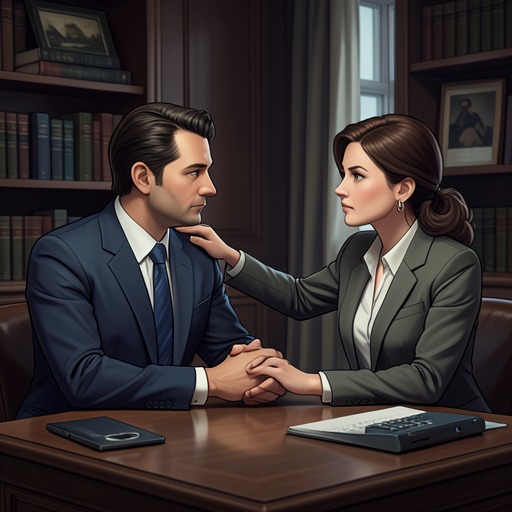
A producer notices that Hideo seems pale and voices a practical concern: a scriptwriter might collapse while a television series is underway. The warning is delivered jokingly, with the producer urging him to take extra care until the work is finished and then teasing that his health will matter less afterward. The exchange ends in laughter and conversation, but its lightness does not prevent the remark from becoming unsettling to Hideo.
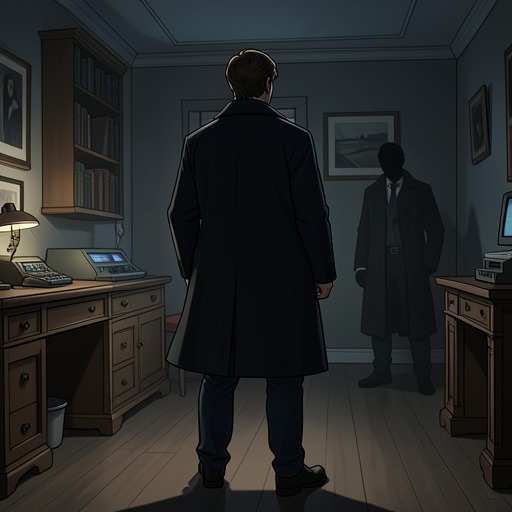
The next morning, Hideo tries to explain the possibility that his appearance has changed. He has returned from dinner with his parents at a reasonable hour, gone to bed by eleven, and read through his manuscript during his usual morning work period. Nothing in that routine readily accounts for a sudden physical decline. He nevertheless considers a supernatural cause: his parents belong to the world of the dead, and he reasons that contact with beings from that world might sap a living person’s vital forces. He recalls that stories of such depletion appear in folklore, from ancient legends to modern novels. This is Hideo’s interpretation of his condition, not a medically established explanation.
His response to that possibility is strikingly accepting. He thinks his parents must have made immense sacrifices to return and join him, and he is willing to give up some of his own lifeblood in exchange. Seeing evidence of paleness would, paradoxically, reassure him: it would confirm that his parents, rather than he alone, were bearing the cost of their reunion. His concern for them thus makes the prospect of his own depletion feel like a fair exchange, even a relief.
Mirrors and Conflicting Testimony
Hideo’s attempts at self-observation initially fail to confirm what others report. He remembers no change in his complexion while shaving, and, when he checks his face in a restaurant mirror, it does not look sallow. Later, after returning home, he examines himself again and still sees nothing strange. The mismatch is not simply between Hideo and one observer: it recurs across different settings, leaving him unable to verify the change that has begun to concern him.
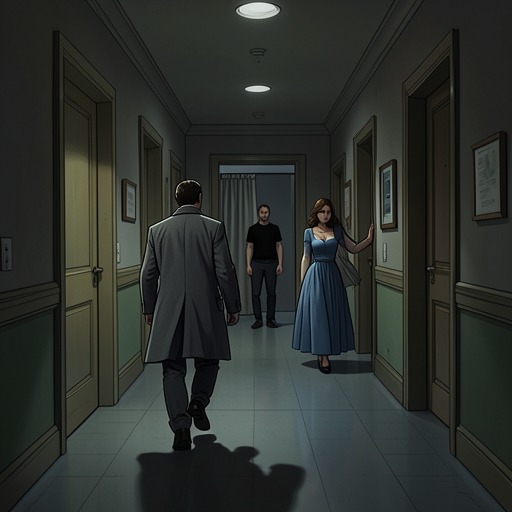
Kei’s judgment is more direct. When she arrives a little after nine one evening, she tells him that he looks dreadful. Hideo is taken aback because his own recent check in the mirror found nothing unusual; he protests that she should not tease him and admits that he is sensitive about his appearance. He goes to the bathroom to inspect himself under two 100-watt, soft-white bulbs, seeking a brighter and more dependable view. The effort emphasizes how much he trusts visual self-checking—and how little that method can tell him at this stage.
Kei later describes what she sees without softening it: deep, dark bags beneath his eyes and hollow cheeks. When she asks whether he truly did not look tired to himself, Hideo replies that no man of forty-eight is entirely free of wear and tear. Her answer distinguishes ordinary aging from the present deterioration: those hollow cheeks and darkened eyes are how he looks now, and how he looked in the mirror. The exchange makes his inability to recognize his own condition central to the state, rather than a passing disagreement about whether he appears tired.
Progression Seen by Others
A later encounter with Mamiya supplies another independent measure. Mamiya says that he can hardly believe he recognized Hideo and explains that the change has happened in a short time. He recalls visiting Hideo at home not long before and says that Hideo looks as though he has lost a great deal of weight since then. The comparison across visits turns a vague impression of paleness into an apparent progression: someone who has seen him at two points can perceive a difference that Hideo has not been able to confirm by looking at himself.
After the encounter, Hideo concludes that the previous night with his parents has made him look even more emaciated to other people. The conclusion rests on an accumulating pattern of testimony, rather than on a visible change he has observed firsthand. He imagines that he may continue wasting away without ever seeing the damage, until he suddenly dies. Even this prospect does not make him renounce the time spent with his departed parents; he reasons that someone allowed to be with them again should not ask for much more. His willingness to accept the cost persists as the signs become harder to dismiss.
Collapse and Recognition
The state reaches its most forceful expression when Kei clings to Hideo and pleads for help for a man. Hideo abruptly feels staggering fatigue; Kei’s weight becomes heavy on his shoulders, his legs waver, and he says that he feels incredibly weak. His legs give way, and he sinks to the floor gasping for breath. The decline is no longer an appearance described by someone else: it has become an immediate loss of strength and the inability to remain standing.
Kei strains to lift him toward a mirror, wedging a hand under his arm and wrapping herself around him. Through the haze of debilitating fatigue, Hideo sees an old man. The reflection has deeply sunken eyes, cavernously hollow cheeks, and skin as colorless as a pale white ghost. He recognizes that this is himself and screams, though the sound is scarcely more than a sigh. The mirror that had repeatedly failed to disclose his deterioration now confronts him with its extremity. This recognition joins the physical collapse to the earlier reports of paleness, dark bags, hollow cheeks, and weight loss, making the wasting condition undeniable to Hideo at last. It also crystallizes the story’s unsettling association between intimacy with the dead and the depletion of the living: the cost he had been willing to pay becomes visible precisely when his body can no longer sustain him.