Kei Fujino
Strangers (Taichi Yamada Edition)Kei Fujino is the third-floor resident whose nighttime visits draw Hideo Harada into a close relationship after his divorce. She is first glimpsed passing through Harada’s apartment building, a seven-story residence beside the ceaseless traffic of Tokyo Route 8; when she later appears at his door, she names herself Kei, discloses the burn scars she keeps private, and speaks as someone increasingly bound to Harada. Her role joins the book’s urban loneliness to an intimate conflict over how far their relationship can extend into his encounters with the dead.
Identity and Naming
The building directory lists her as Katsura Fujino, but she tells Harada to call her Kei. In her family register, she explains, her name is Katsura. Because Fuji and Katsura are both trees, combining them seems to her like an odd grafting experiment; she therefore takes the Chinese reading of Katsura and uses Kei. She also offers K and the English name Kay as alternatives. The small account makes naming an expression of her own choice: the name Harada first finds in a directory does not, by itself, tell him how she wants to be addressed.
Kei lives on the third floor. The evidence offers little conventional background about her life before Harada meets her, but it establishes that she had recently moved away from a previous apartment where neighbors repeatedly pressed her about being single. Her account presents that attention not as harmless curiosity but as an intrusion that had become suffocating. She is willing to explain this to Harada, while also making clear that such personal questions are not the kind of conversation she wants to have with neighbors generally.
Introduction in the Nighttime Building
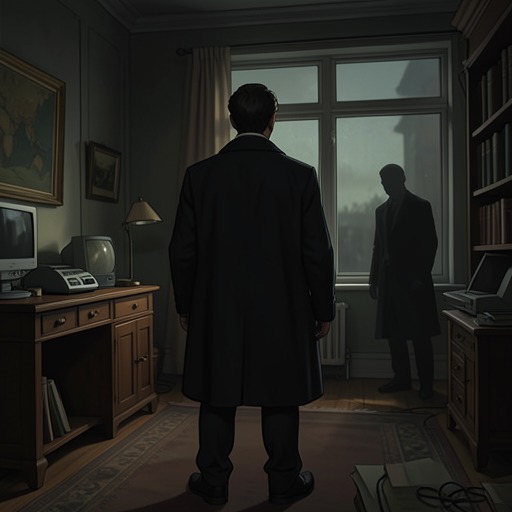
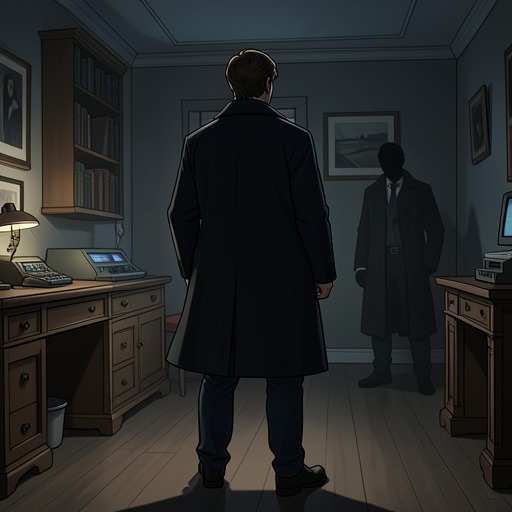
Kei’s introduction unfolds within an unusual pattern of nighttime solitude. Harada’s building faces a road where trucks and other traffic roar past around the clock; when he first moved in full time, the noise repeatedly woke him and left him short of breath. Yet, after his divorce, he notices that the building itself grows unnaturally quiet. As evening empties the parking lot, only a pink children’s-apparel van remains. Late at night, every window he can see is dark except his own, on the seventh floor.
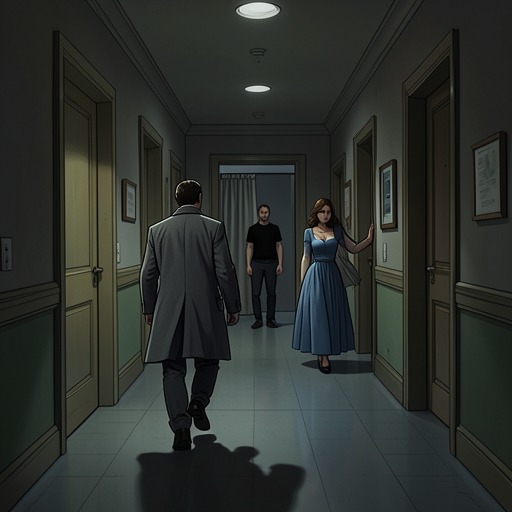
When Kei comes to his door, Harada recognizes her as the woman he had seen crossing the lobby several nights earlier. She wears a pale-green cotton housedress with a large sketched flower on the front. She tells him that, by this hour on most nights, the two of them are the only people left in the building. The disclosure startles him: he imagines that a woman discovering she is alone with a strange man might ordinarily lock her door and keep watch. Kei, however, delivers the information with averted eyes before meeting his gaze again. Her matter-of-fact confidence unsettles Harada’s assumptions about how she should respond to the situation.
The emptiness is temporary rather than absolute. By morning, heels click along the concrete corridors, doors latch, phones ring, and voices return; the office staff next door gradually resume their work. The contrast gives Kei and Harada’s nighttime encounters a particular setting: an ordinary urban building remains busy by day, yet its late-night residents can find themselves almost alone within it. The traffic outside never stops, but the people inside seem to disappear.
Candor, Vulnerability, and Growing Intimacy
Harada had invited Kei over for drinks, though he is not certain whether he meant to offer drinks or simply conversation. Before calling, he searches the directory for a Fujino at the address and finds Katsura Fujino. She answers on the second ring and says she will come up in five minutes. Her brisk, cheerful response surprises him because he had imagined that she might be lonely and in need of comfort. Instead, she arrives ready to talk and brings a plastic container holding a knife and small chunks of cheese.
During their conversation, Kei explains why she lives alone and why she avoids discussing her appearance with neighbors. She says she has an ugly burn on her chest. Skin grafts have been performed, but the area remains badly scarred and its colors do not match. She gestures to the place as she describes it and finishes her shochu before asking for brandy. Her directness puts a painful and intimate fact into the conversation without disguising it as a confession she cannot bear to make. Harada struggles for an answer, then remarks that the building’s residents at least leave her alone. Her history of being badgered about marriage and her account of the scar show how ordinary social interest can become an unwelcome demand for access to her private life.
Their connection becomes explicit when Kei tells Harada that she has thought of them as being together. He says that he has too, although he begins to qualify his answer before she asks what he means. The exchange makes the relationship’s importance clear while leaving the hesitation in Harada’s response visible. Kei is not merely a neighbor who shares the building’s silence: she understands their bond as an existing intimacy and asks him to acknowledge it.
Conflict, Boundaries, and Narrative Role
After Harada tells Kei about his experiences in Asakusa, she pleads with him never to go there again and asks him to promise. He understands her concern: his parents are dead, and he agrees that the return of the dead disrupts the order of the living and should be avoided. But he cannot apply that conviction straightforwardly to his own mother and father. Kei’s request therefore places their attachment against his longing to see his parents again. His contemplation of a secret return shows that the promise does not settle the conflict; it turns his visits into something he would have to conceal from her.
Their relationship also appears in the everyday friction of a daytime outing. They set off for lunch a little after three and walk a full kilometer along Route 8 toward a small Spanish restaurant. The mid-afternoon heat is intense, and Harada has made a habit of curbing his breathing because the air is thick with car and truck exhaust, though he is enjoying the outing. Kei does not share his pleasure without qualification: she asks why he has no car. He explains that he gave his car to his son and expects to afford another after finishing his new series. The exchange gives their intimacy a practical, conversational texture, distinct from the more consequential question of Asakusa.
Kei’s characterization rests on the contrast between reserve and candor. She objects to intrusive questioning by neighbors, yet chooses to tell Harada about her scars; she identifies their relationship before he has fully formulated his answer, and she presses him to keep away from a place he considers emotionally inseparable from his parents. Her encounters with him move from the near-empty building and a shared drink toward acknowledged intimacy, while the request about Asakusa exposes a boundary their closeness cannot easily resolve. Through Kei, the quiet of Harada’s urban isolation becomes both a condition for connection and the setting of a conflict over what that connection can ask of him.