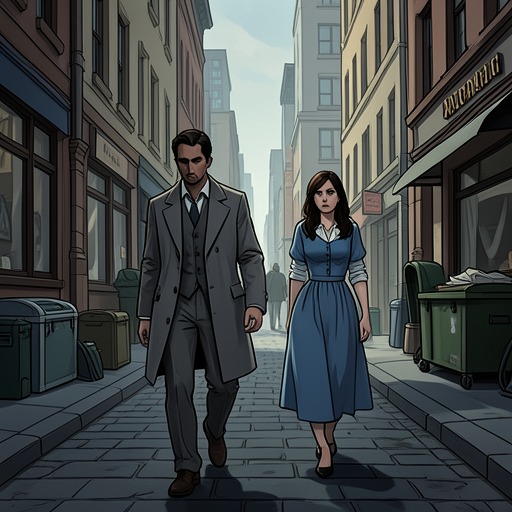
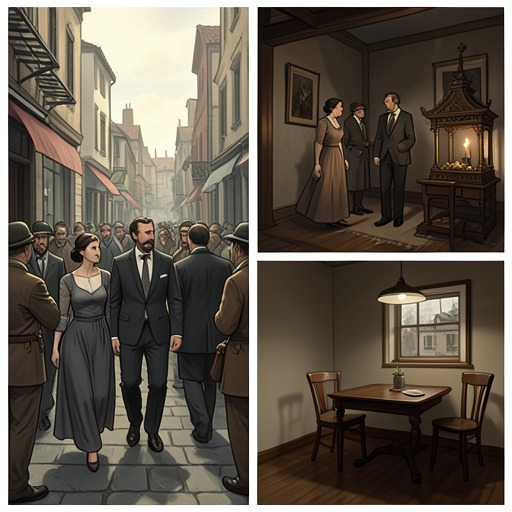
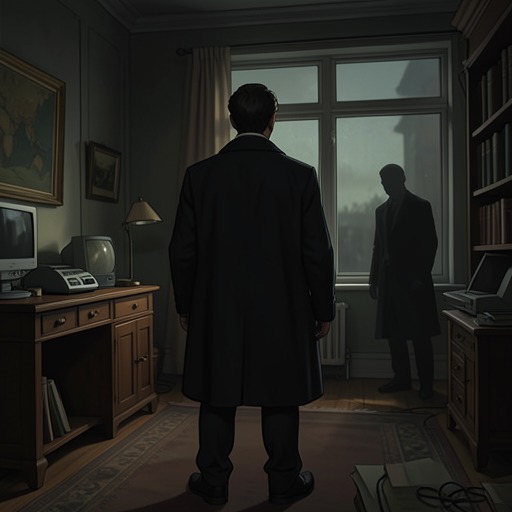
1939
Birth in Asakusa
[Hideo Harada](entity:character-recall-character-hideo-harada-6ebd071019d6) was born in [Asakusa](entity:location-recall-location-ce8bb873f34e), the first child of a sushi chef and a kitchen helper. His earliest years unfolded in a crowded neighborhood where his parents worked hard to make a life for their family.
The city and its streets would remain bound to his childhood memories, even after decades away. Much later, returning there would feel like entering both a real place and a lost family world.
Toward the end of World War II
War and the Move North
With [Hideo's father](entity:character-recall-character-hideo-9de13b3f0d52) away in the army, Hideo and his mother went to stay with her parents in Tochigi. After his father returned from the Philippines in 1946, the family went back to [Asakusa](entity:location-recall-location-ce8bb873f34e) and made a living selling improvised food in the black market.
Hideo remembered helping his parents and watching his mother prepare the bubbling stew. Those scenes of modest domestic effort would later become part of the comforting family life he longed to recover.
Around 1950
The Family Moves Nearby
When [Hideo's father](entity:character-recall-character-hideo-9de13b3f0d52) found steady work as a sushi chef, the family remained in [Asakusa](entity:location-recall-location-ce8bb873f34e). They rented a room on the second floor of a tinsmith's house behind [Honganji Temple](entity:location-recall-location-3f5868fe9495), and [Hideo's mother](entity:character-recall-character-hideo-623f3881afee) became pregnant with their second child.
The family’s ordinary hopes were cut short before Hideo could learn whether he would have a brother or sister. The place they shared became inseparable in his memory from the sudden end of his childhood.
January 1951
The Fatal Collision
A car struck Hideo's parents while his father was riding his mother on the back of his bicycle near the [International Theater](entity:location-recall-location-8a092f081864). Both died at the scene, and the hit-and-run driver was never found.
Hideo was twelve and lost both parents at once. Their deaths shaped his guardedness and left him with a yearning for the parental comfort that would later make his supernatural encounters feel almost impossible to resist.
After January 1951
A Second Orphaning
Hideo went to live with his widowed grandfather in the farming village where his father had grown up. He tried to become an unremarkable country boy, believing that he needed to hide his city upbringing to fit in.
His grandfather died during Hideo's junior year of high school. An uncle then took him in, and Hideo eventually returned to [Tokyo](entity:location-recall-location-2ef35aba743c) for college, carrying his losses into adulthood without learning how to depend easily on others.
During Hideo's adulthood before the novel opens
Marriage and Estrangement
Hideo married [Ayako](entity:character-recall-character-ayako-028a78966225) and they had a son, [Shigeki](entity:character-recall-character-shigeki-a148d061184a). Over the years, Hideo's reserve and difficulty accepting care helped chill the marriage, while his relationship with his son also grew distant.
He later saw his emotional withdrawal as part of his failure as a husband and father. His habit of shouldering responsibility alone would shape both his divorce and the choices he made after it.
About a month before the story's opening
The Divorce
Hideo initiated a divorce from [Ayako](entity:character-recall-character-ayako-028a78966225), and she eventually agreed that indifference had become the central bond between them. Their settlement was difficult, and Hideo gave up the house and much of their shared assets.
He initially felt newly free, but the divorce left him emotionally depleted and alone in the apartment he had used as an office. [Shigeki](entity:character-recall-character-shigeki-a148d061184a) aligned himself with his mother, deepening Hideo's sense that family ties had slipped beyond his reach.
About three weeks after the divorce
A Quiet Building
Living alone in his office apartment, Hideo noticed that the building seemed unnaturally quiet at night, despite facing the constant traffic on [Tokyo Route 8](entity:location-recall-location-8-e0d31aea58f9). He had once struggled to sleep through the roar; now he found himself listening for sounds that seemed absent.
He wondered whether the divorce had left him anxious, then went downstairs to test his impression. The quiet became a measure of his isolation, and the nearly empty building seemed to confirm that he was alone in more than just his apartment.
Late July, after eleven at night
The Empty Night
Hideo looked out over the parking lot and found only a few cars, then walked through the building's dark lobby and checked the windows from outside. Every apartment appeared dark except his own, and he concluded that he might be the only overnight resident.
As he sat alone in the lobby, a woman entered and hurried to the elevator without noticing him. He saw the indicator stop on the third floor, an image that would matter when she later came to his door.
Four or five days later
Mamiya's Confession
[Mamiya](entity:character-recall-character-mamiya-e86858dd24e8) visited Hideo and first urged him to see more of [Shigeki](entity:character-recall-character-shigeki-a148d061184a). Hideo was touched by the unexpected concern, but the conversation turned to Mamiya's private reason for coming: he intended to pursue [Ayako](entity:character-recall-character-ayako-028a78966225) and hoped to marry her.
Mamiya said Ayako did not know his feelings, though Hideo suspected otherwise. Their long professional partnership seemed to end in a single visit, leaving Hideo wounded by the sense that Mamiya had chosen his ex-wife over their friendship and work.
That night
Champagne at the Door
After [Mamiya](entity:character-recall-character-mamiya-e86858dd24e8) left, the woman from the third floor rang Hideo's intercom. She introduced herself as a resident, said the building was nearly empty at night, and offered him a half-empty bottle of champagne.
She admitted that loneliness had suddenly become unbearable and asked to come in. Still angry over Mamiya and [Ayako](entity:character-recall-character-ayako-028a78966225), Hideo refused her and shut the door, then worried that his coldness might have pushed her toward self-harm. He did not go back to check on her.
Two days after the champagne visit
An Apology in the Lobby
Hideo encountered the woman in the lobby as she returned with groceries. She apologized for her late-night visit, and he apologized for his brusque response, even offering to invite her for drinks another time.
The ordinary sight of leafy greens in her shopping bag relieved Hideo: she seemed to be carrying on with daily life. Yet he had spent the previous rainy night watching her window, unsure whether she was safe.
August 4
The Birthday Turn
On his birthday, Hideo bought himself an outlandish tie and recognized that his newly independent life had not given him a clear idea of what he wanted. He had hoped for something different from his solitary routine but recoiled from both restraint and excess.
Seeing the sign for [Asakusa](entity:location-recall-location-ce8bb873f34e) at the subway entrance, he decided to visit his birthplace. The choice sent him back toward memories he had long avoided, especially the streets associated with his parents' deaths.
August 4, evening
Return to Asakusa
Hideo recalled his childhood in [Asakusa](entity:location-recall-location-ce8bb873f34e) as he rode the subway there. He passed through the busy streets but hesitated to visit the places most closely tied to his parents, fearing that his carefully contained grief might break open.
After eating, he wandered through the aging theater district. The [International Theater](entity:location-recall-location-8a092f081864) was gone, replaced by a modern hotel, and the changed streets held both familiar memories and evidence of how thoroughly time had passed.
August 4, later that evening
The Variety Hall
Hideo entered [Asakusa Variety Hall](entity:location-recall-location-b5b68a33244e), expecting a sparse audience, but found the room packed with tour-group visitors. When most of them left between acts, a comic storyteller joked about the exodus while an audience member called out that they were still there.
The voice and the man's profile struck Hideo as astonishingly like those of his dead father. Hideo changed seats to see him more clearly and, after the man smiled and beckoned him outside, followed him into the night.
August 4, late evening
A Fatherlike Stranger
The man led Hideo through the old neighborhood, bought beer, and treated him with the casual authority of a father. Hideo felt an unfamiliar warmth and security as he followed, even though the stranger was younger than he was.
At the man's apartment, a woman appeared who looked and sounded exactly like [Hideo's mother](entity:character-recall-character-hideo-623f3881afee) as he remembered her. The couple welcomed him inside, and Hideo struggled to reconcile their vivid presence with the impossibility that they could truly be his dead parents.
August 4, late evening into the night
A Night with His Parents
Hideo spent the evening with the couple, sharing food and drink and receiving the affectionate attention of a son. He nearly asked whether they were his parents, and at one point addressed the man as “Dad,” who answered naturally.
When Hideo left, the couple urged him to return. He cried in the taxi, savoring their kindness while questioning whether the experience had been a drunken hallucination or something real.
The next morning and following days
Back to Work
Hideo woke hungover and doubted the [Asakusa](entity:location-recall-location-ce8bb873f34e) encounter, then threw himself into research for a new television series. A canceled drama and a young actor's wedding message reinforced the unstable rhythms of his working life.
He also heard a message from [Kei Fujino](entity:character-recall-character-kei-fujino-ad453f2805e1), the third-floor neighbor. Though he briefly felt guilty for neglecting her, his new project displaced the memory of Asakusa and its emotional force.
A few days later
Kei's Invitation
Hideo called [Kei](entity:character-recall-character-kei-1b4faefb6f58) and invited her up for drinks. She arrived cheerful, bringing cheese, and explained her chosen name and her habit of using food to test people's tastes.
As they talked, her buoyant manner gave way to candor. She disclosed that a severe burn on her chest had left visible scarring despite skin grafts, and that intrusive questions about her single status had driven her from her previous home.
The same evening
The Hidden Scar
[Kei](entity:character-recall-character-kei-1b4faefb6f58) spoke openly about her scar and then made a blunt sexual proposition, leaving Hideo uncertain how to respond. When she asked him to kiss her, he did, but she pulled away when he touched her chest and insisted that he not look beneath the towel covering it.
Hideo promised not to see the scar. Their intimacy continued with her back turned, and the small moles on her shoulder, waist, and hip became familiar details. Her prohibition established both trust and a boundary that would remain central to their relationship.
Three days later
The Daytime Visit
After finishing a television proposal, Hideo returned to [Asakusa](entity:location-recall-location-ce8bb873f34e) in daylight, hoping to distinguish reality from the distortions of night. The apartment building remained where he remembered it, and the door to the couple's unit stood open.
The woman recognized him as Hideo and treated him as her son, even asking him to take off his clothes and help turn an ice-cream maker. Her casual familiarity made the scene more convincing, not less, though the modern appliance confirmed that she belonged to the present.
During the daytime visit
A Name That Shatters
Hideo spent time with the woman while she described her husband's work as a sushi chef and his habit of quitting jobs. He found himself calling her “Mom” and asking when his father would come home, slipping into the family role almost without effort.
As he prepared to leave, he asked her name. She answered that it was Harada and laughed that a child would not ask his own parents their name. The revelation struck Hideo like a blow, and he fled the apartment in terror.
That evening
Fear in the Storm
A violent thunderstorm passed over [Tokyo](entity:location-recall-location-2ef35aba743c) while Hideo sat in a high-rise bar, trying to understand his encounters as hallucinations born of childhood grief. He feared a nervous collapse but also knew that his mother's presence had felt as physically real as the glass in front of him.
At home, a burned-out bathroom bulb magnified his fear. When the intercom rang, he imagined his parents might be at the door, but it was [Kei](entity:character-recall-character-kei-1b4faefb6f58), whose arrival relieved him.
That night
An Intimate Refuge
Hideo concealed the [Asakusa](entity:location-recall-location-ce8bb873f34e) events from [Kei](entity:character-recall-character-kei-1b4faefb6f58), embarrassed by his fear and unsure how to explain them. She told him he had looked pale and strangely absent when he came home, as if he belonged to another dimension.
They became intimate again, and Hideo learned more about Kei's life and upbringing. Her concern offered him a living connection, even as the unexplained experiences with his parents remained close beneath the surface.
The next several days
The First Script
Hideo worked intensely on the new series, completing its first episode at a pace rarely achieved in his career. He observed pool halls, wrote through the night, and briefly managed to keep thoughts of his parents at a distance.
After finishing the draft, he remembered their welcome and wondered whether he needed to reject the visions if they brought comfort and strength. He decided to return to [Asakusa](entity:location-recall-location-ce8bb873f34e), no longer only to test whether the encounter was real but to embrace the world in which his parents seemed to exist.
The next visit to Asakusa
The Ball Game
Hideo climbed the stairs to the couple's apartment, where his father called him by name and invited him to play catch. His mother welcomed him in, and the family spoke as if the years apart were an ordinary interruption.
They found old gloves and went outside to play in the streets near [Honganji Temple](entity:location-recall-location-3f5868fe9495). Hideo delighted in the sound of the ball hitting his glove and in the way his father stepped aside with him whenever a modern car passed.
The same visit
Cards and Family Talk
Back at the apartment, Hideo shared beer and food with his parents and heard his father speak bluntly about writers and the world. The criticism felt so perfectly in character that Hideo wondered whether he was supplying the words himself.
He asked his parents to teach him [Hanafuda cards](entity:object-recall-object-60add373cfe2), hoping that learning a game he did not know would prove they existed independently of his mind. His father began teaching him Flower Rummy, giving Hideo another intimate piece of family life to carry home.
The days after the visit
The Parents' Warning
Hideo checked the cards and rules after returning home, but [Kei](entity:character-recall-character-kei-1b4faefb6f58) became alarmed by his appearance and insisted that he looked severely emaciated. Hideo could see only his familiar, healthy face in the mirror and resisted her conclusion.
She made him promise never to return to [Asakusa](entity:location-recall-location-ce8bb873f34e), warning that the dead could not be harmless if contact with them was consuming his strength. Hideo understood her fear but felt that abandoning his parents without a farewell would be cruel.
After Kei's warning
A Night Away
Hideo tried to reach [Shigeki](entity:character-recall-character-shigeki-a148d061184a), hoping to reconnect and offer him a father's care. He learned that his son was in Arizona, then spoke with [Ayako](entity:character-recall-character-ayako-028a78966225), who angrily rejected his questions about her relationship with [Mamiya](entity:character-recall-character-mamiya-e86858dd24e8).
Unable to see Shigeki, Hideo stayed at a hotel and reflected on the distance between them. He recognized that he had often expected disappointment from his son and had gradually chosen to give up trying to win his affection.
The following morning
The Emaciation Revealed
Hideo encountered [Mamiya](entity:character-recall-character-mamiya-e86858dd24e8) in the hotel lobby. Mamiya was shocked by how much weight Hideo had lost and urged him to see a doctor, confirming [Kei](entity:character-recall-character-kei-1b4faefb6f58)'s account of his decline.
Hideo still could not see the change in his own reflection. He suspected that each visit to his parents was draining him, yet he accepted the cost as a price worth paying for their brief return.
The evening after the hotel encounter
The Promise Broken
Hideo returned to [Asakusa](entity:location-recall-location-ce8bb873f34e) despite [Kei](entity:character-recall-character-kei-1b4faefb6f58)'s prohibition. He told himself that he owed his parents a proper goodbye, but the pull of their affection was stronger than his fear of what another visit might do to him.
His mother greeted him at the stairs, and his father welcomed him inside. Hideo slipped back into their household rhythm, drinking beer, playing cards, and urging his mother to order eel for dinner.
That night in Asakusa
A Son's Last Evening
Over dinner, [Hideo's father](entity:character-recall-character-hideo-9de13b3f0d52) spoke about work, customers, and the pressures of life as a sushi chef. The warmth of their banter made Hideo reluctant to tell them that he might not be able to come again.
His parents' uncomplicated affection also made him think of [Shigeki](entity:character-recall-character-shigeki-a148d061184a). On the way home, he asked the cabdriver to take him to a hotel in Akasaka, intending to call his son and offer to meet him, but learned from [Ayako](entity:character-recall-character-ayako-028a78966225) that Shigeki was still abroad.
The morning after Hideo's visit
Kei at the Elevator
[Mamiya](entity:character-recall-character-mamiya-e86858dd24e8) saw Hideo in the hotel and again remarked on his dramatic weight loss. Soon after, Hideo met [Kei](entity:character-recall-character-kei-1b4faefb6f58) at the elevator in his building; she said she had watched for him all night and accused him of lying about where he had been.
Hideo acknowledged that he had returned to [Asakusa](entity:location-recall-location-ce8bb873f34e) and had not said goodbye. Kei took him to the bathroom mirror and pleaded for someone to save him, insisting that he was wasting away even though he still saw a healthy reflection.
That morning
The Collapse in the Mirror
As [Kei](entity:character-recall-character-kei-1b4faefb6f58) clung to him and prayed, Hideo suddenly felt his strength leave him. His legs buckled, and he sank to the floor, too weak to stand or keep his eyes open.
Kei dragged him toward the mirror and made him look. For the first time, Hideo saw his true condition: an old, ghost-pale man with hollow cheeks and sunken eyes. The sight exposed the life-force cost he had been unable to perceive.
About an hour after the collapse
A Hour's Return
Hideo's strength gradually returned, though [Kei](entity:character-recall-character-kei-1b4faefb6f58) continued to see him as dangerously wasted. Her devotion and fear moved him; he had assumed that people could not care deeply for someone they had known only briefly.
They ate and talked, and Hideo admitted that his solitude might have been deeper than he had believed. He decided that he had to return to [Asakusa](entity:location-recall-location-ce8bb873f34e) once more, not because he wanted to keep risking his life indefinitely but because he could not bear to leave his parents without a farewell.
That evening
The Final Visit Begins
[Kei](entity:character-recall-character-kei-1b4faefb6f58) asked Hideo to wait while she sought advice, but he would not promise to stay. She left in distress, and Hideo watched her disappear from the building, unsure whether he would ever see her again.
He went to [Asakusa](entity:location-recall-location-ce8bb873f34e) carrying half a watermelon and found his parents in good spirits. His mother was preparing the room and his father welcomed him, unaware of the danger their visits posed to him.
That evening, before dusk
The Farewell Confession
Hideo proposed taking his parents out for sukiyaki, but they hesitated at the idea of leaving their apartment. After they played cards and the evening darkened, he finally bowed and told them he could not visit again because his body was failing.
His parents did not understand at first, then accepted the news with sadness. They had sensed that their time together could not last forever, and rather than spend the remaining hours inside, his father insisted that they go out for the meal after all.
That evening, after dusk
Sukiyaki Goodbye
Hideo walked with his parents through [Asakusa](entity:location-recall-location-ce8bb873f34e), buying small figurine cakes and trying to turn the farewell into a celebration. His parents could not go everywhere he suggested, and his mother wept when they had to decline a visit to the temple.
At the restaurant, they ate and talked while [Hideo's father](entity:character-recall-character-hideo-9de13b3f0d52) praised him to the waitress. His mother told him they were proud of him, and his father urged him to stop being so hard on himself. As they began to fade, Hideo thanked them and watched them vanish, leaving their bowls, chopsticks, and beer behind.
After the farewell, later that night
Kei's Embrace
Hideo returned home exhausted and initially pushed away [Kei](entity:character-recall-character-kei-1b4faefb6f58), who had come to help him. He later awoke in her embrace, too depleted to explain himself, and sought comfort in her closeness.
When he tried to move the bandage that concealed her chest, Kei stopped him, and he respected her boundary. He told her his parents were gone; the sadness of parting remained, but he felt that the encounter had ended.
The following afternoon
A Future with Kei
Hideo and [Kei](entity:character-recall-character-kei-1b4faefb6f58) went out for lunch, and he began imagining a new car and a quieter apartment for them. He admitted that he did not feel worthy of her love and worried that she had not seen the real person beneath his failures.
Kei refused to excuse his self-deprecation, telling him to become more of a man rather than seek reassurance. She also confessed that at her worst she wanted to extinguish herself, a remark that stirred an unspoken fear in Hideo.
That afternoon
Kei's Apartment
Hideo visited [Kei](entity:character-recall-character-kei-1b4faefb6f58)'s apartment, where he saw its tatami room, modest furnishings, and two paintings by Seison Maeda. One depicted a warrior in a coffin; the other showed men examining a dead woman, subjects that deepened his sense of Kei's uneasy relationship with death.
She played an aria from Gianni Schicchi, then the two became intimate. The evening seemed to promise a life together, but the supernatural hold connecting them had not truly ended.
That evening
The Story Runs Dry
After dinner, Hideo sat down to write the second episode of his series but could not produce a sentence. The farewell to his parents had overwhelmed the fictional story he was supposed to continue, and the characters felt hollow.
[Mamiya](entity:character-recall-character-mamiya-e86858dd24e8) arrived unexpectedly, ostensibly concerned about Hideo's health. He said Hideo looked worse than before and urged him to look in the mirror, reviving the fear that the deterioration had not stopped even after the parents disappeared.
During Mamiya's visit
The Tenant's Death
[Mamiya](entity:character-recall-character-mamiya-e86858dd24e8) recounted how he had come to Hideo's apartment the previous night and seen a woman who seemed almost transparent through the narrow opening of the door. Later, he learned from the building manager that the former tenant of apartment 305 had died by suicide.
The woman had stabbed herself seven times in the chest after enduring severe burn scarring and loneliness. Her name was Katsura Fujino, but she had used [Kei](entity:character-recall-character-kei-1b4faefb6f58) as the reading on her lease. Mamiya recognized that the woman Hideo had been with resembled the dead tenant exactly.
The same day
The Empty Apartment
[Mamiya](entity:character-recall-character-mamiya-e86858dd24e8) explained that he had seen Hideo and the woman enter apartment 305, but when he and the manager checked the office, no one was inside. The apartment had already been renovated and rented to a health-food company after [Kei](entity:character-recall-character-kei-1b4faefb6f58)'s death.
Hideo did not need further proof. He realized that the woman he loved was a ghost, and that the new life he had begun imagining with her could not happen. He nevertheless wanted the chance to say goodbye rather than simply flee.
That afternoon
The Last Confrontation
As Hideo prepared to leave with [Mamiya](entity:character-recall-character-mamiya-e86858dd24e8), [Kei](entity:character-recall-character-kei-1b4faefb6f58) appeared in the seventh-floor hallway wearing her white housedress. Mamiya raised a rosary and warned Hideo not to speak to her, but Hideo told Kei that he wanted them to be together, whatever the cost.
Kei approached with a cold, lifeless stare and reminded him of the night he had turned her away with the champagne. She said she would drag him down with her, then explained that she could not take his life because his heart was no longer with her. Her chest bled through the dress as she faded and vanished.
The following twenty-two days
Hospital Recovery
Hideo spent twenty-two days at [Tokyo National Hospital](entity:organization-recall-organization-tokyo-national-h-dfbca228f37d), receiving intravenous feeding as he recovered from severe emaciation. His hair had turned partly gray, his eyesight was damaged, and he remained visibly weakened.
He could no longer continue writing the series, so the producer arranged for a younger writer to take over. The supernatural encounters had cost him not only his strength but also his work and the future he had begun to imagine with [Kei](entity:character-recall-character-kei-1b4faefb6f58).
Mid-September, after discharge
A Small Reconnection
Hideo moved into a larger apartment near Kyodo, with help from [Mamiya](entity:character-recall-character-mamiya-e86858dd24e8), [Ayako](entity:character-recall-character-ayako-028a78966225), and [Shigeki](entity:character-recall-character-shigeki-a148d061184a). He called Ayako to thank her and spoke to Shigeki, whose manner seemed less hostile than before.
Hideo invited his son to dinner sometime. Shigeki's cautious reply, “One of these days,” was modest, but Hideo accepted it as a possible beginning rather than another rejection.
Two days after discharge
The Empty Lot
Hideo returned to [Asakusa](entity:location-recall-location-ce8bb873f34e) with [Mamiya](entity:character-recall-character-mamiya-e86858dd24e8). Mamiya told him that the apartment building had been demolished in May, before the encounters began, and that the site was now an overgrown empty lot.
The physical absence of the building made the visits seem even more impossible, but Mamiya had cleared weeds and arranged two cinder blocks where he believed the apartment had stood. The makeshift markers gave Hideo a place to mourn.
That visit to the empty lot
Incense and Forgiveness
Hideo and [Mamiya](entity:character-recall-character-mamiya-e86858dd24e8) lit incense and prayed at the site. Hideo thought of returning with the chopsticks his parents had used at their final meal, finding a reason to come back and remember them.
Mamiya revealed that he planned to marry [Ayako](entity:character-recall-character-ayako-028a78966225) and asked whether they could work together again. Hideo wished them well and thanked Mamiya for his concern, while Mamiya tried to dismiss the supernatural events as a shared lapse of sanity. Hideo chose not to argue, though he did not believe he had been mad.
At the end of the novel
A Final Prayer
Hideo silently said goodbye to his mother, father, and [Kei](entity:character-recall-character-kei-1b4faefb6f58). He remained grateful for the love and comfort he had received, even though his contact with the dead had nearly destroyed him.
The novel ends with Hideo holding to the conviction that his experiences were not simply madness. His recovery and tentative reconnection with the living do not erase the losses, but they leave him with a more honest sense of how deeply he had needed love.