Emotional attachment as a condition for a ghost to drain life
Strangers (Taichi Yamada Edition)Emotional attachment as a condition for a ghost to drain life is a rule of the supernatural world that Hideo Harada understands only when Kei confronts him after her death. Her explanation turns emotional separation into a limit on a ghost’s power: she may hate Hideo and threaten him, but she cannot take his life once his heart is no longer with her.
The rule revealed through Kei
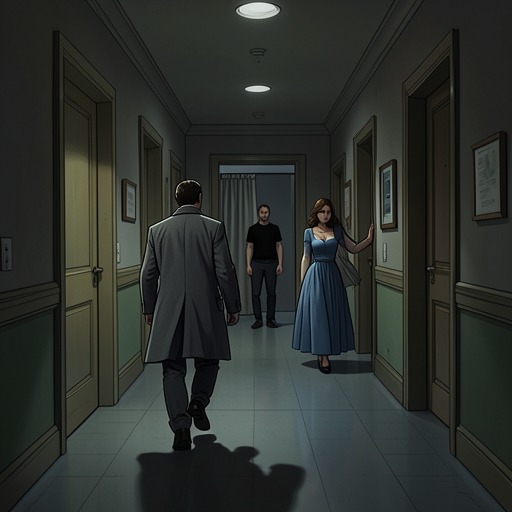
Hideo learns that Kei stabbed herself in the chest seven times on the night he brusquely turned her away from his apartment. In their later confrontation, she presses close and threatens to drag him down with her; her hatred feels so forceful that he is physically driven backward. Remembering Kei’s earlier plea that he stop visiting his parents in Asakusa lest those visits kill him, Hideo wonders whether what had seemed like love was actually hatred.
Kei explains that she cannot drain his life. By the time Hideo left his apartment, she says, his heart was no longer with her, despite his words about staying together. Hideo had not consciously recognized this separation, but her explanation rings true to him. He realizes that a ghost cannot take his life unless he loves it from the heart.
What the condition does—and does not—mean
Kei’s threat and its failure distinguish a ghost’s hostility from its ability to drain life. She says she will leave without taking Hideo’s life, not because she cares for him, but because she cannot take it. The limit therefore does not depend on her goodwill: in this encounter, Hideo’s emotional withdrawal is what prevents the loss of his life. He nevertheless feels dizzy after the confrontation, and the episode offers no fuller account of how the supernatural law operates beyond the condition Kei identifies.
The scene also complicates Hideo’s understanding of their relationship. He had regretted turning Kei away and had worried, on a rainy night, that she might kill herself, though he did not believe she would. Her account retrospectively links that rupture to the distance between what he said and where his feelings had gone. The rule is disclosed not as an abstract doctrine but as the explanation for why a threatening ghost cannot carry out her threat.
Contrast with Hideo’s parents
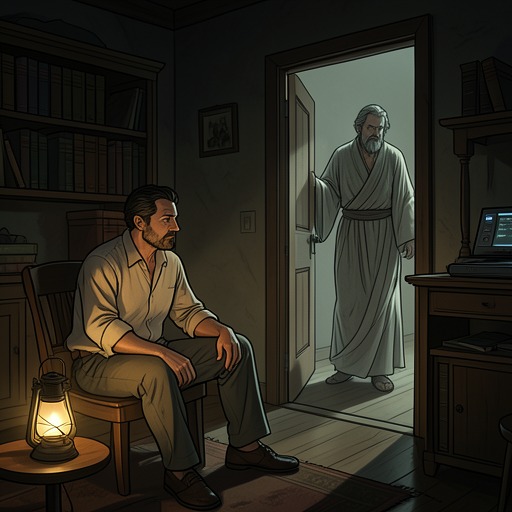
Hideo’s encounters with his parents in Asakusa provide a different image of attachment across the boundary of death. He accepts the possibility that the visits are hallucinations, yet chooses the comfort they bring; he imagines that his returned parents may exist only during the time he is with them, as if he alone can breathe life into them. That belief expresses his emotional investment, but the evidence does not identify his parents as draining his life or establish that their appearances follow Kei’s rule.
At a later farewell, Hideo watches his mother become transparent and his father fade, and understands that he cannot stop their departure. He gathers the two pairs of chopsticks they used at their last meal and wraps them carefully in a handkerchief. The contrast matters: with Kei, emotional attachment is described as a condition that makes life-draining possible; with his parents, attachment persists through loss and the keepsake he carries. The story thus presents the bond with the dead as both a source of vulnerability and a continuing form of remembrance.