Hideo and Shigeki’s estrangement
Strangers (Taichi Yamada Edition)Hideo and Shigeki’s estrangement is a father-son rupture shaped by divorce, silence, and Hideo’s decision to stop seeking his son’s affection. For a time, Hideo treats that distance as something he should accept; later, the parental love he receives from his own parents makes him reconsider what he might still offer Shigeki. His effort to reconnect is real but tentative, and the evidence leaves its success unresolved.
Origins of the Estrangement
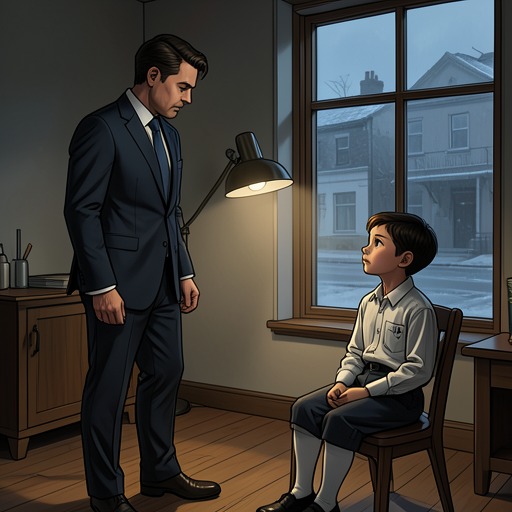
The fracture becomes acute around the time Hideo and Shigeki’s mother begin discussing divorce. Shigeki turns almost completely away from his father and sides with his mother. When Hideo speaks to him, Shigeki ignores him; with his mother, he continues to talk easily and familiarly. The contrast makes the estrangement visible in ordinary conversation: Hideo is not simply separated from his son by the impending divorce, but excluded from the easy exchange that remains between mother and child.
Hideo understands the practical and emotional circumstances behind Shigeki’s choice. He expects that after the divorce the nineteen-year-old will live with his mother, and says he cannot fault him for aligning himself with the parent who will remain his daily companion. That understanding, however, does not restore their relationship. Hideo reasons that if Shigeki’s hostility toward him helps him become a better son to his mother, then Hideo should let him hate his father. He converts the pain of rejection into a decision to abandon efforts to win Shigeki’s affection, and, in effect, to try to forget him.
A Question Hideo Had Avoided
The distance is brought into conversation when Mamiya asks whether Hideo should be seeing more of his son. The question catches Hideo off guard: he has not expected Mamiya to raise the subject, and initially cannot understand why his friend is concerned. Mamiya cautiously proposes establishing rules, such as seeing Shigeki once a month, while stressing that the suggestion is his own and not the mother’s. His earnestness, and the color rising in his cheeks as he explains himself, show that this is not a casual remark.
Hideo resists the idea of turning contact into a scheduled obligation. He points out that Shigeki is nineteen, not a child in junior high who needs adults to arrange visits, and says his son is perfectly capable of coming by when he wants. Mamiya then shifts the question from what Shigeki should be made to do to what Hideo himself might want: surely there are times when Hideo would like to see him. Hideo admits that there may be, but imagines how unwelcome a compulsory monthly dinner with his father would have felt when he was nineteen. Mamiya appears to understand the objection. Their exchange exposes the tension at the center of Hideo’s position: he recognizes a desire for contact, yet treats pressure or obligation as a reason not to pursue it.
Parental Love and a Change of Resolve
After spending time with his own parents, Hideo reflects on the reserve with which they treat him. They say what they like, but do not hint that they want to visit him; Hideo feels saddened and somewhat guilty that he has taken advantage of their restraint without inviting them. He also senses a boundary between illusion and reality that should not be crossed. It is in this unsettled state that Shigeki comes back to his mind.
Hideo’s recollection marks a change in emphasis, not a claim that the estrangement has already ended. He wonders whether Shigeki may have learned of his mother’s relationship with Mamiya and, despite being a college sophomore, might now feel a need for a father’s love. Hideo connects that possibility to his own experience: having begun to revel in the love of his parents, he thinks he could repay them by offering Shigeki the same kind of care. The movement is striking because Hideo had previously chosen to forget his son; now he considers that the distance may conceal a need he should answer.
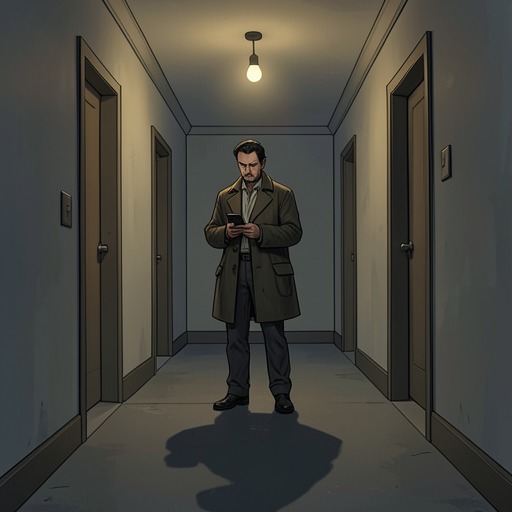
He asks the cabdriver to take him to a hotel in Akasaka rather than home. Staying there will let him avoid lying to Kei for at least that night, while making room for a direct approach to Shigeki. Hideo plans to call and invite him to lunch the following day and to give him some extra spending money. Even as he makes the plan, he is unsure how his son will receive such an unexpected overture. The invitation and money are intentions, not evidence that the meeting takes place.
The Limits of the Attempt
Hideo’s renewed concern also emerges in a call with Shigeki’s mother, when he asks whether she intends to marry Mamiya. She says the matter is none of his business. Hideo answers that Shigeki is his son too and that he has a right to care about the effect the marriage might have on him. Her response turns the discussion back on Hideo: why is he suddenly so concerned when he never paid Shigeki the least attention before?
Hideo explains that he called because he wanted to see his son, but the exchange does not establish that he reaches Shigeki or that his son accepts the invitation. Shigeki’s mother ends the call, saying that talking to Hideo makes her sick. The rebuke places his new resolve beside the history that undermines it: concern has surfaced, but from her perspective it arrives after a long failure of attention. The relationship remains suspended between Hideo’s wish to offer paternal love and the consequences of having withdrawn from his son. His change of heart opens a possibility of reconnection without confirming that either Shigeki or his mother is ready to meet him there.