
The Human Cost of the Camp
StrikeThe camp’s coercive routines expose how the Retros turn survival necessities, anonymity, and punishment into instruments of control.
increasing Bearing strength in each event
 decreasing
Bearing strength in each eventdecreasingOne Mistake Allowed
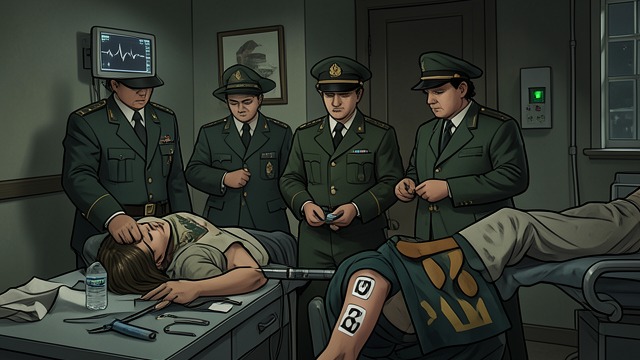
One Mistake Allowed
Speech punished
Tucker speaks after being assigned a number and is struck with an energy charge. The medical official permits only one mistake before threatening worse consequences.
Care without compassion
The same institution repairs Tucker’s body and denies his personhood. Treatment becomes a way to maintain labor capacity rather than an expression of concern.
Work Until Release

Work Until Release
Physical exhaustion
Tucker digs foundations and carries earth under the desert sun. Water is scarce, and the workday ends only when the supervisor decides the task is complete.
Healing sustains exploitation
A shower appears to contain medicine that repairs blisters. The treatment allows workers to return to labor quickly, reinforcing the camp’s instrumental use of medical care.
The Rules of Silence
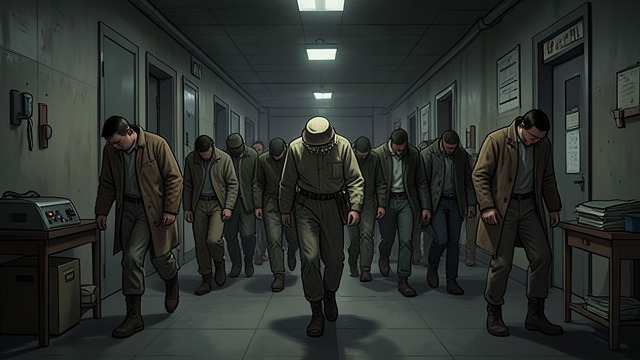
The Rules of Silence
Routine removes choice
Prisoners eat on a strict schedule, receive no second portions, and move when their unit moves. Their numbers replace names in daily administration.
A system made to feel ordinary
The efficient routine makes domination appear procedural rather than violent. Tucker recognizes that control is reinforced not only through weapons but through repeated denial of personal choice.
Punishment Through Display
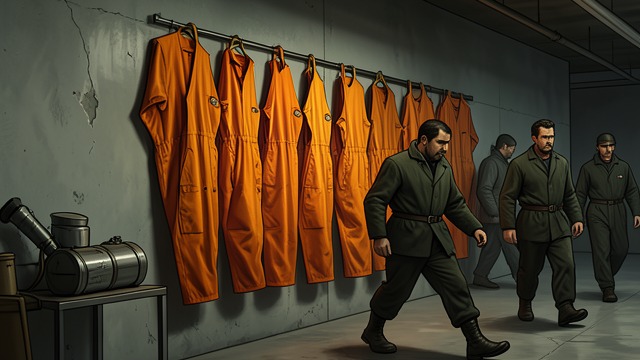
Punishment Through Display
Empty uniforms as warning
The camp displays the escapees’ orange coveralls in a line after the bus is destroyed. Prisoners are marched past the empty clothing as a public memorial and threat.
Hope targeted directly
Bova’s punishment aims to convince workers that resistance is futile. Instead, the spectacle also reveals how much courage the escapees showed and how much grief the prisoners continue to share.
Workers Turn on Their Captor
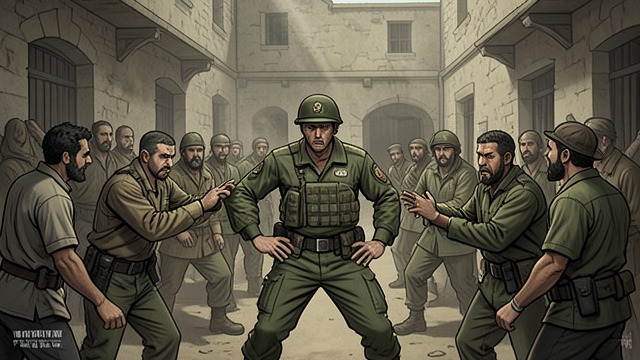
Workers Turn on Their Captor
Bova attempts escape
After Tucker finds Bova hiding with stolen valuables, the camp commander escapes through a window on a motorcycle. The prisoners recognize him as the person who has tormented them.
Collective action reverses the hierarchy
Workers block his routes and surround him. They seize the commander who had used numbers and force to control them, briefly turning the camp’s power structure upside down.
In Tucker’s first moments in the infirmary
The first full labor day
At meals and during the day in the camp
The morning after the failed bus escape
During SYLO’s final assault on the camp
