
Digital Life and Divergence
Systema Delenda EstThe novel follows the ethical and emotional consequences of copying, digitization, reconciliation, and voluntary postbiological existence.
increasing Bearing strength in each event
 decreasing
Bearing strength in each eventdecreasingThe Problem of Copies
The Problem of Copies
One Mind in Many Bodies
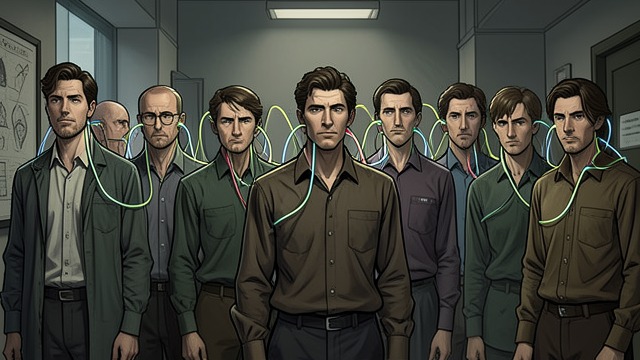
Cato treats his Warframes as versions of himself connected through microwave glands and reconciliation. The arrangement is efficient but never emotionally simple.
Divergence Risk
He knows that delayed communication can produce desynchronization madness and incompatible personalities. His backups remain dormant because independence can become a form of psychological drift.
Moral Status
Cato insists that every active variant is a complete person. This principle prevents him from treating his own instances as disposable equipment.
The Sisters’ Deep-Time Immersion
The Sisters’ Deep-Time Immersion
A Simulated Community
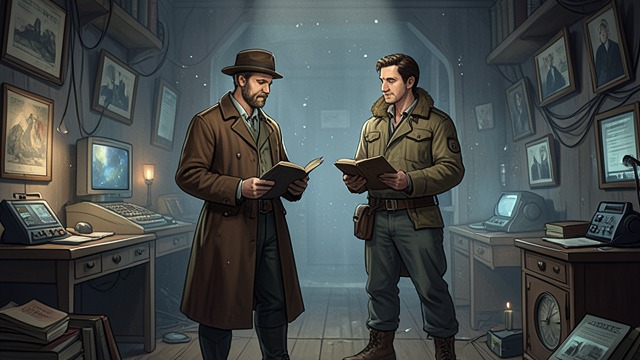
Raine and Leese spend subjective years in a detailed Ikent simulation, adopting alternate identities and exploring lives outside combat. The immersion gives them experience the System never allowed.
The Return Shock
When they return to System life, the physical world feels false and paused. The experience reveals how deeply context shapes identity and how difficult it is to move between realities.
A New Standard
Their immersion becomes evidence that postbiological existence can offer more than pleasure. It can provide education, culture, experimentation, and a deliberate way to recover from System conditioning.
Mass Digitization as Rescue
Mass Digitization as Rescue
An Unacceptable Choice
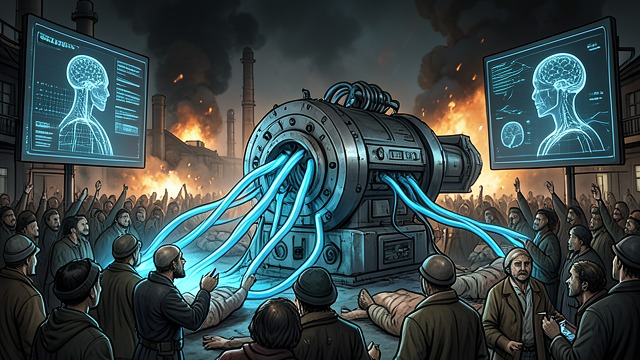
Cato faces the destruction of Gyvestral and cannot evacuate millions through ordinary bodies and portals. He deploys mindrippers despite believing that forced digitization violates personal autonomy.
Sixteen Million Saved
The operation preserves over sixteen million minds, including the planetary Interface. Their bodies and world are lost, but their continuity survives in protected digital environments.
A Moral Wound
Cato regards the rescue as necessary but horrifying. The System’s exterminatus forces him to violate the very agency he claims to defend.
Elysiums as Temptation
Elysiums as Temptation
A Perfect Escape
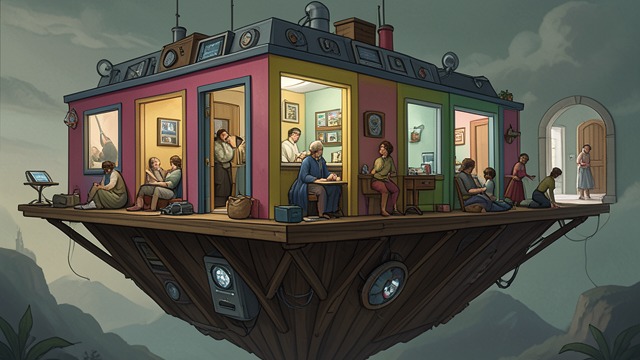
Cato offers Alums and former deities Elysiums designed around their desires. These worlds can provide endless adventure, learning, relaxation, and social contact without the System’s violence.
The Behavioral Sink
The same personalization that makes Elysiums attractive can eliminate the need to leave. Cato worries that the most successful refuge could become another cage disguised as freedom.
Voluntary Immersion
The ethical distinction rests on choice. Unlike the System, an Elysium allows exit, modification, and independent ownership, even if many residents may never want to exercise those rights.
Mii-Es’ Rebirth
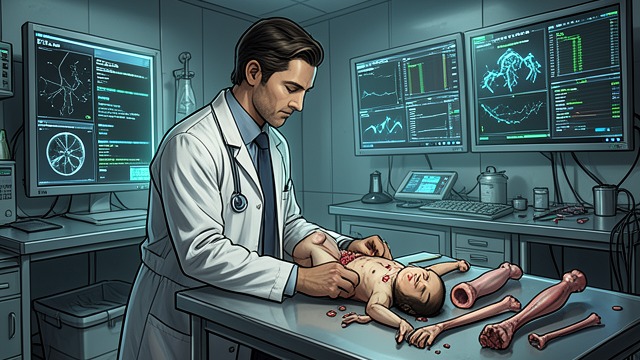
Mii-Es’ Rebirth
Recovering a Lost People
Cato reconstructs Mesh-ia infants from fragments of biology and Mii-Es’ genetic information. The project gives a vanished species a possible future.
The Split Self
Mii-Es leaves one version of herself in the System while another becomes digital and raises the infants. The choice preserves both her political role and her personal longing.
Home as Construction
The habitat recreates a lost environment rather than restoring the original planet. Mii-Es discovers that belonging can be rebuilt through care, memory, and daily life.
Cato’s first months on the lunar base
During the years after reaching Uriva
During Gyvestral’s exterminatus
After the frontier collapses
Late in the reconstruction period
