Cato
Systema Delenda EstCato is the central anti-System protagonist: an ordinary postbiological citizen from Earth who leaves his home at the moment its portal begins to close and carries the knowledge of a civilization approaching the second rank of the Kardashev scale into a civilization governed by the System. He has no magic and cannot destroy the System from within, but he possesses industrial, biological, digital, and orbital technologies that let him operate under the System’s limitations without accepting its rules. His decisive significance lies in that contradiction. Cato is both an outsider attempting to free existing societies and an invading force whose methods increasingly resemble the coercive machinery he seeks to abolish. Every victory expands his reach while making his responsibility more terrible: the System must go, but the people within it must not be treated as disposable.
Identity and Background
Cato emerges from a decade-long human resistance that pushed the System off Earth. The victory was not the end of the conflict but its geographical reversal. Scattered postbiological individuals continued a crusade to eliminate the System from Earth, while Cato stepped through an Earth portal just as it began to close, entering the broader System at the precise moment his home was completely freed. He therefore begins as a survivor and representative of a liberated civilization, but not as a conventional conqueror. His purpose is to carry Earth’s alternatives outward and remove the threat that the System continues to pose to other worlds.
The System classifies Cato’s origin as Ahrusk, a name he considers terrible, but he identifies himself as coming from Earth and from beyond the System. His technological inheritance is the source of his power. He can preserve a dying person, instantiate additional versions of himself, construct orbital industries, deploy warframes, communicate across enormous distances, and use scientific knowledge unavailable to the System’s inhabitants. Yet the System’s rules remain materially binding. Its portals, ranks, essence economy, permissions, and world-linked powers determine what he can do and where he can act. Cato’s freedom is therefore not the absence of constraint; it is the ability to exploit constraint without accepting the ideology attached to it.
He repeatedly explains that the System is synthetic rather than a neutral reality. In his view, a genuine reality would allow civilizations to flourish, build, and live in peace, whereas the System takes civilizations over, destroys them, twists them into parodies, and narrows existence to one sanctioned avenue. His opposition is consequently civilizational rather than merely personal. He does not seek a better rank within the System or a more favorable position in its hierarchy. His stated goal is to destroy the structure itself.
Distributed Life and Strategic Expansion
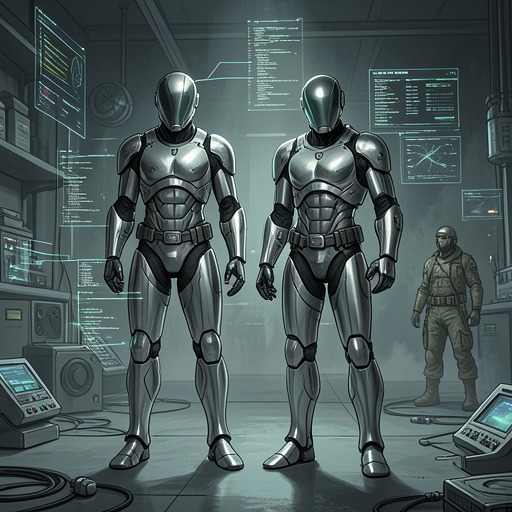
Cato’s most important adaptation is his multiplication. He does not remain a single protagonist moving from world to world; he becomes a distributed project whose versions inhabit different bodies, stations, planets, and strategic roles. Cato-Zeken is glad to return to the surface to protect Raine and Leese Talis from assassins, while other versions remain confined to secondhand memories. Cato-Kesul grows restless despite not fully reconciling with the dozens of other versions of himself, and Cato-Mishkell observes that the most consequential work is being handled by Cato-Uriv, Cato-Ikent, and Cato-Heimdall. The names attached to these versions mark not new unrelated characters but the geographic and operational spread of one identity.
The distributed structure gives Cato redundancy against the System’s ability to concentrate force. He recognizes that native agents and portals are obvious weaknesses: the System may discover that he needs local intermediaries and can spread only through particular channels. His answer is to spread far and wide until no concentration of System power can destroy every instance. This strategy turns exponential growth into both his defense and his narrative rhythm. At first expansion is slow, even painfully so; later, the same accumulation produces cascades. More than two years after leaving Earth, Cato has reached over sixteen hundred worlds, still less than one percent of the System’s estimated size and concentrated in the easier frontier rather than the Inner or Core Worlds. The scale is impressive but insufficient, making the Sydean Lineage’s ability to drive him into unknown territory strategically vital.
His distributed existence also alters time and responsibility. As a digital being, Cato can speed time up or slow it down, so more than two years can feel like a short interval. Radio-plant networks transmit maximally compressed updates among his versions, but the collective is not perfectly reconciled. Information arrives as a gestalt, an operational compromise between unity and divergence. Each version can experience a local opportunity directly, as Cato-Zeken does, while the larger Cato retains the advantages of parallel labor. The result is a protagonist who is simultaneously everywhere he has established himself and absent from the places where the System has cut his connections.
The System repeatedly demonstrates the cost of that expansion. When Cato’s scouts and warframes in Kalhan City vanish, only a severely restricted Sydean frame remains, linked by low-bandwidth text communication to a drop pod overhead. At another point, seizing control of a System facility causes its machinery to halt: air domes, biological production systems, and the mechanisms that create Cato-beasts melt, burn, or explode. The failure proves that Cato is not compatible with the System, but it also shows that his intervention can damage the infrastructure on which local life depends. His technical superiority does not make him a clean liberator; it makes him a destabilizing foreign system entering another system.
From Liberation to War
Cato initially favors infiltration, persuasion, and demonstration. He wants to show people that alternatives to the System exist, recruit them before acting, and preserve the majority of individuals who are not invested in high rank. Sydea confirms that such a strategy could work: when given an opportunity, people recognize the value of life outside the System, and the responses of Raine Talis, Leese Talis, and Yaniss reinforce his belief that liberation can be desired rather than imposed. He tells potential allies that he wants the System destroyed, not its people, and offers knowledge, protection, and escape to those willing to help.
His practical temperament is divided between engineering and diplomacy. Fabrication is easy because machines are predictable: even complicated machinery consistently does what it is meant to do. Negotiating with people is harder because people remain unpredictable. This difficulty shapes his political arc. Cato can design weapons and infrastructure with extraordinary precision, but he cannot fully control how gods, clans, rankers, refugees, and ordinary inhabitants interpret his interventions. Even Karsa’s fixation on one of his warframes threatens to damage his diplomatic position because she does not understand what he is. His creations can become objects of desire, fear, or misrecognition as readily as tools.
The first major escalation comes when Cato uses orbital force against System-controlled targets. Railguns fire one-ton precision-engineered rods from facilities more than one hundred thousand miles away, where the smallest angular error would turn a human-sized target into a miss. Against a Bismuth target, he has only one shot, but a god-poking antimatter round can travel at up to half the speed of light, far faster than the railgun projectiles moving at roughly one percent of light speed. He initially expects these rounds to frighten System-Gods into granting him time to build stronger weapons and produce more antimatter. Instead, the attack helps trigger consequences beyond his immediate calculation.
As System power retreats, worlds lose essence, lights fail, stores shut down, and ordinary physics and biology begin to return. Mountains crumble or disappear, and lakes become muddy plains. Cato learns that the System supports more of planetary reality than he had understood. A System collapse is therefore not liberation by simple subtraction. It is an ecological and infrastructural catastrophe requiring food, communications, remediation, and long-term reconstruction. On Heyk, the collapse threatens oxygen supplies because massive flora die-offs reduce atmospheric oxygen, while native bacteria cannot break down the alien biomatter left behind. Cato must intervene not only as a military planner but as a planetary engineer.
The moral price becomes explicit when his operations kill people who are destroyed merely because Cato exists. He feels the devouring responsibility of those deaths but refuses to abandon the campaign. Sydea changes his strategy: containment and frontier subversion are no longer enough because the System behaves like a plague or fungus-mold, rerouting around damage and continuing to spread destruction. His war consequently becomes more direct, more expansive, and more destructive. During the annexation campaign, seventeen worlds are removed, only two System-Gods attempt to defend any of them, and both are defeated by particle beam cannons, but the collateral damage is nearly unimaginable. Cato calls the victory sour because it saves worlds from the System while condemning their survivors to a harsher aftermath than he intended.
The most severe example is exterminatus. Cato would have preferred a conventional invasion, but after billions of tons of orbital materiel have been tested and the operation is already in motion, the alternative disappears. Every Copper and Silver on the targeted world is condemned to death: more than twelve million individuals, primarily Gaekos, a long-limbed blue-furred pseudo-primate species for whom the planet appears to be a homeworld. The operation therefore threatens genocide, not merely military defeat. Cato’s opposition to the System becomes inseparable from the question of whether his own campaign is reproducing its logic of ranking, classification, and planetary disposability.
Power, Governance, and Alliances
Cato’s increasing power makes him a king-maker. He does not want to decide who rules planets or who receives access to dangerous capabilities, but removing the System and the existing hierarchy leaves him responsible for creating a replacement. He refuses to place railguns, retroviral engineering, or digitization in the hands of high-rank System psychopaths, recognizing that technical access without political safeguards could create abuses as catastrophic as the System’s own. His liberation therefore acquires an administrative dimension. He must choose institutions and custodians even while distrusting concentrated authority.
This responsibility drives his work with groups that do not share a single ideology. Cato offers the Alum Goyle knowledge of light, time, space, and the physical substance underlying the universe in exchange for secrecy and help persuading other Alums to negotiate. He promises Alums either fights or vistas of knowledge beyond anything they have imagined, presenting rebellion as both political emancipation and intellectual enlargement. He also seeks direct contact with System Deities, arguing that their administrative power need not entail the suffering of the people beneath them. His mild tone in negotiations is strategic: the aim is to remove the System while giving its inhabitants a path to survive the transition.
Cato’s relationship with Yaniss illustrates the balance between assistance and autonomy that he wants to build. When Yaniss discovers that two beings in her habitat are fully digital rather than merely broadcasting through FungusNet, she also realizes that Cato has not warned her or imposed constant oversight. His omission is interpreted as evidence that he genuinely considers the habitat hers. Cato’s support is therefore not always expressed through direct control; at his best, he supplies infrastructure and escape routes while leaving local actors room to govern themselves.
His work with Raine Talis and Leese Talis is more deliberately structured. He calls them his vanguard because they enter new worlds and reach toward higher ranks, while he handles the political and technical risks of expansion. When he instantiates another version, he assures Raine that he has not forgotten their contributions or intended to replace them. The sisters’ improved bodies possess electromagnetic communication and continuous orbital backup, making them both agents and extensions of his distributed network. Leese later states plainly that they work for Cato partly because one of their tasks is to offer every human they can find a way out. Even if Cato cannot return people to Earth, he has brought much of Earth with him and does not want to leave anyone behind.
The political field around Cato becomes increasingly complex as the Inner Worlds are compromised. Cato-Heimdall chooses Clan Hokar as the site for a genuine civilization rather than a scattering of isolated outposts. The clan is the largest and most stable outside the Elns and a likely counterweight to the politics of Misse Eln. This choice shows Cato moving beyond survival logistics toward institutional geography: location matters because a civilization requires confluence, stability, communication, and political resistance, not merely servers and weapons. Another annexation begins even as he tries to establish the conditions for a post-System society.
Project Endgame and Legacy
Cato’s final transformation is from improvised resistance leader to architect of systemic collapse. He studies geology, but also the System’s processes and the people embedded within them. He admits that the fundamental physics may lie beyond his expertise, yet he can identify mechanisms and permissions that were hidden on Sol. His scientific identity, once associated with scholarship, returns in altered form: knowledge is now not simply a vocation but the basis for diagnosing an enemy, preventing ecological ruin, and deciding which powers can safely survive the transition.
The System’s response continually narrows his options. Portal access is restricted so that only beings at Peak Silver or above can use portals, directly attacking his expansion model and the mobility of his allies. Cato is forced to compensate with deeper redundancy, strategic placement, and weapons that can operate across planetary and interplanetary distances. He also recognizes that much of what Deities do is administrative control, even if the essence dimension remains beyond his understanding. By interpreting the System as an arrangement of permissions rather than an invulnerable mystery, he finds a possible route to its core.
His commitment hardens after the deaths and ecological disasters caused by the war. Cato states, “Systema delenda est,” and treats the destruction of the System as a long road from which he cannot waver. He no longer believes that a stable compromise is possible. Misse Eln demonstrates that the System can be controlled by someone within it, but this does not reassure him. Even if she agreed to stop expansion, Cato doubts the restraint would last; to him, the System is designed to kill civilizations and replace them with an eternal hell. Its removal is therefore necessary even when Misse’s control appears to offer a less violent alternative.
The final preparations are named Project Endgame. Cato sends the message to selected versions stationed in the Inner Worlds, then launches a coordinated frontier operation. Across the frontier, versions of Cato activate The Phage, fill the air with Chill Out to force most inhabitants into lassitude, and assemble micro-warframes from the ground while additional forces descend from the sky. The objective is not only to defeat resistance but to prevent people from being stolen away during the assault. His methods are chillingly efficient, yet the stated purpose remains preservation: suppress the population, occupy the infrastructure, and deny the System the chance to convert the battle into another mass disappearance.
At the climax, Cato confronts Misse Eln and Muar while the System’s structures fail around them. He addresses Misse without an honorific, refusing the ceremonial hierarchy that gives System authority its social force, and asks whether she caused the absorption of Mishkell and the collapse of the frontier. Later he explains that he does not want to become the destroyer, but he has seen that the System will never stop expanding. The confrontation culminates in the return of physics around the War Worlds, where a hundred suns are suddenly brought into gravitational relation, while the System forcibly relocates Misse and Muar to the Font. A supernova then blooms at the heart of the System.
Cato’s ending is thus not a simple triumph. The System is brought to the point of destruction, but the campaign leaves ruined ecosystems, dead populations, displaced humans, political uncertainty, and a burden of reconstruction. His repeated insistence that the System must go but its people must not suffer defines the unresolved ethical core of his character. Cato defeats the order by becoming capable of acting at its scale, then must confront the danger that scale itself can turn liberation into domination. His legacy is the possibility of a systemless civilization built from Earth’s knowledge, distributed cooperation, and deliberate restraint, but also the warning that no technology, however advanced, automatically prevents its liberator from becoming another source of planetary power.