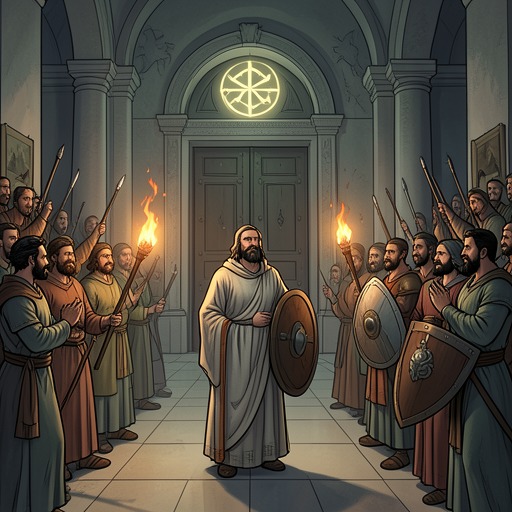
Cato–Raine and Leese alliance
Systema Delenda EstCato–Raine and Leese alliance is one of the central working relationships in the campaign against the System. Cato supplies the sisters with biological modifications, combat algorithms, movement Skills, communication tools, estates, and access to knowledge that let them operate beyond the limits imposed on ordinary System inhabitants. In return, Raine and Leese become more than powerful auxiliaries. They open worlds for Cato, test the consequences of his methods, help plan his expansion, and serve as the practical and ethical audience before whom he must explain why liberation may require war.
Identity and Foundation
Raine and Leese begin this phase of their relationship with Cato as Sydean sisters whose abilities have been radically enhanced by his intervention. Their advantage is not merely numerical. Cato’s gifts make the Ascension Trial legible to them: combat algorithms expose the logic of each encounter, while modified biology allows them to withstand dangers that would normally make repeated advancement nearly suicidal. During the Platinum Rank Trial, Raine and Leese defeat separate guardians—Raine cutting through a massive stone golem amid spikes and flechettes, while Leese clears a swarm of amphibians—and suffer only minor glancing injuries because Cato has made the trial easier than it was designed to be.
Their dependence on Cato does not erase their judgment. With Yaniss’s advice, they understand that the Skill chosen at ascension will shape not only their tactics but also their disposition. Offensive Skills would encourage endless combat, defensive Skills would presume something specific to protect, and sensory Skills could make them esoteric and detached. They therefore choose movement Skills, which accord with their existing impulse to travel and explore. Cato’s support helps them raise those Skills to S-tier, culminating in Raine selecting Khuroon’s Fiery Stride as her Ascension Cornerstone. The choice shows the alliance at its best: Cato provides exceptional means, while the sisters retain responsibility for deciding what kind of beings those means will make them.
Patronage and Operational Partnership
The sisters’ ascension changes their position within Cato’s larger project. Once they return with their estates, they immediately report to him and prepare to travel toward the Core Worlds. Their conversation also reveals the unusual structure of Cato’s identity: the version speaking with them feels continuous and familiar, yet each Cato associated with a world is a separate person rather than one consciousness stretched across the entire System. Even so, the relationship remains emotionally coherent. Raine and Leese treat him as the same patron and ally, while Cato monitors their progress across an expanding network of parallel operations.
Their work is explicitly connected to Cato’s industrial and military expansion. Exponential growth has allowed him to spread across hundreds of worlds, establishing factories, mines, refineries, solar arrays, and locally produced armies. Because forces cannot be moved through portals in meaningful numbers, each world must become its own manufacturing and military base. Raine and Leese function as the forward edge of that strategy: their role is to move ahead of Cato’s great works and open new worlds for liberation, while his industrial infrastructure turns those openings into durable power.
The arrangement is not without danger. System authorities recognize that Cato’s creatures are only Copper Rank and consider portal minimum thresholds as a way to cripple him. That calculation reveals both the sisters’ vulnerability and the ingenuity of Cato’s patronage: their actual effectiveness comes from advantages that exceed their official rank, including modified bodies, superior combat cognition, and carefully chosen Skills. Their alliance is therefore partly a contest over whether System categories can still define what Raine and Leese are capable of doing.
Trust, Accountability, and Moral Conflict
The sisters are among the few people who can challenge Cato without treating him as an untouchable deity. Raine asks what will happen when other humans stand between him and the System’s destruction. Cato admits that he has always known this confrontation was possible. He hopes that enough pressure will persuade defenders to stop fighting, but he also states that if armed humans continue to obstruct the removal of an entity that regularly destroys entire planets, he will have to go through them.
Raine’s questioning is not a rejection of the alliance. It is a test of whether Cato can sustain his stated purpose when liberation becomes indistinguishable from conquest to those caught in the path of his weapons. He accepts that they may need to oppose him if his methods lose their justification, while they require confidence that he will not abandon the campaign at a decisive moment. Their relationship thus supplies a feedback mechanism unavailable to Cato’s armies and machines: Raine and Leese do not merely receive orders, but force him to articulate the difference between fighting the System and fighting the people trapped within it.
Cato’s actions make that distinction increasingly difficult. He severs almost twenty worlds from the System after discovering that merely shutting down a planet does not prevent annexation; he must fight the portals, draw away defending forces, and invade the surrounding area. Raine is disturbed by the scale and casualness of the operation, recognizing that the patron who once seemed to offer protection can now invade a score of planets as part of a single strategic response. Cato sounds exhausted when he justifies the decision, arguing that if he is not there to save worlds exploited by the System, his presence has no purpose. His alliance with the sisters therefore becomes a measure of whether his ideals can survive his expanding capacity for force.
The Diplomacy Project and Renewed Purpose
After the sisters experience a period of discouragement, Cato visits them directly and refuses to let them disappear into retirement aestivation. He offers a choice between moving to the frontier and beginning again on a selected planet, or taking charge of a diplomacy project on Uriva. The second proposal gives them responsibility for a rotating habitat intended to help chosen Urivans adapt to life outside the System and to demonstrate that Cato can honor the agreements he makes.
The project is strategically important because Cato hopes to win Initik and perhaps other System-Gods to his side. Raine and Leese would serve as liaisons, working with the Urivans and with members of the Warden’s Claw, the group they had previously encountered. Their familiarity with those people makes the assignment possible, while their own experience of transition gives them authority that a purely technical administrator would lack. Raine sees that the project could matter more than preparations on many other worlds: even a small number of World Deities joining Cato could alter the entire campaign.
Leese accepts on the condition that they can remain Sydean rather than change themselves again. Cato agrees, emphasizing that this is no longer subterfuge, and promises safeguards in case Initik attempts to pull the environment back into the System. That assurance carries the memory of their earlier entrapment and shows that Cato’s patronage has become more careful. He no longer treats their safety as an incidental cost of a larger plan; he builds contingency measures around their autonomy.
The assignment restores purpose to Raine and Leese. Cato supplies databases and promises to let them control the habitat’s specific design once his factories arrive, while Leese solemnly accepts the responsibility and Raine silently weighs it. They understand that Cato’s tools are powerful and that life outside the System presents almost infinite decisions. Success will depend on their judgment, and Initik’s cooperation may depend on their success. Their alliance therefore advances from protected service into delegated leadership.
Strategic and Narrative Significance
Cato explicitly needs Raine and Leese not only as allies and helpers but as a check and sounding board. They are the people to whom he is most accountable, both as individuals and as representatives of ideals he is trying to preserve. Their continued faith matters because they have witnessed the System’s restrictions, Cato’s interventions, and the widening violence of the campaign without abandoning their own judgment.
The relationship also embodies the book’s contrast between System-shaped existence and deliberate freedom. The System reduces advancement to ranks, Skills, portals, and rewards; Cato gives the sisters tools that let them exceed those categories, but he cannot decide their values for them. Their movement-based ascension, their refusal to surrender their Sydean identity, and their choice to administer a habitat rather than retire all show agency operating within, and gradually beyond, inherited structures.
By the time Cato recommits himself to destroying the System, Raine and Leese are already working beside him: one running simulations and strategies, the other using bioengineering tools. Their presence turns the declaration into more than a solitary ideological commitment. Cato’s industrial base, orbital weapons, and distributed incarnations may provide scale, but the sisters provide interpretation, criticism, and a continuing reason to preserve people rather than merely defeat an enemy. The alliance is consequently both an engine of the liberation campaign and one of the narrative safeguards against Cato becoming another totalizing power.