Fern War
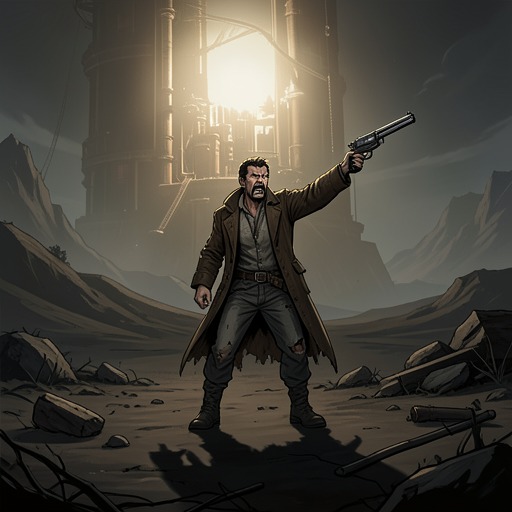
Systema Delenda EstThe Fern War is the name given to the multi-world conflict that follows Dyen’s betrayal of Cato’s FernNet network. What begins with a single intelligence sale becomes a crisis spanning the Inner Worlds and the frontier: Cato’s hidden influence is exposed, his biological infrastructure is hunted and destroyed, and the System responds by deploying Azoth elites and condemning compromised worlds. The event is decisive because it converts Cato’s quiet, distributed resistance into an openly recognized strategic threat while demonstrating that the System’s preferred answer to uncertainty is planetary extermination.
Causes and Background
Dyen initiates the crisis after entering the Assassin’s Guild information brokerage and, for the first time, placing information on the market. He pays for the strongest available anonymity, lists as many Tornok-Clan planets as he knows, and identifies the ferns Cato uses for communication. His warning is not merely an accusation: he supplies a memory crystal showing Raine and Leese planting some of the organisms years earlier. The evidence gives Cato’s enemies a way to identify the plants as deliberate infrastructure rather than harmless anomalies.
The FernNet plants are small, resilient organisms distributed across dozens, perhaps hundreds, of worlds. They appear innocuous and are only slightly tougher than ordinary plants, but their real significance is infrastructural: they mark the reach of Cato’s influence and allow communication across his expanding network. Dyen understands that the plants will give the gods and other Azoths a trail to follow. He has not seen any on Tornok itself, but he knows where some are located and can move them, making the disclosure more dangerous precisely because the network is dispersed rather than concentrated in a single vulnerable installation.
The immediate strategic context is already tense. Cato has returned to coordinating the Sydean Lineage and is accelerating activity on worlds where political developments may force him to act sooner than planned. Because travel through the Inner Worlds can take weeks or months, he orders additional Cato-spears to be launched toward selected targets, accepting the extra mass in exchange for shortening the industrial timetable by several months. His resistance therefore depends on preparation, parallel action, and growth that may be slow at first but becomes formidable once enough worlds are connected.
Cato detects the danger through large-scale surveillance and algorithms that compare patterns across the enormous number of worlds under observation. A statistical anomaly appears in the movement of high-ranking System personnel near the Tornok-Clan nexus leading to the Inner Worlds. The signal is initially ambiguous; with nearly half a million worlds to monitor, unusual movement is common. The decisive warning is the near-simultaneous disappearance of more than a hundred FernNet nodes. Since the plants normally lose about one percent of their population each year through ordinary ecological attrition, the sudden bulk die-off can mean only that they have been deliberately produced and targeted.
Exposure and Biological Countermeasures
Cato responds first as an engineer attempting to contain a breach. Versions of himself on more than a hundred worlds scramble to trigger the plants’ self-destruct systems. Every organism he designs outside the carefully integrated ecosystem carries built-in kill codes, but destroying the plants alone would leave evidence behind. Unlike Cato’s warframes, the ferns cannot simply dissolve into undifferentiated material, so Cato, Raine, and Leese deploy antagonist organisms engineered to break down the exposed remains.
This response mitigates additional damage but cannot restore secrecy. More than thirty worlds, beginning with Tornok in the Inner Worlds and extending outward into the frontier in a broad fan, have already been compromised. The campaign’s geography matters: the Fern War is not a siege around one capital or one portal, but a widening pattern of exposure that follows biological traces through a distributed political and industrial network. The question becomes whether the System will treat each compromised world as a local problem or use the discovery to justify exterminatus.
The crisis also exposes the unusual character of Cato’s power. His communications infrastructure is biological, mobile, and embedded in ordinary ecologies rather than visibly technological. That makes FernNet difficult to detect during normal operation, but once the System understands what to look for, its apparent harmlessness becomes a liability. The plants function simultaneously as communication devices, territorial markers, and evidence of Cato’s presence. Their destruction therefore attacks not only information flow but also the material signs by which his enemies map his expanding sphere.
The Multi-World Battles
The System’s response combines investigation with direct force. In Misse’s war room, assembled gods watch battles across a score of worlds through a vast wall of scry-views. Some views show ground-level sparks and distant fireballs; others follow the dark craft accompanying Azoth elites through space. No individual Cato creation appears especially impressive, yet their number and simultaneous deployment make them strategically significant. The war’s scale transforms modest machines and organisms into a system-wide threat.
On each targeted world, between fifteen and twenty Azoths launch into the atmosphere and continue beyond the boundary Cato has established as the edge of System Space. Their movement Skills allow them to reach speeds of Mach twenty or more, so the high-ranking System forces clear the boundary almost immediately. Their presence changes the balance of the conflict. Misse judges that as long as Azoths remain on the surface, Cato has little ability to act against them, even though his forces can create vast quantities of material and powerful artifacts.
Raine has prepared for the possibility that the response will become a space battle. Thousands of fighters emerge from the deep black, powered by oversized fusion engines and carrying minimal command hardware together with single-shot antimatter bullets. Different worlds and Lineages use different variants, reflecting divergent preferences among versions of Raine, but the common purpose is to force the Azoths to fight on more than one plane. Raine sends fighters that have exhausted their ammunition on suicide runs against the nearest Azoth, using the attacks as distractions while Cato begins de-orbiting prepared matériel.
The first major strike occurs simultaneously against Azoth forces scattered through space. Enormous plumes of water, fragments of earth, metal spears, and sharpened thorns erupt at extreme velocity and continue beyond the System bubbles surrounding the attackers. Once the projectiles enter base reality, their special properties matter less than their mass; the Fern War repeatedly turns industrial material into ammunition. The impactors tear through craft, sometimes triggering uncontrolled fusion explosions when they shatter the right engine components. Antimatter detonations from Raine’s fighters add a second layer of pressure, preventing the Azoths from ignoring the orbital screen.
Cato remains aware of comparable silent engagements on other worlds. Although the versions of Raine have diverged substantially, their shared interest in fighter craft has led many of them to maintain similar orbital fleets. Cato orders other versions of himself to commit those forces wherever spacefaring elites are present. The conflict therefore acquires a genuinely distributed command structure: separate Catos, Raines, and Leeses make local decisions while coordinating through shared information and parallelized action.
System Judgment and Sacrifice
Misse interprets the pattern as deliberate engineering. Every verified world containing Cato’s ferns belongs to the Tornoks, a mortal clan subsidiary of the Eln. She treats that concentration as proof that someone has been dealing with Cato, while also using the situation to shape the political narrative before the watching gods. Her suspicion reaches beyond Cato and the Lundt Clan toward the coalition of independent gods, suggesting that the Fern War is also an accusation within the System’s divine politics.
Misse has known about the threat for weeks but has delayed decisive action while arranging for elites to confront it first. She argues that harsher measures remain available and that the delay of a few hours will not necessarily imperil other worlds. Her intervention is therefore double-edged: she presents herself as acting cautiously for the sake of defense, but she has also engineered the conditions under which the System can learn how useful its Azoths are against Cato’s methods.
The result is an experiment conducted on inhabited worlds. Misse concludes that the Azoths provide a meaningful defense against an incursion, particularly when the threat is detected early, and then declares the affected worlds condemned. Their destruction becomes a necessary sacrifice in her public account, justified as the price of understanding and combating an interloper from outside the System. She presents the decision as proof of Eln loyalty and as evidence that the campaign against Cato will receive neither hesitation nor quarter.
The logic is brutally asymmetrical. Cato’s plants are treated as signs of contamination, and the worlds that contain them become disposable even when the organisms are only communications infrastructure. The System’s diagnosis does not distinguish between the network, its suspected collaborators, and the populations living under its control. The Fern War thus turns information security into a planetary death sentence: once a world is associated with Cato, its inhabitants inherit the consequences of the hidden network.
Aftermath and Significance
The Fern War continues to shape later security decisions. Afterward, surveillance around portals becomes more sensitive to high-rank traffic, even though orbital systems and spy-eye insects cannot directly see rank. Observers infer status indirectly from behavior, demonstrated abilities, and movement patterns. The war has therefore changed the meaning of intelligence: a statistical anomaly that once might have disappeared into the background now becomes a possible prelude to invasion.
Its effects are also visible in the restrictions imposed on Rikel. Raine and Leese note that reaching the dungeons and beginning the process of severing Rikel has become more difficult because the dungeons are locked down on Rikel and several nearby worlds. The purpose is to prevent the strategy associated with Gogri from being reproduced. The Fern War has expanded the System’s defensive posture beyond the original plants, making entire chains of infrastructure inaccessible because similar methods might be used again.
For Cato’s scattered versions, the event produces a lasting burden that cannot be resolved by ordinary reconciliation. Cato-Tornok and other survivors establish themselves on smaller habitats alongside Sydean enclaves. Normally, divergent versions of Cato would reconcile with one another, but temporal disjunction prevents that process, and the survivors are carrying the experience of seeing millions of people wiped out while being unable to intervene. The habitats become both refuges and repositories of incompatible memories: the network survives in fragments, but the people who witnessed its destruction cannot simply merge away the cost.
Cato-Ikent is spared direct participation in the fighting, yet he receives reports and memory-clouds from the versions who face it. That distance does not make the event abstract. He has watched the planet involved for years and understands the Fern War as a hopeless confrontation with cousins who have been bent by the System’s architecture into murderous monsters. The event consequently links strategic loss to familial distortion. The System destroys not only populations and infrastructure but also the possibility of recognizing kin outside its imposed identities.
The Fern War’s central reversal is that Cato’s covert network, designed to enable communication and gradual expansion, becomes the mechanism through which his enemies identify and punish the worlds connected to him. At the same time, the System’s victory is not clean: its response confirms the scale of Cato’s reach, forces him to refine distributed defense, and leaves surviving Lineages and habitats carrying the memory of extermination. The war is therefore both a tactical setback and a revelation. It makes Cato visible, but it also makes the System’s governing principle visible: when control is threatened, defense and annihilation become nearly indistinguishable.