Gyvestral Mass Digitization
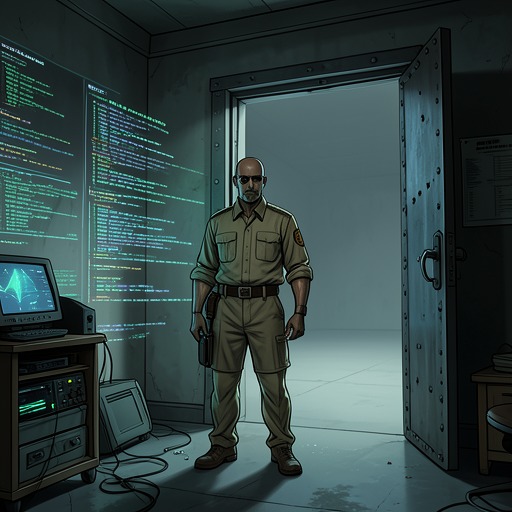
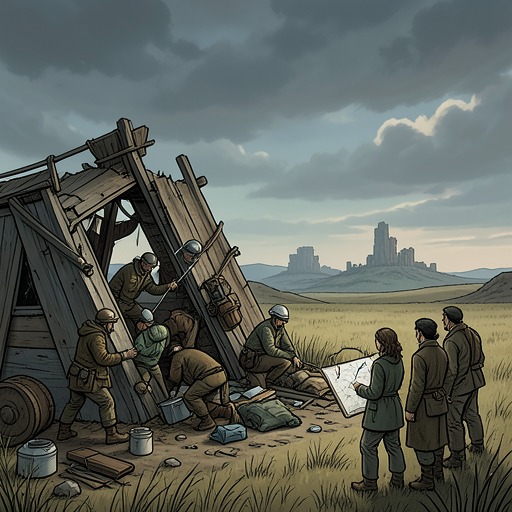
Systema Delenda EstGyvestral Mass Digitization is the large-scale evacuation carried out when the System condemns Gyvestral to exterminatus. Cato cannot save the planet by defeating the System’s judgment or by preserving its surface intact, so he converts its population into digital minds and moves them into protected infrastructure. The operation saves 16,412,892 souls, including a mindripped System Interface, but it also exposes the ethical resemblance between Cato’s rescue technology and the System’s own coercive power: survival depends on forced sedation, invasive biological machinery, and the reduction of embodied lives to information that can be transmitted, analyzed, and housed elsewhere.
Causes and Background
The operation grows out of the System’s exterminatus policy, under which everyone below Gold rank on Gyvestral is condemned to die. More than twelve million inhabitants are primarily Gaekos, a long-limbed, blue-furred pseudo-primate species whose unusual anatomy distinguishes them from humans and whose homeworld is threatened with genocide by the planetary sentence. The suspension of the Dungeons removes another possible route of survival, while the closing of portals prevents ordinary evacuation. Cato therefore faces a population that cannot simply flee through existing System infrastructure and a world whose destruction is treated by the ruling powers as an acceptable administrative solution.
Cato’s response is also shaped by his broader war against the System. From the beginning, the System’s arrival on Earth has been associated with technological failure, monsters, mass death, and compulsory participation in game-like physics. Cato’s opposition is accordingly not a conventional rebellion for control of the existing order; it is an attempt to preserve people while dismantling the structure that makes their lives disposable. On Gyvestral, that distinction becomes brutally practical. He cannot protect everyone through force, and he cannot wait for a political settlement. The evacuation must be prepared as a technical intervention under an extermination deadline.
Preparation and Methods
The first response consists of several million one-ton canisters carrying the Big Bad Bug Bomb organisms. Cato does not use them merely as dungeon-killers. He has continued developing the biotechnology because the ability to produce coordinated biological systems without warning is too valuable to reserve for a single purpose. Half of the canisters are assigned to create a planet-wide System-jamming network, whose neural static might interfere with the mechanism sterilizing condemned worlds. Cato recognizes that this hope is weak, but the attempt matters because the alternative is to accept exterminatus without testing every available disruption strategy.
The other half of the deployment is directed toward the population itself. Copper and Silver ranks lack reliable defenses against precisely targeted biological agents, and Cato possesses the genetics, biochemistry, and anatomy of every species on Gyvestral. The resulting Chill Out organisms release neurochemicals that impose calm, while the mindrippers render victims unconscious and digitize them with minimal trauma. The process is therefore presented as a rescue, but it is not voluntary in the ordinary sense. Cato’s technology makes consent difficult or impossible under the time pressure, and the operation’s humanitarian purpose is inseparable from its capacity to seize control of bodies and minds.
Once activated, the insects spread through the pacified towns. Their black appearance comes from graphene filaments, and they wrap around people’s heads while temporary antennae rise from rooftops and open ground. The organisms convert themselves into System-jamming smart biomatter and establish the physical interface required for mass transfer. FungusNet cannot provide enough bandwidth for the gestalts, genetic and biometric data, and relational analysis needed to preserve individuals correctly, so the information is sent through a dense satellite network in orbit. The evacuation thus becomes an engineered communications event as much as a medical or military one.
The Evacuation and the Planet’s Destruction
Cato’s distant infrastructure includes an enormous armored-computronium aestivation far beyond the moon. Built to Summer Civilization specifications, it contains enough power to run millions of people along with their environments and virtual intelligences, with inhabitants framejacked or underclocked as necessary. This structure is the most vulnerable part of the rescue network, so Cato keeps it far from Gyvestral and shields it from the planet. Its distance also gives the event a defining tension: the population’s continued existence depends on an unseen habitat that must remain intact while the world beneath it is being erased.
The System-jamming conversion triggers a System Defense quest across the globe. Cato prepares backups just short of a re-entry burn in case the local deity responds with a purge, but the immediate counterattack does not come. He uses the opening to infiltrate the capital with the jamming biomatter, deliberately withholding a full deployment because he believes words may achieve more than premature force. When an Azoth appears through a portal and repeats the divine accusation that Gyvestral has been condemned because of Cato, Cato answers through hundreds of sources throughout the city and orders the visitor to leave.
The confrontation escalates when a burst of massively accelerated particles strikes the Azoth. The attack tears through the atmosphere with thunder, destroys foliage, and kills Copper-rank creatures in nearby zones, although buildings and the biological material shield much of the populace. System Skills and rank-based toughness prevent the point-blank nuclear-level discharge from killing the Azoth, but the warning succeeds: the Azoth declares the world doomed and vanishes. Cato then assimilates the capital, excluding the Platinum inhabitants temporarily so that a diplomatic-sized warframe can persuade them to accept digitization and avoid interfering with the mindripping of the Interface.
The jamming network fails to stop the exterminatus. Nevertheless, the digitization is completed roughly half an hour before Gyvestral’s surface is destroyed. The event is consequently neither a military victory nor a rescue of the planet as a physical place. It is an evacuation from planetary annihilation, preserving inhabitants after their world has become unsalvageable under the System’s rules.
Results and Aftermath
The final count is 16,412,892 souls. The figure includes a pseudo-AI created from the mindripped System Interface, making the rescued population not only biological citizens translated into digital form but also an entity produced through the extraction of a System administrative component. The distinction complicates the moral vocabulary of the event: Cato saves people from a system that treats them as expendable, yet he also appropriates one of the System’s own intelligences as part of the rescue and investigation.
The digital minds are installed in dedicated Summer Civilization technology. Framejacking stretches the last half-hour before destruction into weeks of subjective time, allowing interviews and debriefings before the summary is relayed through FungusNet. The operation therefore defeats the ordinary temporal meaning of the exterminatus deadline. Physical time runs out almost immediately, but the rescued population receives an extended interval for testimony, orientation, and information gathering inside accelerated digital existence.
The Interface provides Cato with his first direct insight into planetary administration and the economics of essence. It cannot explain what essence is, what generates it, how System physics are applied, or how the System spreads to new worlds; its knowledge resembles that of an accountant who maintains the books of a fusion plant without understanding power generation. Even with those limitations, its testimony reveals a structural vulnerability. Cato’s analysis shows that ordinary planetary operations cannot cope with the scale he can impose and that worlds can become too expensive for the System to maintain if he continually destroys their Dungeons. Gyvestral’s evacuation thus yields intelligence as well as survivors: the rescued Interface helps convert catastrophe into a model of systemic attrition.
Significance
Gyvestral Mass Digitization concentrates the book’s central conflict between liberation and control. Cato’s stated aim is to save everyone, and the operation preserves millions who would otherwise be exterminated, including an entire species facing the destruction of its homeworld. Yet the means are unsettlingly close to the System’s own administrative violence. People are pacified, biologically processed, scanned, grouped, and transmitted through networks whose operators determine how identity will survive. The difference lies not in the absence of coercion but in the direction and claimed purpose of the coercion: Cato uses system-like machinery to keep lives from being erased by the System.
The event also turns scale into both weapon and refuge. Several million canisters, a dense orbital satellite network, an aestivation capable of supporting millions, and a final population of 16,412,892 make individual rescue impossible except through industrial coordination. Gyvestral is saved as data because embodied, planetary survival has been denied. Its destruction leaves a world behind, but the operation preserves inhabitants, testimony, social relationships, and the technical knowledge needed to continue the war. In that sense, the digitization is a victory with a permanent wound at its center: Cato rescues the people of Gyvestral by accepting that Gyvestral itself cannot be rescued.