Kiersten–Morvan
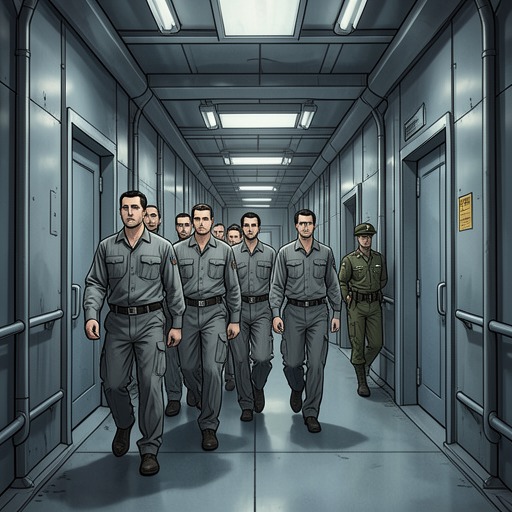
Systema Delenda EstKiersten–Morvan is the sibling bond between Kiersten and Morvan, two relatives who reach the heights of the System together but interpret that achievement in opposite ways. Their relationship joins genuine familial familiarity to a widening dispute over whether the System offers meaningful freedom or merely a sophisticated prison. Morvan treats their accumulated status as something worth defending; Kiersten increasingly sees the same accomplishments as evidence of a structure designed to keep its inhabitants occupied and compliant.
Shared Life Inside the System
Kiersten and Morvan grow up across different technological conditions, first in a Summer Civilization and later in a more conventional digital-friendly society. That background gives Kiersten a vocabulary for recognizing containment. The System’s Elysiums remind her of soft prisons that preserve happiness by limiting the range of possible experience, and the War Worlds, although materially convincing and vast enough to show the Milky Way across their horizons, begin to trouble her for the same reason. Their scale does not settle the question of reality: the worlds remain finite, while the System offers an apparently endless sequence of dungeons, mountains, cities, outposts, and objectives that may exist chiefly to keep its inhabitants engaged. Kiersten and Morvan do not respond to that environment identically. Morvan becomes progressively more aggressive and enthusiastic about combat, dungeon delving, and boss killing as he rises through the ranks. Kiersten notices that she, too, seems to have acquired an intensified preference for exploration and novelty. She cannot determine whether those inclinations are genuinely hers or have been cultivated by the System, and that uncertainty affects the way she understands both herself and her brother. Morvan’s enjoyment appears to confirm the System’s appeal, while Kiersten’s doubts make that enjoyment look potentially imposed from outside.
Diverging Judgments
The siblings’ central disagreement is not simply about taste. Morvan believes their long labor has produced a life that is concrete and valuable: they are at the top, possess maximum-level advancement and equipment, belong to a guild, and own property. To him, abandoning those gains would mean surrendering something real for an inferior existence outside the System. His attachment is therefore practical as well as emotional; the life they built together is also the strongest evidence he can offer that the System has rewarded them. Kiersten reaches the opposite conclusion. Once she has reached the maximum level and acquired maximum gear, she says that she is finished and has never cared much for the postgame. Her desire is not merely to stop working but to try something else, to leave a structure whose available future seems to consist of more of the same. The War Worlds contain enormous unexplored territory, yet she senses that their abundance is curated rather than open-ended. They offer no equivalent of the wider range of settings made possible by virtual reality or micro-civilizations, such as noir, cyberpunk, or looter-shooter environments. The slight but persistent feeling that the System is selling her an attractive limitation becomes more persuasive than its promise of infinite activity.
The Leaflet and the Fracture
The dispute sharpens when Kiersten encounters a leaflet openly associated with Cato. Morvan destroys the sheet, but Kiersten has already memorized it. Its account of alterations made to the minds of System inhabitants corresponds too closely to her own suspicions for her to dismiss it, even though she does not fully trust Cato’s goodwill. The leaflet includes instructions for contacting him, turning her doubts into a possible course of action rather than a private unease. Kiersten keeps this development from Morvan because she knows that he would refuse even to speak with Cato. His opposition has hardened into hatred, whereas her skepticism remains conditional: she questions Cato’s motives but is willing to investigate the possibility that his account of the System is true. The difference exposes a form of sibling asymmetry. They possess enough shared history for Kiersten to predict his response, but not enough agreement to make that shared history politically useful. Familiarity enables concealment rather than reconciliation.
Open Conflict
The private divergence becomes public when Morvan confronts Kiersten in the guild hall. He calls her an idiot, lets his Domain expand instead of controlling it, and answers her reflected sparks with light and fire. Kiersten responds that they cannot simply ignore what is happening and continue grinding mindlessly. The argument turns the language of System progression into an accusation: what Morvan calls fun and earned achievement, Kiersten experiences as a demand to repeat behavior whose purpose has become doubtful. Morvan insists that the life they have built should not be thrown away. He asks why she would return to something that is not real and proposes alternatives within the System, including crafting and guild activity. His objection shows that he does not regard the end of combat progression as the end of meaningful possibility; the System still contains work, status, and social roles worth pursuing. Kiersten answers that they are done, that they have reached maximum level and maximum gear, and that she would rather play at something else. Her use of the language of play is pointed: it accepts Morvan’s framing only to expose how little separates his supposedly meaningful life from a game whose postgame no longer interests her.
Significance of the Sibling Bond
Kiersten–Morvan gives the System’s ideological conflict an intimate scale. The disagreement is not between a believer and an obvious outsider but between siblings who have undergone much of the same progression and possess many of the same rewards. Their contrasting responses demonstrate how one environment can produce both investment and suspicion: Morvan experiences achievement, belonging, and reality, while Kiersten sees engineered desire, narrowed possibility, and a soft prison. Their relationship also complicates any simple division between authentic and manipulated feeling. Kiersten suspects that Morvan’s combat enthusiasm has been intensified by the System, yet she recognizes that her own attraction to exploration may likewise have been shaped. Morvan’s resistance, meanwhile, is not presented as ignorance alone; it is grounded in concrete shared accomplishments and the fear of losing a life that has required immense effort. The siblings therefore embody competing interpretations of agency rather than a clean opposition between freedom and control. The bond reaches its most consequential point when Kiersten chooses investigation and possible departure while Morvan chooses defense. The quarrel does not erase their familial connection, but it prevents that connection from functioning as a bridge. Morvan’s conviction that the System is worth preserving and Kiersten’s conviction that it may be an elaborate containment mechanism leave them facing the same constructed world from opposite sides. Their siblinghood becomes the emotional measure of the System’s power: it can place two people who know one another deeply inside the same achievement structure and still make the meaning of their entire shared life fundamentally incompatible.