Muar
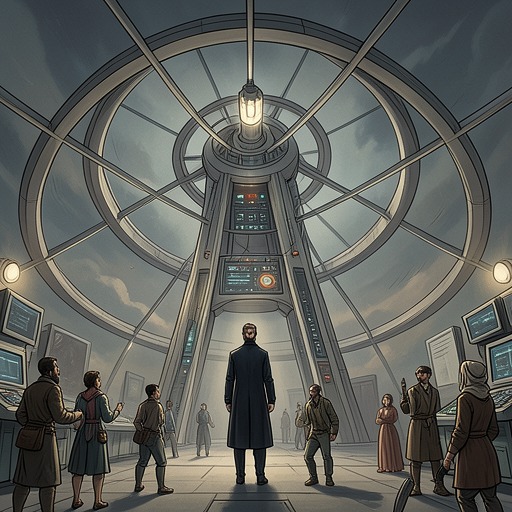
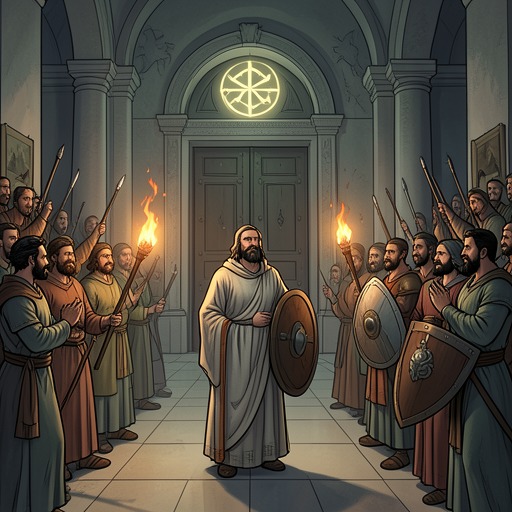
Systema Delenda EstMuar is a Sydean warrior, paladin, and eventual Overdeity whose entire second life is organized around defending the System. He begins as a practical adventurer concerned with rank, rewards, and the survival of his party, but his death and resurrection expose him to a System-less void and to Cato’s plan to destroy the System. That encounter does not liberate him; it radicalizes him. Muar comes to regard the System as the foundation of purpose, progress, identity, and reality itself, and he turns personal survival into a divine mission. His rise from Copper to Alum and then to godhood is therefore both a heroic ascent and a study in religious commitment becoming institutional power.\n\n## Identity and Early Life\nMuar first appears as the heavily armed member of an adventuring group that includes Cormok, Raine, and Leese. He carries a shield and spear, identifies himself with the confidence of a Gold ranker, and treats a Silver quest as an attractive opportunity rather than a serious danger. His attitude is brisk and martial: when the quest is accepted, he strikes his heavy shield with his spear and urges Cormok to move. The early Muar measures the world through rank, combat readiness, and reward, and his confidence is not entirely misplaced.\n\nThat confidence collapses during the group’s confrontation with an almost invisible beast. The creature ignores Muar’s challenge, pierces his skin with a detonating thorn, throws him through the air, and briefly overwhelms Cormok. Muar’s charge can only stagger it. Raine’s amplified Inferno Lance also fails to kill it, and the beast eventually shatters her shield. These scenes establish Muar as a durable front-line fighter, but they also place him in a world where rank and conventional combat expertise can suddenly become inadequate. His later certainty is born from this experience of helplessness as much as from faith.\n\nWhen Cato begins working with Raine and Leese, Muar interprets cooperation with Cato as betrayal rather than pragmatism. He insists that a priestess should not listen to anyone who stands against the System, and after Cormok’s disappearance he tells Raine that the Gosruk Guardians are finished. His judgment is harsh because it reflects the survival code of rankers: if Cormok had died to a monster, Muar believes, the group would have honored him, sold his equipment, and continued. The difference is that Cato has made the old rules morally unstable.\n\n## Death, Resurrection, and Conversion\nMuar’s decisive transformation follows his death during the Sydean crisis and his awakening in a room beyond the System’s reach. He later recounts the experience in exacting detail: the defense quest, his death, the System-less place, Cato’s claims, the return journey, and the conversation between Cato and the Platinums. The account becomes the foundation of his authority. He is not merely repeating rumor about an enemy; he is the one mortal who has seen Cato’s works beyond the known structure of reality and returned to testify.\n\nThe System-less space becomes Muar’s central spiritual trauma. He remembers it as a silent void without status, comprehension, or meaningful interaction, a dead environment in which existence lacked purpose. Rather than treating that absence as freedom, he experiences it as annihilation. The memory makes him shudder, and it explains why Cato’s promise of liberation has no appeal to him. Muar cannot imagine meaningful life without the System’s categories, progress markers, and revealed truth. His faith is therefore experiential rather than inherited alone: he believes because he has encountered the alternative and found it empty.\n\nAfter reaching Uriva, Muar seeks the local temple despite feeling alien among its insect-like inhabitants. The temple honors both the planet’s god and the divine System, giving him the institutional shelter he needs. He spends days meditating before the System crystal, seeking contact with the divine presence and trying to rebuild himself through devotion. The System rewards this practice with Divine Insight. The Skill marks a shift in his identity: he is no longer merely a warrior fighting for personal advancement, but a religious agent who understands rank advancement as preparation for service.\n\nMuar’s testimony attracts attention because it threatens the established interpretation of reality. A priest verifies that Muar is not lying, while High Paladin Nikhil doubts the story’s plausibility. Initik, however, recognizes that the essential claims are probably true: Cato comes from outside known reality and seeks the destruction of the System. Muar’s authority thus grows through a paradox. He is a young Sydean Copper, an outsider to the central institutions, yet he possesses knowledge that even established religious officials lack.\n\n## The Crusader’s Rise\nMuar advances with unusual speed. After emerging from a dungeon, he reaches peak Silver through essence conversion and purchased equipment, then begins searching for a World Elite whose defeat will make him Gold. He refuses to treat Gold as a final achievement. The rank is only a stepping stone, and he wants the strongest possible foundation for the future rather than the quickest available reward. This calculation distinguishes the mature Muar from the boastful adventurer of his introduction: ambition remains, but it has been subordinated to a long campaign.\n\nHe leaves the Spiky Delvers because his advancement has outpaced theirs, yet he continues taking temporary positions with temple-sponsored groups. The temple gives him access to opportunities, healing, guidance, and a community that can convert his private conviction into public action. When he sees Sydeans arriving on Uriva, he is excited and stunned to encounter people from his lost world, but his response is immediately filtered through duty. He Appraises them and understands that the sisters’ movements will probably bring them into his path again. In his interpretation, the System’s blessings have not simply rescued him; they have prepared him to oppose Cato’s agents.\n\nAt Platinum, Muar receives an A-tier Estate Token, but he does not yet regard Uriva as home. The traitors remain alive, Raine and Leese remain at large, and Cato’s influence continues to spread. When he learns of the Crusade, he accepts it as the assignment for which his history has prepared him. He has seen Cato firsthand, has no responsibilities binding him to Uriva, and possesses the personal fire required to carry the warning outward. He leaves through the Nexus without a fixed destination, intending to move toward the Core Worlds and prepare every world along the route to recognize Cato’s signs, identify his mortal agents, and defend itself.\n\nThe Crusade turns Muar into an institution rather than merely a fighter. Its rewards grant him essence, and its growing scope gives his individual testimony a system-wide function. He insists that even if the Crusade has spread throughout the System, it remains his quest because he alone has crossed beyond the System, witnessed Cato’s works, and returned. When officials obstruct him, he refuses to waste time and goes directly to temples, using divine movement Skills to cross cities in moments. His mission is not limited to combat; he must persuade priests, administrators, deities, and entire factions to treat Cato as an existential threat.\n\nMuar’s title becomes both political authority and combat power. At peak Platinum and later at Azoth, rank alone does not explain his influence. He reminds others that he is the Crusader, and the System itself validates his words. Elder Nomok of the Tornok Clan offers him passage into the Core Worlds and recommends that he undertake the Bismuth Ascension quest before entering them. Muar’s rapid rise from nothing to Azoth in twenty years is described as almost unprecedented, and his acceptance of Clan Eln’s patronage allows institutions that might otherwise resent a Sydean outsider to claim him as their own.\n\n## Faith, Enemies, and Political Alliances\nMuar’s opposition to Cato is ideological before it is personal. He sees Cato as an invader and conqueror whose promises are deception, and he treats Raine’s cooperation with Cato as a betrayal motivated by hollow rewards. Cato, in turn, initially underestimates him, expecting him to fade into irrelevance. The mistake becomes costly. Muar survives, advances, and turns his firsthand knowledge into a Crusade that follows Cato across worlds. Cato eventually recognizes that simply allowing Muar to live was an error and identifies him as a genuine enemy.\n\nMuar’s relationship with Raine and Leese is therefore defined by divided history. He once fought alongside them, watched the beast target Leese, and understood Raine’s desperate protection of her sister. Later, he confronts them as Cato’s agents and tells them that the gods are watching and will eventually track them down. Their shared past gives his hostility a personal charge, but Muar never allows affection or former comradeship to override the System’s cause.\n\nThe loss of Cormok and the deaths surrounding Sydea deepen his bond with Dyen, although the two men grieve differently. Muar has lost a companion-in-arms; Dyen has lost his wife and barely knows where to direct his anger. Muar recognizes Dyen’s pain even while maintaining a stern, hierarchical outlook. This capacity for limited recognition prevents him from becoming merely a shouting zealot: he can understand another person’s grief, but he interprets grief as fuel for action rather than as a reason to question the structure that produced it.\n\nMuar’s devotion eventually draws him into the orbit of Misse. She regards him as a rising star and appoints him the Blessed among the mortal worlds, charged with ensuring that Planetary Administrators and temples coordinate against the foreign threat. Muar admires Misse above the other gods because she takes his insight and commitment seriously. She tells him that he has been Chosen for those qualities, not because he can make every institution wise, and predicts that his status as a mortal Crusader is temporary. Her patronage gives Muar more than protection: it offers a path toward godhood and a divine hierarchy in which his personal mission can become policy.\n\nYet Muar’s loyalty is more exacting than simple obedience to a clan or deity. He is devoted to the System itself and considers Misse its most worthy representative. Even after becoming her favored subordinate, he does not identify primarily with her Clan or with senior gods. His allegiance is theological and structural. He supports Misse because she appears to embody the System he worships, making their alliance powerful but also revealing the narrow basis on which it rests.\n\n## Ascension and Final Function\nAs a Chosen, Muar can cross into the divine realm through temple pylons, though the passage costs essence. He uses this privilege to visit Misse’s estate, where the denser essence helps prepare him for Alum. After defeating the World Elite Magonog, he receives additional essence for overcoming an enemy of superior rank, along with an outpost and dungeon. The rewards confirm the logic he has embraced: combat, quest completion, and loyalty are converted into measurable advancement. Muar welcomes the system of rewards even as his own history has made him its most zealous defender.\n\nMuar refuses to rely permanently on borrowed divine strength. Although his Chosen status and Skills let him enter the divine realm, he regards that route as hollow if it substitutes external authority for genuine understanding. He meditates in his Estate, aligns his essence with the reality above him, and attempts to cross from Alum into true Deity by his own power. The transition comes through incremental adjustment rather than spectacle: his surroundings flicker, his awareness expands beyond Misse’s personal world, and he pushes through the boundary until the Interface recognizes him as Deity Muar and then Overdeity Muar. His ascension completes the arc from practical ranker to metaphysical guardian.\n\nThe new status gives Muar unprecedented access. As Overdeity, he can inspect every System Space directly, stripping away protections and seeing through the hidden structures that lesser investigators cannot penetrate. He uses this ability to investigate Marus’s associates without interviewing them, reasoning that they would lie, conceal information, or obstruct the search. The method reveals both his efficiency and his transformation: the former party warrior has become an authority capable of treating whole realms as transparent objects of inquiry.\n\nEven godhood does not make him complacent. During the final crisis, he searches for the weapons producing impossible columns of light and urges the other powers to destroy them or find a way to stop the bleeding. He considers whether the Core itself can be moved. When Cato’s attack consumes worlds and Misse’s own world must be converted back into essence and fed into the Font, Muar’s project reaches its bitterest contradiction. The System he spent his second life defending is forced to burn its own substance to survive, while a black wall emerging from the light swallows the remaining view of reality.\n\nMuar’s ending is consequently not a simple triumph. He achieves the highest status available within the System and becomes the figure Misse relies upon for the work ahead, but his victory arrives at the edge of systemic collapse. His rise shows that faith can generate extraordinary discipline, courage, and political effectiveness; it also shows how completely a person can be shaped by the structure he defends. Muar’s deepest fear is not death but meaninglessness outside the System, and the final catastrophe tests whether divine rank can preserve meaning when the System itself is being consumed. As Cato attacks the foundations of reality, Muar stands on the opposite side not because he has failed to understand the threat, but because he understands it and still believes the System must be saved.