Neyar begins the world transition
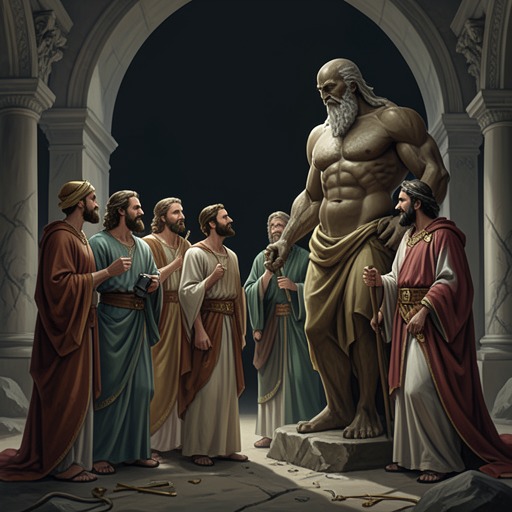
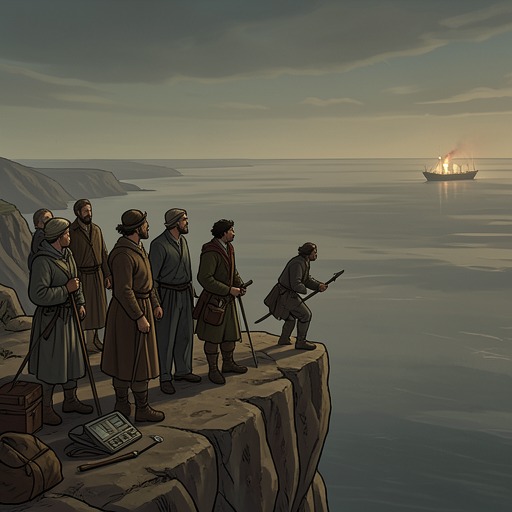
Systema Delenda EstNeyar begins the world transition at the moment when withdrawal from the System stops being an abstract preference and becomes an urgent collective operation. Given only a week, he accepts Cato’s help in severing his worlds from the System and rebuilding their infrastructure as a different kind of reality. The transition preserves some familiar guidance while rejecting the System’s authority, making Neyar’s decision both a survival measure and a controlled experiment in post-System governance.
The Decision to Leave
Neyar’s decision follows a stark choice between certain destruction and an uncertain future. He has agreed to begin immediately, while Cato prepares to sever not only Neyar’s own worlds but also surrounding worlds that may come under his control. Neyar wants his private System Space reconstructed rather than abandoned, even though it has been his home since his ascension, across centuries and millennia. The request gives the transition a personal dimension: leaving the System does not mean discarding every structure associated with it, but attempting to preserve a home and a civilization after its governing framework has been removed.
Neyar’s position is sharply different from that of Cato. Neyar intends to be done with the System, whereas Cato will continue fighting it elsewhere. That difference shapes the practical arrangement between them. Cato brings the resources and technical process for the severance, but Neyar remains responsible for persuading his own priests and high-rankers to participate. Their cooperation depends on whether the exodus can be presented not as surrender, but as a new challenge and an expedition beyond the limits of their existing worlds.
Recording and Rebuilding
The first concrete stage of the transition is digital capture. Cato tells Neyar that a pod will be sent directly over the town, and Neyar brings the capsule into his private space after Cato receives the blessing of Chosen needed to move through the landscape safely. Once opened, the capsule releases millions of insects. Their purpose is to record everything in Neyar’s System Space so that Cato can recreate it later. The scene converts an apparently mystical divine domain into a technical environment that can be surveyed, copied, and reconstructed.
Cato distinguishes between recording the landscape and transferring its inhabitants. Reproducing the physical or digital environment is comparatively straightforward; transcribing Neyar himself is more difficult, and moving people across is harder still because Cato has little experience with that process. Neyar’s priests therefore become essential participants rather than passive cargo. Their willingness to listen to him offers the social mechanism that Cato’s machines cannot supply.
The transition also reveals how differently the two characters understand reality. Neyar initially describes everything in his private space as divine creation, with no meaningful distinction between base matter and essence. Cato responds by treating it as fully digital and therefore technically manageable. This disagreement does not halt the operation, but it exposes the conceptual shift at its center: Neyar’s sacred home is being translated into data, inventories, instructions, and reproducible structures.
The Angelnet Model
Neyar chooses an angelnet approach rather than attempting to recreate the System in its entirety. Quests and task guidance may remain, but they will no longer define the ultimate limits of achievement. In this design, familiar interfaces survive as tools while the System’s total authority does not. The transition therefore aims at continuity without submission: people can retain guidance and organization, but the horizon of what they may accomplish becomes wider than the System allowed.
The decision is especially significant because the System has made behavior feel compulsory. Cato recognizes that quests do more than offer objectives; they shape reality toward the path of least resistance, while completion produces a pleasurable reward. Neyar’s angelnet model answers that coercive structure by retaining useful coordination without preserving the same absolute controller. It is not a return to the blank System-less void that Muar experiences as meaningless and horrifying. Instead, it is an attempt to construct direction without accepting domination.
Cato’s earlier industrial growth makes this alternative materially possible. Exponential growth begins slowly, but after years of expansion across hundreds of worlds, Cato possesses factories, mines, refineries, solar arrays, warframes, and digital systems on a vast scale. The transition depends on that accumulated infrastructure. The capsule and its insects are not isolated miracles; they are instruments of a distributed industrial network capable of surveying worlds, moving populations, and rebuilding environments.
Coordination Under Pressure
Neyar begins the administrative phase by issuing quests to high-rankers who are away from his worlds and ordering them to return. He had already kept many of them close to their homes and anchored to their own worlds, which now becomes an advantage. The same organizational habits once operating within the System can be redirected toward evacuation and reconstruction. His priests, meanwhile, can frame the undertaking as a departure into a larger and more dangerous frontier, giving the population a narrative in which participation becomes an act of purpose rather than mere flight.
Cato proposes a coordinated leaflet campaign to communicate the plan to his other selves and to the populations involved. The reference to an earlier campaign that failed shows that the new operation requires more than machinery. Information must travel across divergent versions of Cato, and people must understand what is happening before the System’s collapse or the severance leaves them stranded. Checklists for each affected landscape make the operation concrete, while the planned movement of forces from the outer darkness shows that the initial capsule is only the beginning of a much larger deployment.
The operation also depends on trust. Cato reveals the location of his approaching forces even though Neyar could interpret that information as a threat. Neyar concludes that Cato’s actual aim is the removal of the System rather than the seizure of divine power or the displacement of Neyar himself. Cato’s conduct distinguishes the transition from a conventional conquest: ownership and control may change, but the stated objective is to eliminate the System’s corruption rather than to replace one deity with another.
Consequences and Significance
Neyar’s world transition establishes a middle path between System dependence and total disorientation. Muar regards the System-less condition as a dead void without status, progress, or meaning, while Cato regards the System’s rewards and compulsions as a mechanism that turns killing into a pleasurable, self-reinforcing behavior. Neyar’s angelnet seeks to preserve quests, guidance, and social coordination without preserving the authority that makes them compulsory. Its promise is therefore not freedom as emptiness, but freedom equipped with structures that people can still use.
The transition also foreshadows the wider conflict between Cato and the System. Cato’s challenge is not merely military. He must build an alternative at the same time that he dismantles the existing order. That task explains why recording, leaflets, priestly persuasion, high-ranker recalls, and landscape checklists matter as much as weapons. A world can be severed only once; afterward, its people must still inhabit it, understand the change, and maintain a functioning civilization.
Later confrontations clarify the stakes of this undertaking. Misse Eln treats the collapse of the frontier and the absorption of Mishkell as consequences of Cato’s hostility, while Cato insists that his quarrel is with the System rather than with every deity who depends on it. When Misse restricts the System’s influence and the System withdraws toward the True Core, the resulting disruption demonstrates how closely worlds, physics, essence, and divine authority have been coupled. Neyar’s transition anticipates the same separation on a deliberate and constructive scale: instead of waiting for the System to fail catastrophically, he begins preparing a controlled passage into a reality that can retain civilization after the System is gone.