System Task
Systema Delenda EstSystem quests are the System’s operational language: they turn danger, duty, advancement, and allegiance into visible objectives with ranked difficulty, defined locations, and promised rewards. Their decisive significance is that they do not merely describe what characters may do; they shape what seems worth doing, make completion feel intrinsically satisfying, and can pull individuals and whole worlds along paths that resemble choice while functioning as systemic compulsion.
Definition and Operating Structure
A quest typically presents an objective, a recommended rank, a reward, and one or more locations. When Cato first crosses through the Ahrusk Portal Staging Area, the System issues an Instant Defense Quest to investigate the incursion, initially recommending Silver Rank and offering a C-Tier Skill. After he reaches a System nexus, the same defense problem escalates to High Gold Rank and relocates its listed targets to the Southern Jungle Conflict Zone and Gosruk Town. In Azure Canyon Dungeon, the broader Global Defense Quest to destroy the incursion expands again, naming the Southern Jungle Conflict Zone, Azure Canyon Border Zone, and the dungeon itself while retaining a C-Tier Skill as the reward.
The quest system therefore behaves as a distributed response mechanism rather than a single fixed announcement. Its wording changes as the crisis develops, and the geography of the objectives widens from a portal staging area to towns, conflict zones, dungeons, and eventually an entire continent. After Cato destroys the two infiltrating lizard-people and preserves their brains for possible reconstruction, the reward rises from a C-Tier Skill to a B-Tier Skill and the location shifts to Southeastern Coren. Later, the Global Defense Quest spreads across a long list of sites, including the Great Western Sea Ocean Zone, the Clashing Slopes Conflict Zone, the Rocky Rill Resource Zone, and the Gravel Beach Border Zone, with a Platinum recommendation. The escalation reflects both the expanding threat and the scarcity of powerful defenders capable of answering it.
Rewards, Advancement, and Behavioral Shaping
Quests connect action directly to System advancement. When Cato orders the quest to be fulfilled and destroys a plant-flesh blob, the System grants essence, produces a euphoric rush, announces a new rank of High Copper, and manifests reward tokens, including the B-tier Skill wafer. The event makes the mechanism unmistakable: killing is not only permitted or strategically useful but physiologically reinforced. Cato recognizes that the pleasure attached to killing helps create the murderous psychopaths found among the highest ranks.
The reward structure also encourages participants to treat quests as long-term investments rather than isolated errands. A B-tier Skill may be taken upward toward Platinum and have its rarity increased, while lesser Skills can be acquired later. The Global Defense Quest’s escalating rewards thus attract powerful participants even when the local task is only a distraction. Arene Firewing observes that the enormous reward and apparently low risk of scattered assignments draw defenders away from the genuine source of the Ahruskian problem. The quest can therefore defend the world and misdirect it at the same time: its incentives produce activity, but not necessarily strategically correct activity.
Divine Quests and the Crusade Against Cato
At the divine level, the quest becomes a far larger political and religious instrument. Muar learns that a Crusade is the Divine equivalent of a Grand Quest, likely continuing until he reaches Alum Rank and perhaps beyond. Its scope is expected to expand and invite additional participants as it extends through the System. Muar accepts the assignment as a personal charge because he has witnessed Cato’s capabilities, has no local responsibilities binding him to Uriva, and believes no other participant possesses the same combination of investment and conviction.
The Crusade transforms Muar’s individual hostility into a system-wide mission. He leaves Uriva without a fixed destination, intending to travel inward through dozens or hundreds of worlds, warn them about signs of Cato’s presence, identify Cato’s mortal agents, and prepare each world to protect itself. The quest thus creates a chain of mobilization: a divine instruction becomes travel, intelligence gathering, local preparation, and eventually a wider coalition against Cato. Its promised advancement is inseparable from its ideological framing, because Muar understands resistance to Cato as both personal duty and defense of the System’s meaning.
Compulsion and the Illusion of Choice
Cato’s analysis of the Crusade reveals the most disturbing property of System quests. They do not rely only on ordinary persuasion or on the pleasure of receiving essence and Skills. Quest objectives are written into the System’s reality, making obedience resemble downhill motion, the path of least resistance. Cato’s frames can resist some biological alteration, but they cannot fully block the altered reality created by the System itself. Even the possibility that every quest carries some degree of compulsion remains open, turning a seemingly optional assignment into a potential violation of autonomy.
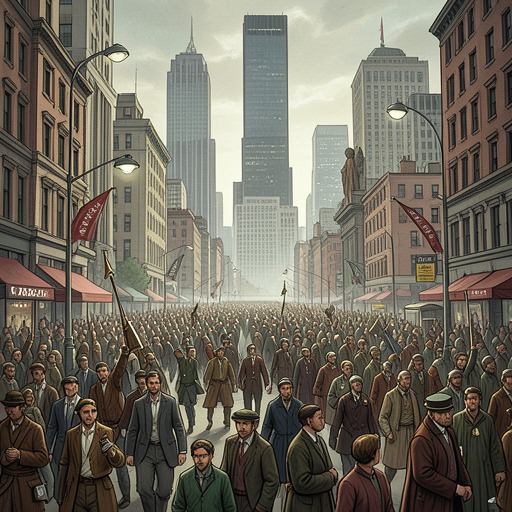
Small quests produce a constant froth of local motion, sending people from task to task in a Brownian pattern of ranking up and becoming stronger. The Crusade operates differently: it becomes a great attractor that pulls people away from their ordinary locations and toward distant parts of the System. Lineages sometimes have to step out of their System frames to clear their minds and ensure that they remain focused on their actual objectives. The distinction matters because a quest can occupy consciousness even when its participant appears to be acting voluntarily.
Systemic Consequences and Final Crisis
The quest mechanism is embedded in the System’s wider feedback structure. The System’s promise of direction, reward, and motivation is exactly what Muar finds comforting after experiencing a blank System-less space, where he could not understand or interact with the world. For him, quests offer a path and a measurable purpose; for Cato, that same structure is the engine of dependency and the means by which the System keeps populations aligned with its priorities.
The contradiction intensifies as Cato’s resistance spreads. His industrial expansion across hundreds of worlds creates factories, mines, refineries, solar arrays, weapons, and Warframes, while the System responds by directing defenders through increasingly broad quests. Cato acknowledges that the System’s reaction is a natural defense against his actions even while condemning its coercive nature. Later, during the confrontation involving Misse Eln and Muar, the System’s influence is restricted and withdrawn toward the True Core; the resulting disruption causes physics to resume around the War Worlds, and the System begins losing essence at accelerating speed. The quest system is not shown as an isolated menu of objectives but as one expression of the System’s larger control architecture: it translates power into incentives, incentives into movement, and movement into a feedback loop that can ultimately contribute to systemic instability.