System World Liquidation Protocol
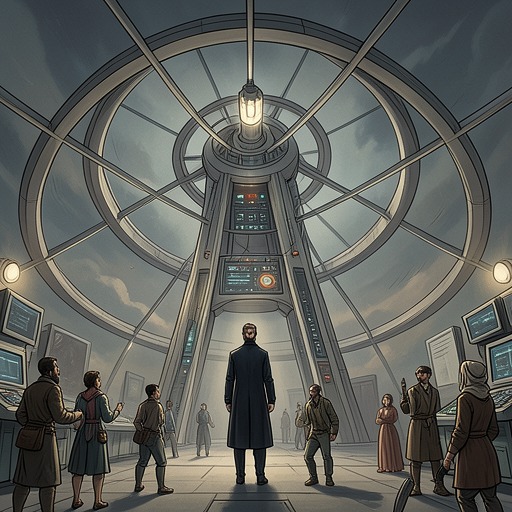
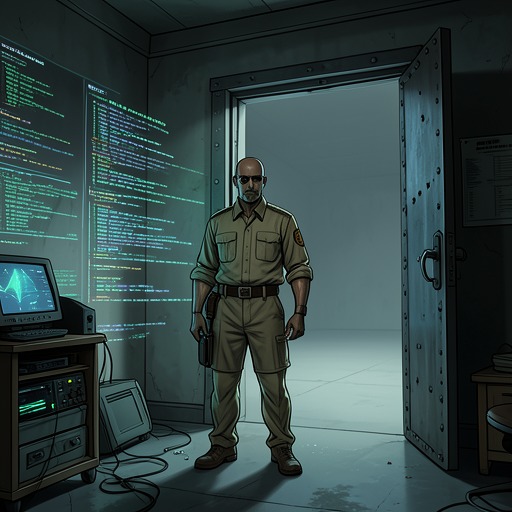
Systema Delenda EstSystem World Liquidation Protocol is the System’s mechanism for declaring a world disposable. Its decisive operation is not merely military destruction: the protocol extracts the condemned world’s essence and resources, terminates its connection to the System, and removes the ruling World Deity’s authority over it. In practice, it transforms planetary annihilation into a formal act of supreme administration, with a notification, a countdown, evacuation instructions, and a final transfer of power.
Definition and Authority
The protocol appears as an order imposed from above the local deity’s jurisdiction. When Meshan received notice that Sulean had been assigned for liquidation, the notification stated that all essence and resources would be extracted, that Sulean’s connection to the System would be severed, and that Meshan’s connection to the world would be revoked in exchange for a one-time essence payment. The message included a timer, turning the decision into an approaching deadline rather than a matter open to negotiation.
Meshan’s response establishes the protocol’s constitutional force. He was Sulean’s World Deity and therefore possessed authority over the world, yet his Interface could not alter the order. The decision belonged to the True Core, described as the highest authority, and no Skill or exercise of local power could reverse it. The protocol thus defines a hierarchy in which a World Deity may administer a planet but cannot guarantee its survival. Sovereignty lasts only until the True Core reclassifies the world as a resource to be liquidated.
The wider System’s political structure reinforces this distinction between local administration and ultimate sovereignty. Near the True Core, combat Skills are forbidden by the System itself, and only a restricted group of divine beings may approach the region where direct communion with the System is possible. The True Core is presented as the place where essence-rich worlds, divine spaces, and the System’s innermost authority converge. The liquidation protocol is consequently not an improvised punishment but an expression of the same central architecture that allocates access, essence, territory, and divine status.
Procedure and Immediate Effects
The protocol’s formal language conceals a sequence of concrete actions. First, the System assigns a world for liquidation. It then schedules the extraction of essence and resources, announces the revocation of the local deity’s connection, and begins a countdown. In another recorded instance, a notification informed Dyen that his world had been condemned by Cato, instructed inhabitants to evacuate through the portal at the Planetary Capital, and started a timer. The wording differs according to the authority issuing the condemnation, but the structure remains recognizable: designation, deadline, evacuation, and severance.
The Sulean order demonstrates how the protocol removes agency from the world’s nominal ruler. Meshan tried to use his Interface against the declaration, formed fists as his Skills sparked and faded, and searched for a contingency. Nothing changed. The order had become a fact of reality, not a proposal awaiting compliance. The one-time essence payment further exposes the protocol’s economic logic: a living world is reduced to recoverable value, while the deity who loses it receives compensation for the termination of his jurisdiction.
World liquidation also functions as a strategic instrument. Misse later weighed whether to purge the Inner Worlds after learning that Cato’s forces had reached all of them. She regarded world-purging as useful against recalcitrant independent gods or inadequate clan members, and considered the destruction of a single compromised world possible, as had happened with Tornok. Yet condemning every Inner World would sacrifice territory too valuable to lose and would undermine her public claim that Cato’s defeat was imminent. The protocol is therefore both an emergency weapon and a political liability: its use can contain corruption, but repeated use exposes the scale of failure.
Ecological Cost of Severance
The protocol’s administrative vocabulary becomes materially terrifying once a world actually loses System support. On Sydea, removing the remaining planetary Nexus caused every other town to lose power, or more precisely, essence. Lights went out and stores shut down as ordinary physics, biology, and ecology spread back across areas that had previously depended on the System. Mountains crumbled or vanished, lakes became muddy plains, sudden storms erupted and disappeared, and alien forests withered while grasslands shifted toward native life.
The reversion was not a clean restoration. Some transplanted organisms simply died instead of being replaced by native systems, leaving enormous scars that would persist for years or decades. Cato had already been preparing biological factories for remediation, but the scale of the transformation exceeded the surface appearance of a political severance. From orbit, a single change of color on the planetary display corresponded to the instantaneous replacement of everything visible to a Warframe below; invasive monsters could disappear as abruptly as a bad special effect. Leese described the spectacle as terrifying, while Raine stared at the planetary changes, unable to easily comprehend alterations occurring at such scale.
The same danger shaped preparations for the crash of the System on Haekos. Cato expected total ecosystem collapse, potentially including the single-celled organisms responsible for producing oxygen. The System could regulate atmospheres and prevent air from leaking through portals between worlds with different pressures and compositions, but the physical world could not be assumed to preserve those conveniences after severance. The oceans were a particular concern because the coasts showed extensive alteration and Haekos had undergone more changes than Sydea.
Heyk demonstrated the delayed consequences. After the System collapsed, massive flora die-offs threatened oxygen levels, while the absence of native bacteria capable of breaking down alien biomatter left weathered husks unable to decay or recycle themselves. Without intervention, the world would have become nearly uninhabitable within months. Remediation therefore became inseparable from liquidation: ending System support did not simply remove an authority; it dismantled ecological processes that had been invisibly maintained by that authority.
Cato’s Counteruse and Political Reversal
Cato eventually turned condemnation into an instrument of counter-sovereignty. A notification told Dyen that the world had been condemned by Cato and that evacuation had begun. Dyen understood the announcement as a victory because it meant that Tornok’s homeworld, and possibly many other worlds, had been marked for destruction. The political effect was immediate: breaking Tornok’s homeworld also meant breaking the clan’s future, even before the final physical consequences had unfolded.
This use of liquidation reflects Cato’s expanding industrial and military capacity. Exponential growth had spread his forces across hundreds of worlds, each with factories, mines, refineries, solar-panel production, and locally manufactured armies and Warframes. Because portal movement could not transfer forces meaningfully at the required scale, Cato relied on distributed production. The protocol’s destructive logic was thus met by a distributed counter-system capable of condemning worlds across a widening theater rather than fighting for only one central battlefield.
Misse’s response shows how thoroughly the protocol had become part of the System’s emergency politics. After learning that Cato had compromised the frontier and the Inner Worlds, she judged the frontier politically important but materially expendable. The Inner Worlds were different: they contained too much value to condemn casually. She therefore concealed the extent of the breach rather than admit that the System’s most important regions might require liquidation. When she later summoned the heads of the Nine Great Clans, she announced that severing the frontier was the simple solution to Cato’s spread and claimed that the measure removed corruption rather than confiscating their essence reserves or personal effects.
The confrontation between Misse and Cato clarifies the competing claims behind the procedure. Misse attributed the collapse of the frontier and the absorption of Mishkell to Cato’s hostility. Cato rejected the personal framing, insisting that his quarrel was with the System rather than with Misse herself. Liquidation therefore becomes the practical expression of their opposing definitions of the conflict: Misse treats worlds as components that may be pruned to preserve the System, while Cato treats the System’s authority over those worlds as the underlying enemy.
Systemic Significance
The protocol embodies the System’s capacity to turn crisis management into world-scale exclusion. A condemned world remains under the System’s power long enough to have its essence and resources extracted, yet it loses the protection and continuity that made it part of the System in the first place. Its inhabitants are ordered to evacuate, its deity is stripped of jurisdiction, and its environment is left to absorb the consequences of vanished infrastructure, altered physics, and broken biological cycles.
Its recurring structure also links administrative control to exponential instability. System-supported worlds may appear stable while their underlying dependence remains invisible. Once an anchor, Nexus, or broader System connection is removed, the accumulated dependence is revealed through cascading failures: towns lose essence, landscapes change, atmospheres and oceans become uncertain, and alien organisms die without compatible ecological partners. The protocol is therefore a threshold mechanism. It can be activated in a single notification, but the effects propagate through political authority, industrial capacity, and planetary ecology over very different timescales.
The contrast between the protocol and the True Core is especially revealing. Misse’s upgraded Interface gives her access to the True Core’s functions, and she shares that authority with Muar while treating Cato as an external presence beyond the Interface’s reach. When she restricts the System’s influence around the War Worlds, physics resumes and gravity takes hold among suns that had been held in an artificial arrangement. The episode shows that even the central authority’s suspension of its own rules is dangerous: the System warns of the risk, and Cato’s weapon continues draining essence despite the attempted retreat. Liquidation is consequently not an omnipotent act of orderly control. It is one of the System’s ways of managing instability, but each severance can expose deeper dependencies and accelerate the collapse it was meant to contain.