System exploitation of worlds
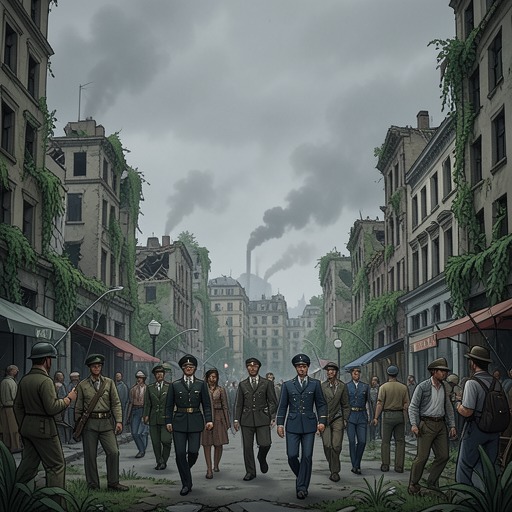
Systema Delenda EstSystem exploitation of worlds is not merely an abusive policy carried out by a few officials; it is the structural condition of life under the System. The System presents itself as reality, administration, and opportunity at once, yet its quests, interfaces, rewards, technology restrictions, and planetary hierarchies channel entire civilizations toward forms of behavior that benefit the System while narrowing the possibilities available to the people living within it.
Definition and Operating Logic
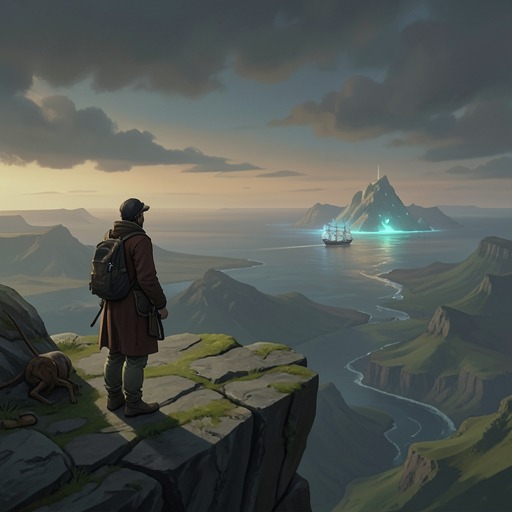
The clearest account of this exploitation comes from Cato’s comparison of Sydea with Uriva. The data did not indicate that the Sydeans had simply failed to develop or had made uniquely poor collective choices. Instead, Sydea was being systematically weakened: its people were being crippled by the conditions imposed upon them. Cato therefore describes the process as an active and hostile purpose rather than an accidental imbalance. The contrast matters because it changes the problem from local failure to external extraction. A world can appear dysfunctional while its dysfunction is being produced by the system governing it.
The System’s control is also material. Its imposed exotic physics makes almost everything more complex than gears nonfunctional, forcing advanced technology into organic forms. Cato’s warframe therefore requires a specialized biological interface: a blank brain in the crown of the cranium is integrated with the System and serves as the only unprotected point through which the System can interact with the frame. Even Cato’s supposedly biological body is industrial in function, with cells that fuse deuterium and organs closer to machinery than natural anatomy. The restriction does not eliminate technology; it decides which technology can exist and who can plausibly develop it, turning the definition of the organic into a political and economic boundary.
Extraction Through Economy and Administration
The System’s exploitation becomes visible in the manipulation of prices, costs, and rewards. On Earth, Luna Secundus identified rapid price adjustments at arbitrary intervals. Prices and rewards were repeatedly fixed or altered so that people could not keep pace with their expenses, while the enormous advantages offered by advanced frames were counterbalanced by sudden increases in cost. The result was not simply scarcity. It was a feedback structure that allowed the System to advertise advancement while quietly preventing its subjects from converting that advancement into durable prosperity.
The same administrative logic operates through the interface and planetary offices. Onswa, attempting to manage Sydea during its crisis, spends the remaining essence reserves on incentives and explanatory quests because ordinary defense of the portals would be futile against Platinums or Bismuths. His authority ends when interplanetary travel restrictions are lifted and Planetary Administrator privileges are suspended. The notification is brief, but its consequences are immense: a world’s administrator can be stripped of practical control at the moment when outside powers become most dangerous, leaving the population exposed to forces it cannot regulate.
The System’s governance also makes the worlds dependent on its own infrastructure. The System map is a thin, flexible sheet that disintegrates without System support, and even Cato’s orbital experts cannot determine what it is made of. Updating it requires a System information pylon, and although the resulting map includes cities, connections, dungeons, conflict zones, faction control, mines, quarries, and farms, it covers only about a tenth of Sydea’s landmass. Knowledge is thus made useful but incomplete, portable but dependent, and apparently comprehensive while remaining bounded by the System’s chosen categories.
From Managed Worlds to Disposable Territory
The scale of exploitation expands as Cato’s resistance spreads. Exponential growth initially appears slow: Cato works from a crater on a moon with only a few drones, a rudimentary solar array, and a hacked-together manufactory that must search for metals among silicon, carbon, and lighter elements. Later, the same principle operates across hundreds of worlds. Lineages help establish factories, mines, refineries, atmospheric extraction, frozen-volatile processing, and vast solar-panel fields. Each world develops its own armies and production systems because portals cannot move forces efficiently, making industrial capacity the decisive strategic resource.
This development exposes an inverted mirror of the System. Cato’s expansion turns worlds into production bases for liberation and war, while the System has already made them units in a larger economy of essence, administration, and reward. The difference lies in purpose and control: Cato’s infrastructure is built to increase the choices available to worlds and eventually enable life outside the System, whereas the System’s infrastructure binds worlds to its categories and extracts their capacity for its own continuation. The distinction does not make Cato’s industrialization politically neutral, but it clarifies why the conflict is about sovereignty as much as military victory.
The disposable character of System territory becomes explicit in Misse Eln’s policy toward independent worlds. She identifies worlds outside the Great Clans as especially suspect because their deities cannot be trusted to act according to what the Core considers necessary. Even worlds without visible hostile activity are to be brought into line, approached individually so that they cannot unite. For worlds judged irreparably compromised, Misse proposes condemnation and stronger measures; for those considered salvageable, Muar may distribute divine gifts to higher-rank combatants. Worlds are therefore sorted according to administrative utility, while their inhabitants remain secondary to the System’s strategic calculations.
Resistance, Exposure, and Collapse
Cato’s resistance begins by exploiting the System’s own interfaces while refusing its categories. His counter-invasion draws the System’s attention, but the actual interface is confined to a single puppeted brain within his warframe, allowing the larger biological machine to remain outside direct System control. He also develops covert communications, eventually restoring contact with Raine and Leese through communication lizards after months of work, while carefully avoiding signals that might alert the System. These acts challenge the System not only militarily but epistemically: they create channels of knowledge and coordination that its surveillance and technology prohibitions were designed to prevent.
His argument to the Sydeans is equally important. Cato does not deny that the System is real; he insists that it is synthetic and hostile. In his account, the System destroys older beliefs, replaces them with its own structure, restricts life to one narrow avenue, and transforms civilizations into distorted versions of themselves. Hirau’s suspicion that Cato feels unnatural, reinforced by plants reacting badly to him, shows how thoroughly the System has made its own conditions appear normal. Cato’s challenge is therefore difficult because liberation requires more than removing an administrator. It requires persuading people that the reality they can see and experience is also the mechanism that confines them.
The crisis eventually reaches the level of systemic instability. Misse Eln’s consolidation absorbs Mishkell and coincides with the collapse of the frontier, while Cato insists that his quarrel is with the System rather than with every world that serves it. During the final confrontation, Misse and Muar restrict the System’s influence, causing essence drain to stop temporarily. The Font provides again, and Misse believes that Cato’s weapon has been neutralized. Instead, normal physics returns around the War Worlds: a hundred suns are suddenly almost touching and gravity reasserts itself. The System forcibly relocates Misse and Muar to the Font, while the Core region becomes an unreadable white blaze and essence totals fall at accelerating speed.
Misse’s response is to order that everything possible be pruned. That command crystallizes the logic of System exploitation: when the governing machine begins to fail, its first instinct is not to preserve every inhabited world but to cut away whatever can be sacrificed. The System’s collapse is consequently both a military defeat and the exposure of its deepest principle. A structure that survives by converting worlds into resources eventually treats the worlds themselves as expendable resources.
Narrative Significance
The concept gives the wider conflict its political and moral vocabulary. Cato’s opposition is not simply a revolt against powerful enemies; it is an attempt to expose the difference between a functioning world and a world made to function for someone else. Quests, maps, rewards, portals, rank advancement, and divine administration all appear to offer order, but they also define what counts as value and make departure increasingly difficult.
The book repeatedly contrasts the System’s managed reality with base reality. Yaniss’s first experience outside the System makes the distinction tangible: her body is grown from her own genetics without alteration, her senses are immediate rather than filtered, and even the awkwardness of dressing herself manually becomes evidence of experiences that the System’s abstractions had silently removed. The station Cato built for her is sized to the diminutive Ikent, and although Yaniss directs its construction, she does so with Cato’s tools. This episode does not erase the dependence created by Cato’s power, but it demonstrates what an alternative technological relationship can look like: tools can support a person’s agency rather than enclosing the person inside an imposed reality.
System exploitation of worlds therefore functions as both world-building mechanism and central critique. It explains why technological freedom is restricted, why economic life feels arbitrarily unstable, why planetary administrators and independent polities remain vulnerable, why Cato’s industrial growth becomes so consequential, and why the final struggle concerns the survival of worlds rather than the replacement of one ruler with another. The System’s greatest achievement is to make extraction resemble normal life; its greatest vulnerability is that once the pattern is recognized, every interface, reward, restriction, and “necessary” sacrifice can be read as evidence of the machine beneath the world.