Systemless State
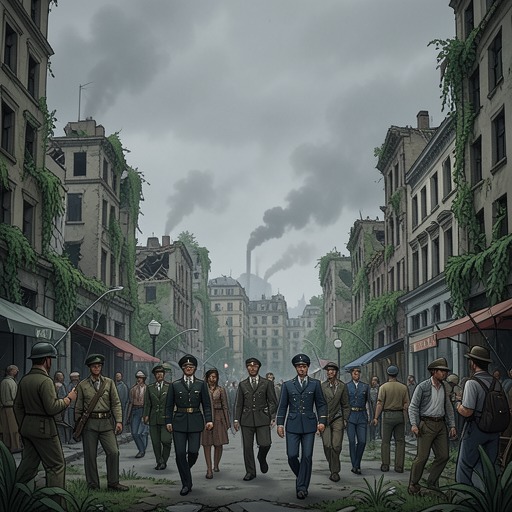
Systema Delenda EstSystemless State is the condition of existing without the System’s status display, Skills, quests, rewards, and imposed framework of meaning. For Muar, it is an intolerable void; for Cato, it is the necessary breach through which a different reality can be constructed. The state therefore carries two opposed meanings at once: deprivation and liberation, depending on whether the subject experiences the System as the source of purpose or as an instrument of control.
Definition and Immediate Experience
Systemless State removes the ordinary interface through which inhabitants understand themselves and their world. In the blank space remembered by Muar, there was no status, no usable means of interpreting surrounding reality, and no evident path of advancement. The absence was not merely technological. It felt like the removal of purpose, direction, and meaning itself. Muar encountered the condition as a silent, lifeless void and emerged from it convinced that a world without the System would be aimless nothingness.
That experience transformed Muar’s formerly weak indifference into fervent devotion. Once he returned to a System temple on Uriva, the presence of the System felt soothing, like awakening from a nightmare. Its promise of direction, reward, and motivation supplied the structure by which he understood progress and truth. The contrast is crucial: Systemless State is not presented as a neutral disconnection. To a believer such as Muar, it is existential horror precisely because the System has become the measure of intelligibility.
Cato’s Deliberate Construction of Systemless Space
Cato treats the same condition as a strategic objective rather than a catastrophe. On Sydea, he establishes System-free buildings whose interior rooms contain sleek black organisms and machines that interfere with the System so thoroughly that even a person’s Status becomes difficult to access. The equipment is intrinsically incompatible with the System, which means that conventional System appraisal cannot properly identify it. Dyen sees the room as profane and mysterious, but he is interested less in its metaphysics than in whether Cato can use it to grant him power.
Cato’s resistance depends on exploiting the System’s technological restrictions. The System renders most complex machinery nonfunctional, so Cato’s warframe and infrastructure must be organic while behaving like advanced industrial technology. A blank System interface is implanted in the crown of the warframe’s cranium and temporarily puppeted so that the System can integrate it; this interface is the sole portion left unprotected. Elsewhere, Cato uses biological machinery, orbital industry, and living weapons to create capabilities the System’s ban was meant to prevent. Systemless State is consequently not an empty condition for him but an engineering environment in which alternative forms of computation, manufacture, communication, and warfare become possible.
The condition also changes the meaning of ordinary objects. A System map is a thin, flexible sheet that falls apart without System support, and its information can be downloaded only through a System information pylon. Cato can read and preserve the map’s contents, but he still considers it inferior to a satellite view. This dependence reveals how deeply the System has materialized its authority: even a map is not simply a physical artifact but an object whose coherence depends on the institution being opposed.
Communication, Bodies, and Material Alternatives
Cato’s Systemless operations require substitutes for the System’s communications network. When he reconnects with Raine and Leese after months of silence, his voice reaches them through communications lizards worn on their heads. The connection is difficult to establish without using anything that might alert the System, and it is not yet worldwide. Communication therefore becomes a measure of the unfinished nature of liberation: Cato has escaped the System’s informational monopoly in principle, but he must painstakingly rebuild reach, reliability, and scale through biological means.
The same tension appears in physical embodiment. Yaniss’s transition into base reality gives the Systemless project a particularly concrete dimension. Her body is grown from her own unaltered genetics, and the station Cato builds for her is sized to the diminutive bodies of the Ikent. She must dress herself manually, perform a simple reflex such as ruffling her feathers, and move through a rotating habitat with her own senses rather than through a filtered digital environment. The awkwardness of these actions is part of the revelation. Base reality is less polished and less precise than her former existence, but it is immediate, raw, and unmediated; Systemless existence can therefore restore capacities that an apparently more advanced digital life had made unnecessary.
The contrast also clarifies that Cato is not merely replacing one interface with another. His databases and tools are built through investigation of base reality rather than endless residence in synthesized creations. Systemless State becomes a return to material contingency as well as a political separation from System authority. The imperfect body, the manually specified room, and the visible world beyond the habitat’s glass all make freedom tangible through friction.
From Local Exception to Expanding Infrastructure
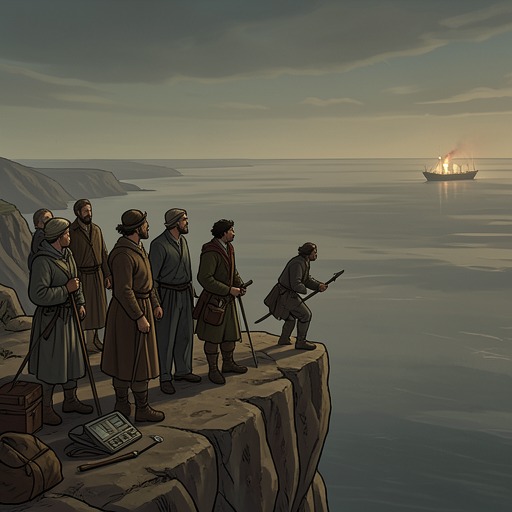
At first, Systemless State is precarious. Cato waits in a lunar crater while drones dig through regolith for volatiles and metals, a rudimentary solar array gathers power, and a hacked-together manufactory processes whatever materials the drones recover. Bio-fusion does not scale well, and proper metals remain scarce. This slow beginning gives the condition an important temporal pattern: exponential growth can be extremely slow before its accumulated infrastructure produces a sudden transformation.
That transformation eventually spreads across hundreds of worlds. Cato industrializes each one with factories, mines, refineries, solar arrays, atmospheric extraction, and the processing of frozen volatiles. Local armies and manufacturing systems compensate for his inability to move large forces through portals. The Systemless alternative thus develops through distributed production rather than a single replacement capital. Industrial capacity, communications, warframes, and biological weapons turn isolated exceptions into a network capable of challenging the System across planetary distances.
The System responds by treating Cato’s organisms as low-ranked threats and by attempting to regulate access through portals. Yet the apparent weakness of his Copper creatures conceals the scale of the systemless infrastructure behind them. The conflict becomes a contest between a centralized authority that controls rank and access and a distributed production network that can reproduce its own tools outside those categories.
Political Consequences and Ethical Ambivalence
Systemless State is never simply benign. The System’s enemies use it to shelter refugees, build weapons, and undermine imposed rules, but they also wield biological technologies against populations still trapped inside the System. When more than twelve million Copper and Silver inhabitants of a world are condemned by exterminatus, Cato responds with millions of one-ton canisters of Big Bad Bug Bombs. Half are intended to form a planetary System-jamming network that might disrupt sterilization; the rest support a more direct countermeasure. The episode shows both the urgency and the danger of liberation conducted through biological force, especially when the threatened population may face genocide and the rescuing power has its own capacity for mass violence.
The Systemless condition also exposes who receives protection from institutions and who is discarded when ordinary rules are suspended. Dungeons can be suspended, portals can be restricted, and whole populations can be designated for extermination while the System continues to present these decisions as administrative operations. Cato’s interference interrupts that order, but his interventions likewise impose sudden deadlines, forced lassitude, and military occupation. The resulting politics resemble an exception confronting an exception: the System suspends its protections to destroy worlds, while Cato suspends ordinary security and autonomy to break the System’s hold.
Systemic Break and Historical Significance
The decisive importance of Systemless State lies in its movement from private terror to collective possibility. Muar’s memory defines the condition as a loss of meaning and drives him to fight for the System. Cato’s laboratories, warframes, communications systems, and industrial worlds redefine it as the precondition for self-determination. Yaniss’s embodied return to base reality supplies a third perspective, in which freedom is neither doctrinal faith nor pure military opposition but the recovery of direct contact with the world.
By the late campaign, Cato can activate The Phage across the frontier, use Chill Out to place most inhabitants into forced lassitude, and assemble micro-warframes from the ground as his forces advance. These operations reveal how far the alternative infrastructure has matured: Systemless State no longer means a single blank room or an improvised lunar factory, but a coordinated reality capable of mass action across more than half a million worlds. When System influence is restricted around the War Worlds, ordinary physics resumes, demonstrating that the System’s reality was itself contingent rather than natural.
The final confrontation makes the condition foundational to the System’s collapse. Cato’s dispute with Misse Eln is explicitly directed at the System rather than at one deity or clan, while Misse’s consolidation of power and the collapse of the frontier show how threatened authorities react by absorbing worlds and withdrawing protections. Systemless State is therefore the negative space that reveals the System’s power: once its interfaces, portals, rewards, and physical rules can be interrupted, the supposedly universal order appears as an infrastructure that can fail, be resisted, and eventually be replaced.