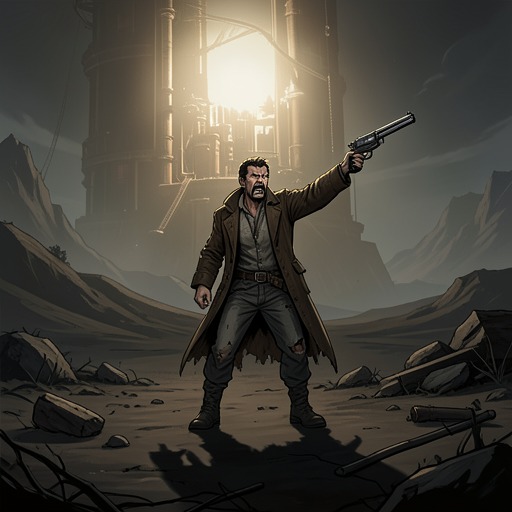
Tornok World Exterminatus
Systema Delenda EstTornok World Exterminatus is the destruction of the Tornok homeworld after the world is condemned during the war between Cato and the System. The event is not merely a battlefield loss. It is a calculated act of world liquidation by the System’s ruling powers, enabled by Clan Eln’s willingness to sacrifice a politically useful but ultimately expendable subordinate world. Its decisive significance lies in the collision between two forms of total war: Cato’s expanding industrial campaign, which can overwhelm defenses if given time, and the System’s capacity to erase entire worlds rather than allow them to pass into his control.
Causes and Political Background
The immediate strategic problem was that Cato’s forces had penetrated the Tornok sphere deeply enough for the world to become a test case. Moskar Lundt argued that even a local victory might not matter if Cato had already thoroughly infested the world with his artifice. He wanted a purge, but his position was complicated by Tornok’s value as a subsidiary of Clan Eln. The world was not simply a disposable frontier settlement: preserving it could protect Clan Lundt’s interests and provide a chance to test the defensive methods that the clans had assembled against Cato.
Misse Eln treated the crisis differently. The danger to the Tornok world gave her an opportunity to consolidate authority over Clan Eln and strengthen its position among the Core Worlds. She recognized that the independent gods were frightened by the possibility that Cato’s forces could turn against them, and she regarded that fear as politically useful. The Tornok could therefore serve as a sacrifice, allowing Misse to demonstrate Eln piety, embarrass Moskar Lundt, and make the other clans dependent on her judgment. The loss of roughly a hundred associated worlds was acceptable to her because Clan Eln controlled more than fifteen thousand; the destruction would be costly, but the political influence gained from directing it could outweigh the immediate loss.
The formal justification was military learning. Misse pointed to the scry-views showing Azoth-ranked defenders smashing or incinerating substantial portions of Cato’s machinery and concluded that the clans possessed some ability to resist an incursion if it was detected early enough. She therefore declared the affected worlds condemned, presenting their destruction as a necessary sacrifice for understanding and combating the threat posed by Cato. Her public posture turned extermination into proof of resolve: hesitation and mercy were framed as dangers to the entire System.
Condemnation and Course of the Destruction
The condemnation reached Dyen in the middle of his personal confrontation with Nomok, a Tornok-Clan Elder searching the blasted battlefield for him. A System notification announced that the world had been condemned by Cato and that evacuation had begun through the world portal at the Planetary Capital. For Dyen, the notification meant that Tornok’s power was broken and its future erased. It also created a brief, bitter sense of victory, because the destruction of the homeworld advanced his vendetta against the Tornok elders even as it annihilated the society connected to them.
The final collapse left almost no time for evacuation. System-aligned forces conducted a fighting retreat that held most of Cato’s forces away from the surface until only minutes before the extermination. That delay was strategically effective but catastrophic for civilians: there was insufficient time to de-orbit rescue resources or move the population through the portals. Cato managed to digitize only a few thousand people, most of them belonging to servant races. Cato-Tornok, Raine Talis, and Leese Talis transmitted out with the small group of survivors rather than remain to inherit a world already being scoured.
The physical scale of the destruction is emphasized by comparison with other System collapses. When a planetary Nexus was removed from Sydea, towns lost essence, lights went out, and System-supported mountains, lakes, ecosystems, and alien forests began to fail. The aftermath on Heyk showed the ecological danger of such a transition even where the planet was not deliberately destroyed: massive plant die-offs threatened oxygen levels, while native bacteria could not break down the dead alien biomass. Tornok’s extermination was more violent still. The world was turned half-molten by the fall of its moon, transforming planetary condemnation from administrative language into geological devastation.
The wider war makes clear that Cato also possessed destructive tools capable of producing comparable devastation. His orbital railguns could launch one-ton precision rods at targets more than a hundred thousand miles away, transferring almost all of the projectile’s energy into the impact rather than wasting it as a conventional bomb would. In another confrontation, Kosch’s shadow wave spread across half a continent and left a thousand-mile circle of empty darkness before withdrawing without leaving anything behind. These examples establish the military environment in which Tornok was lost: orbital industry, divine abilities, System quests, and planetary-scale weapons made ordinary distinctions between battle and apocalypse increasingly unstable.
Death Toll and Immediate Aftermath
Cato’s response reveals the human cost that the official language of condemnation conceals. He held a moment of silence not only for Dyen but for everyone who died on Tornok, acknowledging that millions of lower-ranked inhabitants had been unable to evacuate. The deaths were not presented as an unavoidable natural disaster. Cato understood them as a consequence of the System’s decision to kill its own subjects rather than allow him to free them, and he recognized his own presence as part of the cause: worlds were being destroyed because his campaign had made them strategically dangerous to the System.
The few survivors who escaped carried only a fragment of the world’s population and social structure. The evacuation was therefore not a rescue in any complete sense; it was the extraction of a remnant from a civilization that had ceased to exist. The event also ended Tornok’s subsidiary status and created a political vacuum across many associated worlds. Clan Mokrom, favored by Clan Lundt, was positioned to expand into that vacuum, while Clan Eln calculated that even this possible gain for a rival could ultimately extend Eln influence over the other clans.
Tornok’s destruction also became part of the System’s broader Crusade logic. Crusade notifications interrupted strategic discussions elsewhere, reporting that worlds such as Sunac and Enksa had been considered lost to Cato and purified, with essence granted as a reward. The notification structure converts extermination into a system-readable achievement: a lost population becomes a completed objective, a destroyed world becomes an essence payment, and political failure is recoded as doctrinal success. Tornok is therefore not an isolated act of desperation but one instance of a repeatable protocol for dealing with worlds that cannot be securely retained.
Strategic Consequences
For Cato, the disaster exposed the central weakness of his expansion. His forces possessed overwhelming material weight, and given enough preparation time they could make defense against them untenable. Yet they were divided among many worlds, while System-aligned individuals could reinforce the remaining battlefields as other worlds closed. The ratio of Cato’s fighters to the defending Azoths fell sharply as the war narrowed, and the System’s bespoke high-rank abilities adapted to his defenses faster than his industrial base could adapt in return.
The time limit was therefore decisive. Cato judged that his side might have won under less compressed conditions, but the exterminatus denied him the time required to deploy factories, move weapons, de-orbit rescue assets, and complete digitization. The System did not need to defeat every invasion force directly. It needed only to hold the surface long enough to make evacuation impossible and then destroy the world before Cato could convert conquest into liberation.
At the same time, the destruction failed to contain the underlying threat. Misse later learned that Cato’s forces had reached every Inner World and that his artifice was present beyond the System’s apparent reach. The revelation transformed Cato from an opportunistic raider into a spreading disease. The frontier might be abandoned, but the Inner Worlds were too valuable to condemn in the same way as Tornok. Repeating the policy everywhere would expose the failure of the anti-Cato campaign and undermine Misse’s assurances that victory was near. Tornok thus served as a successful local purge and a strategic warning that the same solution could not be applied indefinitely.
Narrative and Thematic Significance
Tornok World Exterminatus turns the language of governance into the language of mass death. Misse’s declaration that the condemned worlds are a necessary sacrifice does not erase the inhabitants; it reveals the hierarchy that makes their lives expendable. The System’s political order treats worlds as resources, subsidiaries, tests, and rewards before it treats them as homes. Its supposedly rational response to Cato is therefore inseparable from the violence of the order he is trying to destroy.
The event also complicates Cato’s liberationist position. He opposes the System’s enslavement and wants to save its populations, but his campaign makes worlds targets for annihilation, and his own forces cannot always reach civilians before the deadline. His orbital bombardments, railgun strikes, and high-speed offensives are materially different from System purification, yet Tornok shows how both sides operate within a war in which planetary populations bear the cost of strategic calculation. Cato’s silence for the dead is significant precisely because it does not absolve him: he understands that opposition to the System has produced consequences he cannot fully prevent.
Finally, the exterminatus establishes a recurring pattern for the later war. A world is first judged strategically compromised, then classified as condemned, then opened to evacuation under impossible conditions, and finally converted into a resource-bearing notification. The contrast between that abstract sequence and the concrete fate of Tornok—millions dead, a moon falling, a world turned half-molten, and only a few thousand rescued—makes the event one of the clearest demonstrations of what the System must do to preserve itself. It can survive the loss of a world. The people on that world cannot.