Fraale
Tales From Otherworld: Collection OneFraale is the deceased wife whose memory anchors Rozurial’s emotional past. She is not present as an active participant in the current household’s events, but her remembered marriage supplies the clearest image of the love Rozurial once possessed and the losses that shaped his later existence. Through dreams and waking recollection, Fraale remains a living presence in his inner life even though the narrative gives no indication that she can return to him.
Identity and Place in Rozurial’s Past
Fraale was Rozurial’s wife, and their marriage is remembered as a period in which the two lived in love. Rozurial’s recollections place her beside him during the idealistic days of that marriage, contrasting sharply with the childhood world he had known before Dredge destroyed his family. The memory therefore joins two stages of his history: the earlier catastrophe that shattered his family and the later, more intimate life he built with Fraale.
Rozurial remembers Fraale as the only woman who ever fully won his heart. That distinction makes her more than a former spouse in his biography. She represents the emotional standard against which later intimacy is measured, and her absence explains why his attachment to the past is not merely nostalgic. The memory of Fraale is tied to a love he regards as complete, not provisional or replaceable.
Dreams, Memory, and Trauma
Rozurial’s dreams repeatedly return him to the years of his childhood before Dredge’s attack and to the marriage in which Fraale and he lived together in love. These dreams do not present the past as a settled chapter. Instead, sleep carries him back into successive versions of what has been lost, making the destroyed family and the vanished marriage recurring destinations of his unconscious life.
The return from those dreams is itself difficult. After waking, Rozurial must allow his heart to slow and remember who he is and how he became the man he is now. He then recalls the long centuries of his life, his transformation into an incubus, and his continuing hatred toward Zeus and Hera. Fraale’s memory thus stands within a larger chain of rupture: family destruction, the loss of his marriage, supernatural transformation, and centuries of accumulated suffering.
Connection to Rozurial’s Later Intimacy
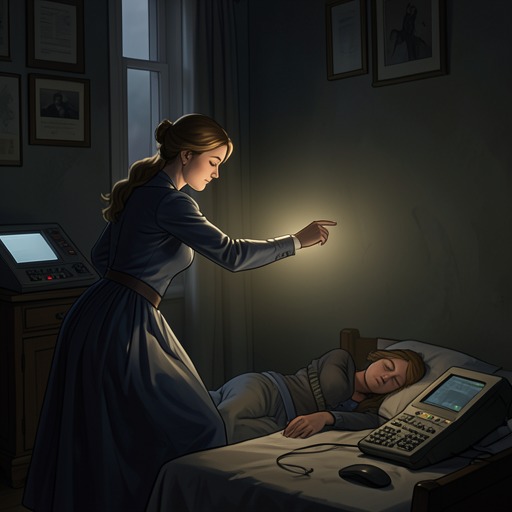
Fraale’s importance becomes especially clear when Rozurial comforts Hanna. Hanna has lost her husband, children, and home, and has been driven far from her original land after following her conscience. As Rozurial sits beside her while she sleeps, he recognizes that they share the experience of losing everyone and everything they loved, as well as memories of the torture and death of their families.
The parallel does not erase Fraale or replace the marriage she shared with Rozurial. Instead, it gives his grief a relational language. Because he has known the loss of a beloved wife, he can recognize the depth of Hanna’s loneliness; because both have survived the destruction of their families, he can approach her suffering without treating it as an abstract sorrow. Fraale’s absence therefore becomes part of the emotional bridge through which Rozurial reaches another bereaved person.
Narrative Significance
Fraale functions as an absent but decisive figure in Rozurial’s characterization. Her role is established through the contrast between remembered love and the violence that followed, allowing the narrative to show that his present identity cannot be separated from what was taken from him. The dreams that return him to her also make memory a recurring structure rather than a single exposition of backstory.
Her presence in the story is consequently double-edged. Fraale embodies the idealized marriage that once gave Rozurial happiness, but remembering her also forces him to confront the centuries of loss, transformation, and resentment that came afterward. The character’s significance lies less in direct action than in this pressure exerted from the past: Fraale remains the measure of Rozurial’s deepest attachment and one of the wounds through which his capacity for compassion is revealed.