Hanna
Tales From Otherworld: Collection OneHanna is both the household’s physical backbone and one of its most wounded guardians. A sturdy woman from the Northlands, she moves through communal work with force and competence, yet carries the private burden of having saved Camille from Hyto’s torture and ended the life of her own son, Kjell, when no other choice remained. Her character is defined by that contrast: the same hands that lift food, tend children, and organize a crowded home also tremble under the memory of an irreversible act.
Identity and Place in the Household
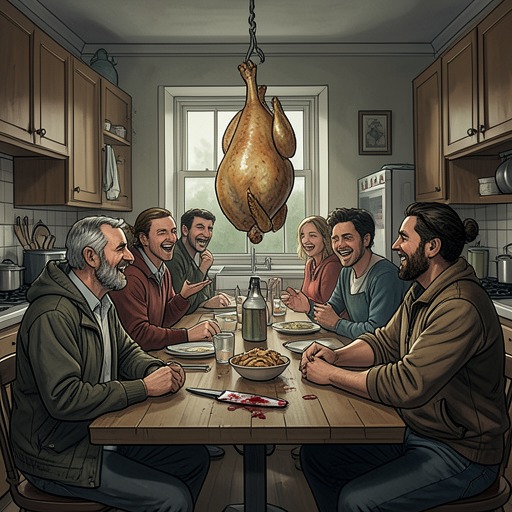
Hanna is introduced through action rather than exposition. During the Thanksgiving preparations, she carries a pan of biscuits over her head while navigating around Rozurial, who is bringing apples to the table for Delilah D’Artigo to peel. She is described as Iris’s lieutenant commander in the kitchen, even though the two women jostle over territory. This image establishes Hanna as an active authority within the household: Iris runs the larger operation, but Hanna is trusted to enforce its immediate order, pace, and standards.
Her authority is practical rather than ceremonial. When Iris leaves to check the tablecloths and napkins, Hanna remains embedded in the work of feeding a large extended family. She helps prepare the holiday meal while Menolly D’Artigo, because of her vampirism, cannot join the feast in the ordinary way. Hanna’s role therefore belongs to a household whose domestic rituals must continually adapt to different bodies, species, and needs. Her labor helps make that adaptation feel ordinary.
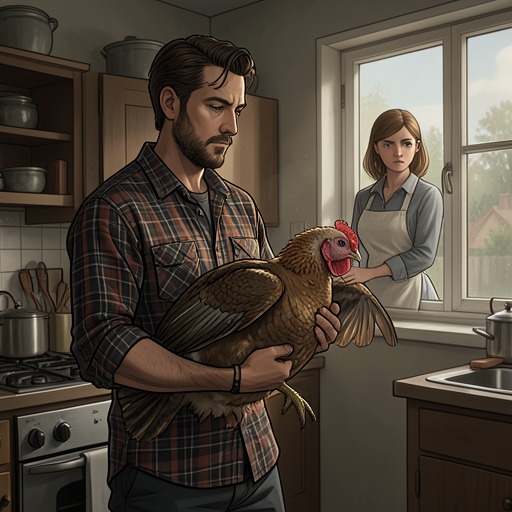
Hanna also possesses a firm sense of ownership and boundaries. When Iris objects to the live turkey in the kitchen, Hanna reminds her that Iris has her own kitchen now and then joins the demand that the animal be removed. The exchange is comic, but it also reveals Hanna’s confidence in confronting stronger personalities. She does not merely serve the household; she helps define how its shared space is governed.
Labor, Care, and Domestic Authority
The Thanksgiving scene places Hanna at the center of preparation as a communal discipline. She carries biscuits, supervises the kitchen, and later opens the oven while Delilah D’Artigo helps remove cookies. When Delilah grabs a hot cookie, Hanna scolds her in her native dialect, but Delilah’s desire for it wins out. The moment gives Hanna a recognizable domestic sternness without reducing her to severity: she protects the rules of the kitchen, yet the household remains warm, improvised, and full of appetite.
Her care extends to children. When Maggie’s stuffed bear appears to float through the house, Hanna checks whether Maggie is in the bathroom and then picks up the bear, explaining that it had been on the table when she last saw it. She goes to her room to check the crib, because Maggie sleeps there with her at night. Hanna’s care is thus intimate and routine, not an occasional gesture performed for narrative effect. She provides the nightly security of a sleeping space and notices the child’s objects and movements closely.
That caregiving role becomes crucial when Maggie’s dead mother appears as a woodland gargoyle. Hanna is among those who search for the child, and the group eventually finds the ghostly mother leaning over Maggie’s crib. Delilah D’Artigo tells the apparition that they are caring for Maggie as well as they can, while Menolly D’Artigo offers guarded reassurance. Hanna’s place in this scene is implied by the fact that Maggie sleeps in her room: the ghost’s visit confirms that the living household has assumed a maternal responsibility that Hanna helps embody. The mother’s relief and tears of joy validate the care surrounding Maggie, even across the boundary between life and death.
Rescue, Sacrifice, and Guilt
Hanna’s deepest plot significance comes through the account of Camille’s ordeal. Rozurial knows that Hanna helped Camille escape Hyto’s lair, tended Camille’s wounds, and supported her after the torture sessions inflicted by the crazed dragon. Hanna’s assistance is not limited to the moment of escape; she remains important in the aftermath, when survival still requires care and emotional support. Her strength is therefore shown as sustained protection rather than a single act of bravery.
The rescue is inseparable from a more devastating act. Hanna saved her own son by ending his life, and the narrative insists that there was no other choice. The necessity of the decision does not lessen its cost. Everyone knows that Hanna carries the memory like a stone around her neck, an image that turns moral burden into something bodily and permanent. Her sacrifice protects her son from a worse fate, but it also creates the guilt that governs her most exposed moments.
That guilt surfaces in a sleepwalking episode. Rozurial hears something moving outside the studio and finds Hanna pacing across the floor while the front door stands open. She is sturdy and strong in ordinary circumstances, but now her face is a mask of fear, and she is unaware of his presence. Her murmured plea to Kjell reveals that the past remains active within her: she asks her son to forgive her and to understand why she did what she did. The scene transforms her from household commander into a woman trapped inside an unresolved moral memory.
Rozurial responds without startling her. He lowers his dagger, removes his duster, approaches silently, and places an arm around her shoulders before leading her to his room. His touch quiets her; once tucked into bed, she falls into deep sleep. The care is deliberately gentle and practical, echoing the care Hanna gives others. In this reversal, the woman who rescued Camille and protects Maggie becomes the person who must be protected from the force of her own recollection.
Family Networks and Social Integration
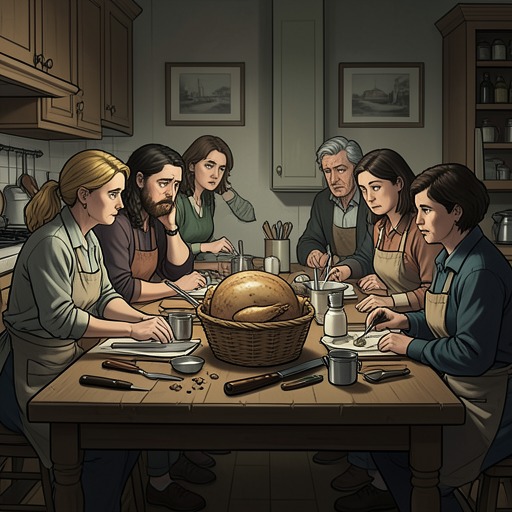
Hanna’s relationships are most clearly expressed through the household’s dense network of shared responsibilities. She works beside Iris, Delilah D’Artigo, Menolly D’Artigo, Morio, Trillian, Rozurial, and others during the Thanksgiving preparations, with each person contributing to a meal large enough for sixteen people, including newly found cousins. Her position is neither that of a servant detached from the family nor that of an isolated outsider. She is one of the people through whom the household functions.
Her connection with Maggie is especially significant. Hanna gives Maggie a place to sleep, checks on her when something strange happens, and participates in the community that promises the child’s ghostly mother that Maggie is being cared for. This bond makes Hanna part of the household’s chosen and extended parenthood, where biological relation, species, and legal status do not determine who may protect a child.
Hanna also appears in moments of collective celebration. She races from the path carrying Maggie when the household prepares an anniversary surprise for Camille D’Artigo and Trillian. The prank gathers Morio, Smoky, Shade, Nerissa, Rozurial, Vanzir, Delilah D’Artigo, and others among the trees, tables, lights, music, and presents. Hanna’s laughter places her within the group’s emotional center: she is not only the person who keeps the house running but also a participant in its affection and play.
Limits, Change, and Narrative Function
Hanna’s integration into the household is not complete or effortless. Delilah D’Artigo says that Hanna does not yet know enough about running the place and cannot read English, so she is given an afternoon off to shop while domestic planning is transferred to someone else. This detail marks a practical limitation without negating her authority. Hanna can command a kitchen, care for a child, and endure dangerous circumstances, but she still occupies a transitional position in a multilingual, culturally complex household.
The contrast between Hanna’s public competence and private distress gives her an unusually layered function in the recalled scenes. She is comic when she scolds Delilah D’Artigo for eating molten chocolate, commanding when she disputes Iris’s claim to the kitchen, tender when Maggie sleeps in her room, and tragic when she sleepwalks toward Kjell’s memory. These modes do not cancel one another. Together they show how ordinary labor and extraordinary suffering coexist within the same person.
Hanna’s ending in these episodes is not a final resolution of her guilt, but a temporary rest. Rozurial’s intervention returns her to sleep, just as the household’s shared work repeatedly returns her to practical life. Her story therefore remains suspended between care and remembrance: she continues to protect others, while the consequences of her sacrifice continue to seek recognition. In the larger emotional architecture of the book, Hanna demonstrates that rescue can save a life without saving the rescuer from grief, and that a family may become a place where even such grief can be carried by more than one person.