Kjell’s death
Tales From Otherworld: Collection OneHanna’s killing of her son, Kjell, is a remembered act of rescue that leaves her with an enduring burden of guilt. The narrative does not show the death as it happens; instead, Rozurial learns what Hanna did through Camille D’Artigo’s account of her escape from Hyto, and later witnesses the memory returning to Hanna in a sleepwalking episode.
Circumstances and Choice
The account connects Kjell’s death to the ordeal surrounding Hyto’s lair. Hanna helped Camille escape, tended to her wounds, and supported her as she coped with the torture Hyto had inflicted. Camille also told Rozurial and the others that Hanna had saved her own son by ending his life. The narration makes the terrible stakes plain while withholding the immediate circumstances: it says there was no other choice, but does not describe how the decision unfolded or what danger confronted Kjell.
That framing is central to the event’s meaning. Hanna’s act is presented as an attempt to save her son, not as a rejection of him; nevertheless, the necessity of the choice does not free her from its cost. Her later plea for forgiveness shows that she continues to experience the decision as a source of guilt and grief.
How the Death Is Revealed
Kjell’s death reaches the reader as part of Rozurial’s knowledge of Camille’s ordeal, rather than through a scene of the death itself. Camille told the group about Hanna’s help after she was able to speak about what had happened to her. Through that disclosure, Hanna’s act becomes part of the larger account of the rescue: alongside Camille’s escape and recovery, there is the devastating price Hanna paid in trying to save her child.
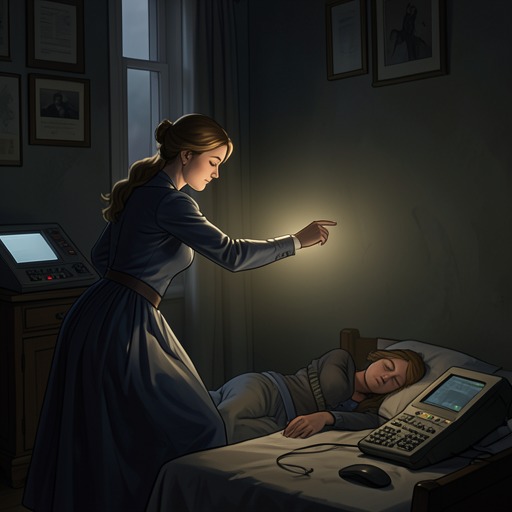
The revelation also gives context to Hanna’s sleepwalking. When Rozurial finds her pacing with the studio door open, she does not appear aware of him. He hears her ask Kjell to forgive her and to understand why she acted as she did. Her tearful, strained expression conveys a need for relief from guilt; the scene makes the remembered decision present without replaying it as action.
Guilt and Aftermath
The narration identifies guilt and regret as what drive Hanna out of bed and into this waking dream. The death has therefore not ended with the act itself: its memory returns in involuntary speech, and Hanna addresses her absent son as though forgiveness might still be reached. The scene gives her grief a continuing, visible form while leaving the details of the original crisis unstated.
The wider aftermath of Hyto’s violence remains visible elsewhere in the story. The place where Hyto captured Camille is marked by a change to its surroundings: after his father had blasted down the trees, Smoky and the men planted rose bushes in their place, at Trillian’s suggestion, in an effort to replace painful memories with prettier ones. This is not presented as a consequence of Kjell’s death, but it shows how the damage surrounding the rescue persists in the landscape as well as in memory.
Rozurial as Witness
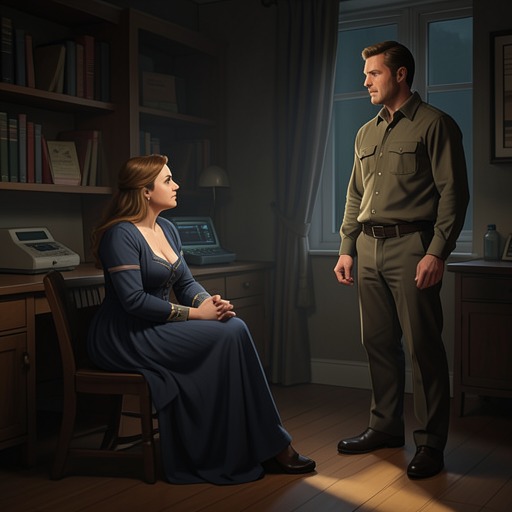
The remembered death is embedded in a scene that also brings Rozurial and Hanna’s losses into relation. After waking from dreams that return him to his childhood and to his lost family, Rozurial responds quietly to Hanna’s distress: he guides her to his room, tucks her into bed, and holds her hand as she sleeps. He recognizes that she has lost her husband, children, and home, and sees a likeness between their histories of family loss and torture. His care does not erase Hanna’s guilt or settle what happened to Kjell; it makes her grief witnessed rather than solitary.