Otherworld
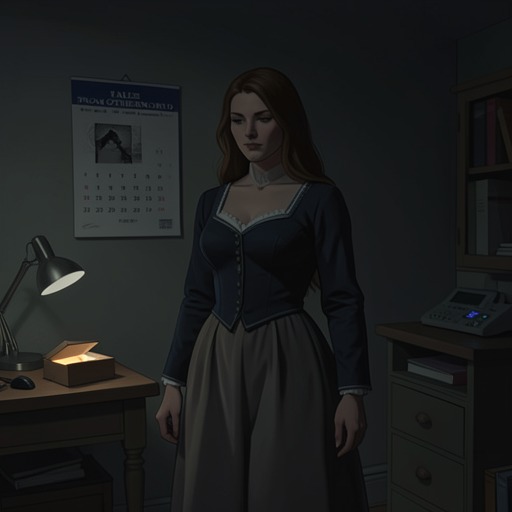
Tales From Otherworld: Collection OneOtherworld is the D’Artigo sisters’ supernatural homeland and the absent center of their divided existence. Although the supplied scenes occur largely on Earthside, Otherworld remains the place associated with family origin, magical belonging, sacred geography, and the possibility of returning to a less burdened self. Its presence is therefore both literal and emotional: a world the sisters can imagine revisiting, and a cultural framework that continues to shape their relationships, rituals, and responsibilities.
Homeland and Narrative Position
Otherworld enters the story as the place from which the D’Artigo sisters came before establishing their lives on Earthside. The August 2014 material is explicitly positioned after the sisters have crossed into Earthside but before Witchling, making their migration an important part of the setting’s background. Their Earthside life includes Camille D’Artigo’s bookstore, family obligations, unreliable magic, and a crowded household, but none of these erases the origin-world identity that Otherworld represents.
The contrast between the two worlds is especially clear when Camille D’Artigo considers leaving her responsibilities behind. Faced with frustration over Trillian’s abrupt departure and the pressure of managing the household, she imagines packing up for a few days and going home to Otherworld. The fantasy is specific rather than abstract: she would camp beside Lake Y’Leveshan, read, visit High Priestess Derisa in the Grove of the Moon Mother, and see Aunt Rythwar. Otherworld consequently functions as a mapped, familiar homeland, not merely a vague realm of escape.
Landscapes and Sacred Geography
The locations Camille D’Artigo recalls connect Otherworld to water, pilgrimage, kinship, and religious authority. Lake Y’Leveshan offers the image of a shore where she could withdraw from domestic demands, while the Grove of the Moon Mother provides access to High Priestess Derisa and to a sacred tradition larger than the immediate household. The imagined journey joins private rest with communal and spiritual belonging: Camille would not simply disappear, but move through a landscape populated by remembered relations and institutions.
This geography also clarifies what Earthside lacks for her in moments of strain. On Earthside, Camille tends magical herbs in a garden whose plants must remain inside the magical circle where they were planted until harvest. She worries about composting, the approaching rainy season, and the first frost, translating magic into continuous practical care. The garden is Earthside, yet its protected circle and living herbs preserve a distinctly Otherworldly relationship between land, season, and power. Her tending of the mandrake becomes a small act of continuity with the world she left.
Seasonal and Supernatural Continuities
Otherworldly power is not confined to a distant location. At Birchwater Pond, Delilah D’Artigo and Shade sit beside a bonfire in mid-October while the season is described as belonging to Hi’ran, the Autumn Lord. Delilah senses Hi’ran in the trees, flames, and chilled air, and learns that the Harvestmen are alert because something is underway. The scene places an Otherworldly seasonal order inside an Earthside landscape: the pond, fire pit, picnic tables, and shelter are domestic additions, but the force governing the night belongs to a supernatural cosmology.
The autumn setting gives Otherworld a recurring temporal presence. Seasonal change is not simply weather or decoration; it carries divine and political significance. The cool night, falling leaves, fire, and watchfulness of the Harvestmen make the boundary between worlds feel permeable. Earthside can host the signs and agents of Otherworldly power, while Otherworld remains the larger frame through which the sisters interpret those signs.
Otherworldly Life in the Earthside Household
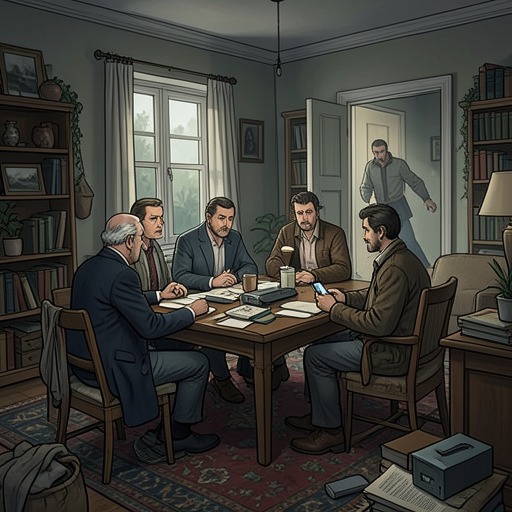
The family’s Earthside home also contains beings and practices that complicate any strict division between the two worlds. During Thanksgiving preparations, the household cooks for sixteen people, including newly found cousins, while Menolly D’Artigo cannot join the feast because her food-flavored blood does not allow her to participate in the meal in the same way. The scene presents a mixed household in which different supernatural conditions must be accommodated through shared labor and modified customs.
The same domestic world can become a site of supernatural visitation. Maggie’s dead mother appears as a doe-eyed woodland gargoyle with calico fur matching Maggie’s. Delilah D’Artigo and Menolly D’Artigo tell her that they are caring for the child as well as they can; the ghost responds with a smile, touches Maggie’s face, and leaves with sadness mingled with relief and joy. This encounter makes the household a point of contact among death, ancestry, species, and care. Otherworldly identity is not treated as an ornamental background but as part of the family’s everyday obligations.
Even practical crises carry traces of the same cultural mixture. When Smoky brings home a living turkey weighing about twenty-five pounds instead of a store-bought bird, the household’s supernatural family life collides with an ordinary holiday expectation. The incident is comic, but it also emphasizes that the sisters’ world is hybrid: Earthside food, holidays, and shops coexist with magical beings, unusual appetites, and customs that cannot be managed by ordinary assumptions alone.
Historical and Familial Reach
Otherworld’s significance extends backward through the family’s history. A separate scene recalls the first meeting between Maria D’Artigo and Sephreh ob Tanu shortly after the summer solstice, in a small outdoor café in a Spanish village. Maria is abroad studying art and searching for family she has never met, despite the danger of traveling to a country recently emerging from civil war while another war continues elsewhere in Europe. The encounter is presented as part of the lineage that will eventually produce the D’Artigo sisters, linking their supernatural inheritance to a human history of displacement, uncertainty, and chosen journeys.
Maria’s circumstances also give the idea of homeland a complicated emotional meaning. Her foster parents are dead, she has no boyfriend or close friend binding her to home, and she does not know what she wants from life. She travels because she believes that what she seeks cannot be found where she began. In that sense, the sisters’ later movement between Otherworld and Earthside repeats an older family pattern: departure is dangerous, but remaining in place can be equally impossible. Otherworld is a place of origin, yet the family’s identity is formed through movement between worlds rather than through uncomplicated permanence in one of them.
Narrative Significance
Otherworld serves as a counterweight to Earthside pressure. When Camille D’Artigo imagines its lakeshore, sacred grove, and familiar relatives, the world becomes an emotional refuge from marriage, household management, weather preparations, and the constant stress surrounding the family. Yet the narrative does not present it as a simple solution. Camille remains on Earthside, returns to her immediate duties, and continues tending the magical garden and responding to the household’s needs.
The world’s deeper function is therefore connective. It explains the sisters’ origins, supplies the sacred and seasonal vocabulary through which they understand danger, and remains present in objects, rituals, bodies, family memories, and supernatural encounters. Otherworld is distant enough to be longed for, but close enough to shape every Earthside choice. Its absence creates homesickness; its continuing influence prevents Earthside from becoming an ordinary human setting.