Samhain
Tales From Otherworld: Collection OneSamhain is more than a date on the calendar in these stories: it is an approaching season of death and witchcraft that reshapes how the characters read autumn, supernatural signs, and their own place in the world. Its nearness links ordinary household scenes to encounters with the dead and to a growing sense that something outside the natural order is drawing close.
Calendar and Narrative Placement
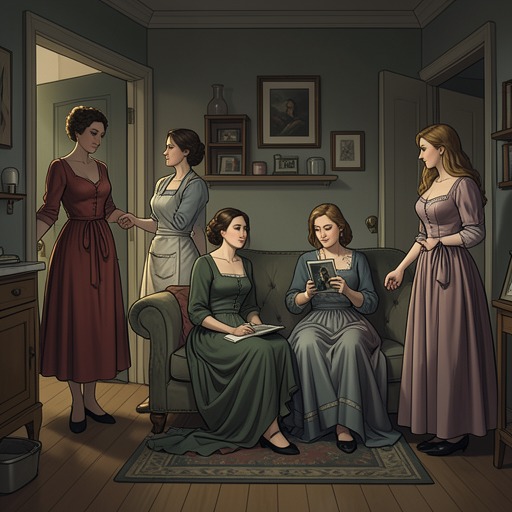
The ghost story is set before Samhain and before Harvest Hunting. Its opening domestic scene is explicitly seasonal: Camille D’Artigo, Delilah D’Artigo, and Menolly D’Artigo are carving pumpkins in a kitchen strewn with newspaper, orange pulp, and seeds. The carving situates the haunting on the threshold of the festival, while the unexplained sounds and the household’s vigilance over its wards introduce a supernatural disturbance before the holiday arrives.
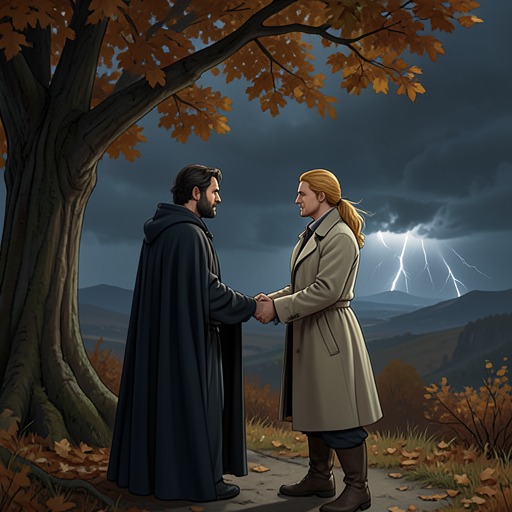
A separate autumn scene, set shortly before Autumn Whispers, makes Samhain’s approach explicit. On a cool, clear evening in mid-October, Delilah and Shade sit by a bonfire at Birchwater Pond. The trees are shedding leaves, stars show overhead, and the flames furnish a warm, intimate setting; nevertheless, the conversation turns toward alertness and foreboding. The scene places Samhain within a wider seasonal chronology rather than identifying every autumn gathering as part of the festival itself.
The stories also distinguish other holidays and periods in the book’s chronology. The Thanksgiving short is placed between Crimson Veil and the moments immediately before Priestess Dreaming begins, and its kitchen is busy with preparations for the following day: potatoes, boiled eggs for canapés, soup, biscuits, and pies. That separate holiday setting helps establish a broader calendar of family and seasonal scenes without making Thanksgiving another name for Samhain.
Household Preparations and the Dead
The pumpkin-carving scene begins with an ordinary family activity, but Camille’s repeated suspicion that something is in the house unsettles that domestic order. The wards show no intruder, and nothing appears out of place. Delilah, absorbed in a movie and eating Cheetos, has heard nothing; the difference between her casual response and Camille’s unease makes the unseen presence difficult to dismiss but not yet identifiable.
The disturbance becomes more concrete when Delilah reports seeing Maggie’s stuffed bear floating, then finds it on the floor. The front door remains locked, so the child could not have left by that route. At Maggie’s crib, the family finally sees a large woodland gargoyle whose calico fur resembles Maggie’s. The ghost is recognized as Maggie’s dead mother; the bear floats down beside the child as the apparition looks on. Because this visitation occurs before Samhain, the seasonal setting frames a return of the dead within a story about family care: the living are protecting Maggie, while her mother’s presence makes the boundary between the household and the dead briefly visible.
A Season Shared by Different Natures
At the bonfire, Delilah describes Samhain as the season of death, the Witch, and the cauldron. Its significance is personal as well as seasonal. Camille’s death magic and Menolly’s association with the vampire belong to the season’s pattern, and Delilah adds that it is now her season too, since she has become a Death Maiden. Samhain thus gathers distinct supernatural identities under one dark seasonal sign without making them interchangeable.
The scene’s intimacy and its unease coexist. Delilah and Shade have sought privacy by the pond, and their closeness unfolds beside a fire under the autumn sky. But Delilah senses Hi’ran, the Autumn Lord, in the trees, flames, and chill air. Shade says that the Harvestmen are alert and that something is approaching; he also senses that it is not part of the natural order. The approaching festival therefore intensifies the scene’s double register: autumn offers warmth, privacy, and connection, while its sacred season carries an expectation of danger.
Seasonal Meaning
Samhain functions as a threshold at which familiar routines take on supernatural weight. Pumpkin carving does not prevent the household from being crossed by a dead mother’s presence; a firelit evening does not dispel the sense of an approaching threat. In both settings, everyday acts—preparing for a festival, tending family, gathering by a fire—sit alongside realities the characters cannot fully control.
The seasonal language also turns supernatural difference into a form of kinship. Camille, Menolly, and Delilah meet Samhain through different powers and states, yet each is named in relation to the same season. That shared alignment makes the approaching festival more than atmosphere: it marks a period in which death, witchcraft, and the characters’ changing identities converge, while the warning at Birchwater Pond leaves the season’s promise unresolved.