Blanca
También esto pasaráBlanca is a forty-year-old woman whose mother’s funeral forces her to face both a death she cannot make comprehensible and an adulthood she has never quite felt prepared to occupy. Her account moves between mordant humor and unsoftened grief: she can describe her exhaustion, question her own place in the world, and still notice the people and small details around her. That alertness becomes a way of thinking about identity itself—less a matter of what people claim to be than of what they see.
Identity and Self-Perception
At twenty, Blanca imagined a life with the person she loved and several children. She pictured herself at sixty making apple pies for grandchildren, despite being unable to fry an egg, and at eighty drinking whisky with friends. But she never pictured herself at forty, or even fifty. At forty, she finds herself at her mother’s funeral, uncertain how she arrived there and physically overwhelmed by the town. She feels so tired and sad that she regards the clothes she is wearing as ruined beyond recovery.
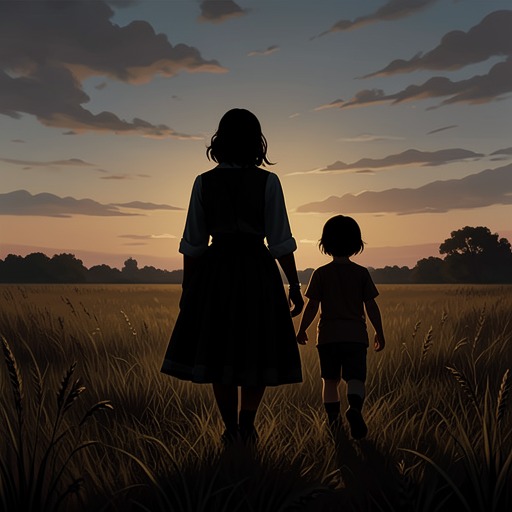
Her sense of adulthood remains unstable. While driving to Cadaqués with the children in the back and Sofía beside her, Blanca notices how strange it feels to be the person in charge: she sets the departure time, directs the babysitter, chooses the children’s clothes, and drives. She expects, almost, to be exposed as a fraud and sent to the back seat. The responsibilities are real, but inwardly she feels as she did at six, watching the passing world rather than confidently belonging among its adults.
Her Mother’s Death and Their Bond
At the funeral, Blanca registers how many people have come—and who is missing. She connects the poor attendance of some of her mother’s friends to the damage caused by her mother’s illness, while also acknowledging that she herself is not especially liked by everyone present. She attributes part of that estrangement to the weight her mother gradually placed on her shoulders: responsibility for her mother’s dwindling happiness. Blanca says that the burden remained even at a distance, and that she eventually drew away because she feared being buried under the same collapse.
That distance does not cancel her love. Blanca believes her mother loved her, without needing to measure that love as more or less. She distrusts the reassuring addition of “much” to an expression of love, seeing it as a dilution of words that are more powerful when stated plainly. Her reflections turn a private difficulty in speaking about affection into a larger part of her grief: the relationship was neither simple nor reducible to a comforting declaration.
The funeral’s starkness matches Blanca’s unsentimental view of death. It lasts twenty minutes, with no speeches, poems, prayers, flowers, or music. Her mother had forbidden poetry at her funeral, threatening to pursue the family from the grave if her poet friends recited anything. The only spoken words come when the elderly workers handling the coffin nearly drop it; Blanca finds the exclamation that follows unexpectedly apt. Afterward, Carolina takes her hand. Blanca registers the fact of her mother’s death and decides that moving to Cadaqués, where her mother now lies, may be best.
Motherhood, Memory, and the Road to Cadaqués
The journey to Cadaqués is an expedition for Blanca, and its practical arrangements sharpen her sense of being an impostor in adult life. She drives while Sofía copilots; the children laugh and fight behind them. Yet Blanca’s attention drifts through the view beyond the car: a dog appearing at a ground-floor window, an old man holding his grandson’s hand, handsome men, lonely elderly people, beggars, trees, and the glint of sunlight on her bracelets. She believes that what people notice defines them, and that people who see the same things recognize and love one another instinctively.
The road also opens a route into childhood. Blanca longs to trade her precarious adult authority for the back seat of her mother’s car, crowded with her brother, the nanny, children who came on holiday, and the family’s dogs. The remembered car is not simply an image of a happier past; it is a precise alternative to her present position at the wheel. She is now the one responsible for getting the children to Cadaqués, but the child who once travelled there remains vivid inside her.
Grief, Time, and the Work of Seeing
Blanca’s reflections on her friends and children turn toward the faces people grow into. She imagines that her friends’ inner selves eventually become visible, while her children are still too full of life for her to discern what they will become. She can scarcely look at her own face directly. Her mother’s, by contrast, disappeared behind the mask imposed by illness. Blanca describes trying, day after day, to get through the final years and find the face and gaze that were there before the illness changed them—a labor she likens to breaking down walls with a hammer.
She understands sadness as something that accumulates in thin, brittle layers, covering a person until only a faint light remains beneath them. Love may sometimes lift grief, she allows, but sometimes it cannot; time, rather than erasing sorrow, gradually tames it. This account gives her narration its characteristic tension: she refuses easy consolation but continues to look closely, returning to memory in the effort to recover what illness obscured. Her mother’s death leaves Blanca bereaved, yet the act of observing and remembering keeps their complicated bond present in the life she is still trying to inhabit.