Blanca and Santi's Badalona date
También esto pasaráBlanca and Santi’s Badalona date is a reunion in which desire briefly seems to restore life, only for Blanca’s body to register grief and exhaustion more forcefully than the evening’s romance can overcome. Their meal, hotel room, and hurried parting expose both the intimacy of their affair and the limits imposed by Santi’s marriage, while Blanca understands sex as a desperate counterforce to her mother’s death.
An affair as a response to bereavement
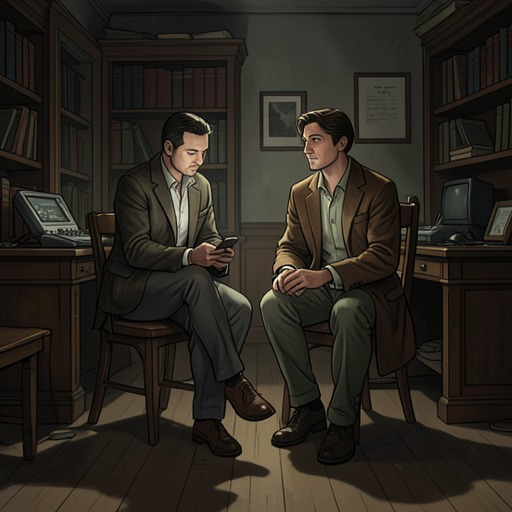
Blanca introduces the date through the unlikely geography of an affair: falling in love with a married man, she suggests, is how someone discovers the genuinely improbable corners of her own city. In Badalona, she and Santi eat dreadful croquettes in a filthy bar, yet experience the place and food as wonderful. They promise to return, pleased with themselves and worldly, as though they were dining at the Ritz. The joke depends on the distance between the setting and the grandeur they lend it; being together makes an unremarkable place feel like an adventure.
The reunion comes after weeks without seeing Santi, and since before Blanca’s mother died. Blanca sets their meeting against the months when her mother was struggling in bed against illness and dementia. While she was not too sad or tired, Blanca sought sex as a way of proving—to herself and to the world—that she was still alive. As her mother’s illness grew more fierce and relentless, Blanca’s sexual encounters seemed to grow fierce and relentless in turn. She imagines both women becoming dry, brittle trees, gray as ghosts and nearly reduced to dust. Her mother had answered that image by insisting that they were the two strongest people she knew, able to withstand any storm. The date therefore begins inside a grief the narrator cannot leave behind, even when she seeks the opposite of death in sex.
Reunion and the limits of intimacy
Santi arrives by bicycle wearing Blanca’s favorite old, faded red jeans and a khaki parka they bought together long ago. She suspects he has chosen the clothes to please her, and also to serve as a charm against the storms that often unsettle their relationship. Seeing him weave between cars toward her, standing on the bicycle as if he were twenty, makes her heart leap as it always does. She notices his compact, tanned body, developed lower half from skiing and cycling, and short, thick, often bruised hands. Her attraction is not an abstract recollection: it arrives as a physical jolt, a pulse quickened by his presence.
Their relationship has lasted more than two years, but Blanca has never wanted to know about Santi’s relationship with his wife. She calls this restraint delicacy and respect, while admitting it also comes from fear; in her view, people eventually show who they are, and one need only keep one’s eyes and ears open. At the date, Santi says he wishes he had been with her at the funeral. Blanca does not turn the admission into a discussion: she gets up and asks whether they should go. His expression of regret marks the absence between them, but the scene moves on rather than resolving it.
A room with a view, then a sick body
They find a small, pleasant, old-fashioned family hotel directly on the seafront. The room has two single beds, which Blanca jokes are the receptionist’s revenge for the spectacle downstairs. Yet its balcony opens onto a view that temporarily makes the sea and horizon feel like theirs. From that height, bathers appear as ants and regain their dignity. Santi, an architect unable to leave a space unimproved when given the chance, carries one mattress onto the balcony, lays Blanca on it, and begins to undress her. Bright light makes him difficult for her to see. She closes her eyes, tries to focus on his kisses moving slowly up her legs, and becomes so dizzy that what she wants is a glass of water.
After two sips, Blanca begins to vomit. She cannot stand; Santi takes her to the bathroom, where she continues until nothing solid remains, then brings up liquid for a long time. Even after the alcohol is gone, her body keeps trying to expel something. In the mirror she sees herself naked, gray and glassy-eyed like a specter, with Santi still dressed behind her. She contrasts her own collapse with his ability to drink and take drugs without losing his composure, though she notes that he later needs stimulants and cannot sleep without a joint or a sleeping pill. The balcony’s apparent paradise has given way to the body as a lost paradise: not a setting that can be mastered by desire, but a physical limit that makes the planned intimacy impossible.
The hurried ending and its contrast
Blanca is devoted to her imperfect body—soft, bony, asymmetrical, and disproportionate—and says she pampers it, follows it, and obeys what it asks of her. It is not a temple; she tries, with limited success, to make her mind one, while wanting the body to remain an amusement park. The contrast gives the vomiting scene more than the force of an embarrassing interruption. The body she indulges has its own demands, and on this night those demands displace the erotic encounter. Santi asks if she feels better; Blanca says the final gin and tonic was a bad idea because she had not eaten, and that if she does not die that night she will be fine the next day.
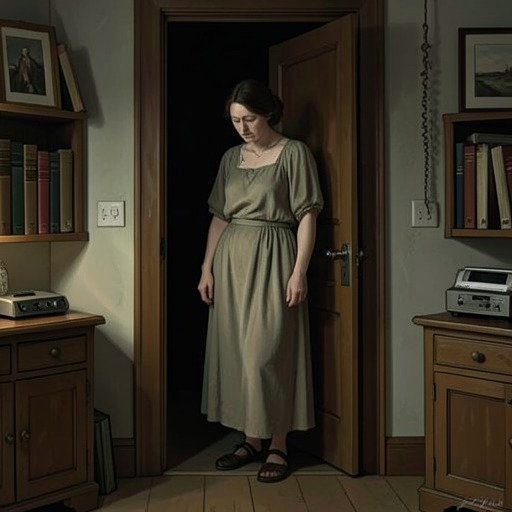
Santi loads his bicycle into Blanca’s car and accompanies her home. Exhausted, she opens the window and closes her eyes, wanting only to sleep. At the door he gives her a hurried kiss, then explains that there are many schools in the area and someone he knows might see him. Before leaving, he says he is going to Cadaqués with his family for a few days, invited by friends, and hopes to slip away sometime so they can meet. Blanca shuts the door, rushes upstairs, and runs to the bathroom, afraid she will vomit again. The date ends not in the promised return to the bar or the intimacy begun on the balcony, but in a private illness and another separation. Santi’s family plans also make visible the arrangement Blanca has tried not to examine: he can offer moments together, yet he leaves to travel with his wife and family.