El Tururut
También esto pasaráEl Tururut is the family boat through which Blanca’s memories of summer life in Cadaqués repeatedly meet the present. Beloved by her mother, it belonged to the rhythms of the family home and to Blanca’s childhood; after her mother’s death, a photograph of her at its helm becomes an image Blanca hopes to keep, while a new outing gives the children a chance to inhabit the same maritime world.
A Fixture of Family Life
El Tururut is already in the water when Blanca considers taking the children to Cadaqués. Her mother had taken care of everything, and Blanca treats the boat as part of the welcome awaiting them there. The suggestion that the family make use of it carries an implicit assurance that her mother would have wanted them to do so. The boat is therefore not only a means of getting out to sea: it is one of the practical arrangements through which the family’s life continues after her death.
In Blanca’s recollection of the house, boating belongs to a long, densely layered summer routine. The family’s shared past includes breakfasts of toasted bread and butter, beach towels drying on the railing, afternoon ice creams, and the first loves and dawns of youth. Later come Blanca’s children and their own visits to Cadaqués. Even as her mother grows old and the house changes, the daily pattern of breakfasts, the boat, lunches, naps, and card games scarcely alters. The routine persists even when happiness no longer feels as it once did, making the boat a steady element in a family life that has otherwise changed profoundly.
The Boat as a Record of Her Mother
Blanca recalls that nothing pleased her mother more than going out on the boat. A few months before her death, her mother gave her the family photograph albums, which Blanca had asked for instead of the valuable figures, books, or paintings. The albums had been started by Blanca’s grandfather and continued by her mother; her mother brought them home in a huge lilac suitcase, with a caregiver’s help. Blanca understands them as proof that the family had been happy, and imagines finding a photograph of her mother smiling at El Tururut’s helm, her hair full of wind and salt.
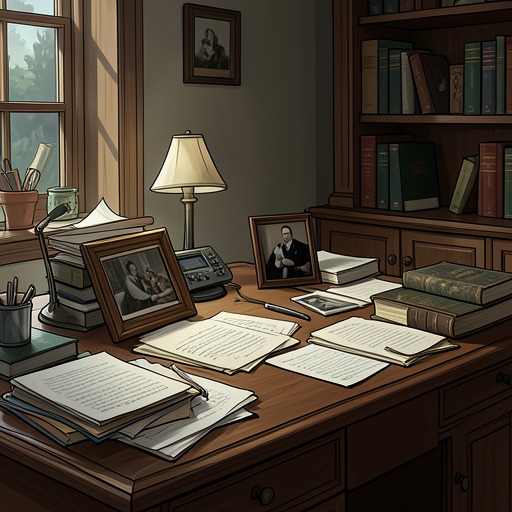
Blanca plans to place that photograph on the shelf beside one of her father. She has not yet opened the albums, however, and has not made the image part of the display. Her reluctance is not a lack of affection: she feels that her mother has not yet become a memory, and that time will eventually make the photograph possible. El Tururut thus holds a particular tension between an available past, preserved in albums, and a loss Blanca is not ready to regard as settled.
A New Outing, an Old Gesture
On a later summer outing, Guillem leads the children and adults down the cobbled streets toward the harbor. The children wait at the dock in orange life jackets while the group prepares to go out; Guillem quickly befriends the boatman and gets his telephone number for the return. Once aboard, he takes charge with a sailor’s cap, a fishing rod, and a paddle, then performs an elaborate imitation of Blanca’s mother. He warns the children that a boat is dangerous and pretends to lose track of the anchor, keys, bag, and glasses. The imitation is so exact that everyone laughs.
The boat leaves the shore and its old motor rattles like a chronic smoker, drowning out conversation. The quiet journey gathers the group into a shared pause: Blanca feels Nico’s warm, pudgy hand in hers; the children take turns at the helm; Edgar sits astride the bow as Blanca did when she was a child; Sofía drinks a beer with her eyes closed; and Patum sleeps at Blanca’s feet. They reach a small cove with only two other boats nearby. When the motor stops, the group seems to wake together from its reverie. Patum barks and leaps about, Edgar dives in first, and the children prepare to descend the ladder while Guillem and Hugo make sure the boat is properly anchored.
Memory Passed On
The outing does not recreate Blanca’s childhood exactly; it places her children in a scene whose gestures and pleasures belong to her own past. Edgar’s position at the bow echoes Blanca’s, while Guillem’s imitation gives the absent mother a comic, recognizable presence without pretending that she has returned. The laughter belongs to the living family, but its source is a remembered way of being on the boat.
El Tururut consequently links more than one generation through repeated actions—setting out, steering, anchoring, and gathering together at sea. Its importance lies both in its continuing practical use and in the images attached to it: Blanca’s mother at the helm, Blanca as a child at the bow, and the children now taking their turns. The boat remains a vessel of family life even as its meaning changes, carrying memory forward without making grief disappear.