Funeral de la madre de Blanca
También esto pasaráBlanca’s mother’s funeral in Port Lligat is both a brief public ceremony and the beginning of a private, ongoing reckoning with loss. Held without speeches, prayers, poems, flowers, or music, it reflects the dead woman’s wishes while leaving Blanca alone with the scale of her absence. The funeral’s starkness does not settle her grief: the journey home, memories of their shared life, and a later attempt to visit the grave show how mourning continues beyond the ritual.
Background and the gathering
Blanca arrives at her mother’s funeral at forty, an age she had never imagined reaching. She had pictured herself at thirty with the love of her life and children, and at sixty making apple pies for grandchildren; middle age had not entered those imagined futures. Now she is exhausted, dressed in clothes she feels she must throw away, and back in a village that suddenly makes her feel sick. The two-hour drive through familiar olive groves has brought her to a place that once meant home and pleasure but now feels altered by death.
The gathering is large, but its absences are conspicuous. Many of Blanca’s friends and some of her mother’s have come, alongside people who were not really friends of either woman. Her mother’s illness had driven her from her former position in her social world and left those around her with grievances and hurt. Blanca recognizes that her own strained standing with some of the mourners is bound up with the emotional burden her mother placed on her: she had come to carry responsibility for her mother’s diminishing happiness, and had eventually needed distance to protect herself. She believes her mother loved her, but not in a way that makes their history simple or the loss easy to bear.
The ceremony
The funeral lasts about twenty minutes. Its near-total silence is partly the result of a specific promise: Blanca’s mother had threatened to rise from her grave and pursue them forever if her poet friends recited anything at the funeral. No one speaks, prays, or reads a poem; there are no flowers or music. The ceremony honors her prohibition, but its austerity also leaves little between the mourners and the fact of death.
Even the practical business of burial falters. Two elderly cemetery workers struggle to place the coffin in the niche and nearly let it fall. Their clumsiness breaks the silence with the funeral’s only spoken words, an exclamation of frustration. Blanca finds the mishap painfully apt: the ceremony is not elevated above ordinary human awkwardness, and its roughness seems truer to the day than a polished tribute would have been.
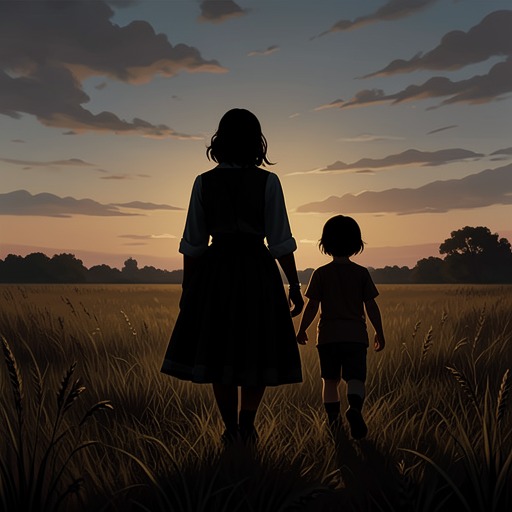
Blanca is physically overwhelmed by heat and grief. She feels faint and imagines sitting beside an imposing angel until she can no longer get up. Carolina, who is quick to notice what others miss, takes her by the arm and leads her to a wall overlooking the nearby sea, away from the gathering. When the ceremony ends, Carolina takes Blanca’s hand as they walk down the slope. The small gesture accompanies the stark recognition that her mother is dead; it does not make that recognition bearable all at once.
What the funeral makes visible
The ceremony exposes the difference between the mother’s public presence and Blanca’s private relationship with her. The crowd includes old friends who remember the glorious person she once was, but the daughter’s experience is shaped by the later illness, the strain of caring, and the distance she had to create. Blanca wonders whether the friends who stayed away have forgiven her mother, and remembers the adults of her childhood laughing, playing cards until dawn, traveling, and swimming naked in the sea. Those chosen family ties once gave the village its warmth; now many of those people are dead or gone, and the funeral makes their disappearance part of the loss.
A practical decision also marks the boundary between the mother’s wishes and what the living can do. Blanca and her friends have decided not to bury Patum with her mother. The dog is too large for the niche, and Blanca suspects that burying a dog with its owner would be illegal. The decision refuses a literal fulfillment of her mother’s belief that Patum could not live without her, while recalling the intimate, comic labor of helping the dog back onto the boat after swims. Even in this moment, affection appears beside the plain constraints of bodies, rules, and burial.
Blanca notices an attractive stranger in the cemetery and, despite her exhaustion, wonders whether he will approach her. He does not. Her fleeting attention to him is darkly comic, but it also shows that bodily awareness and desire persist in the presence of death. After the funeral, she reflects that sex can briefly make death—and life—disappear. She wakes beside Óscar, her ex, with children shouting in the pool outside and ordinary sunlight falling through the window. The reprieve lasts only moments: grief and memory return to their places, just as the furniture and clothes seem to settle back after a storm.
Aftermath and continuing grief
At the cemetery’s exit, Blanca decides that she may make her home in Cadaqués now that her mother lives there. The thought turns burial into a change in her own geography: the village that once meant return and family has become inseparable from the grave. Later, in her Barcelona home, her mother’s belongings make that altered relationship tangible. Among unopened moving boxes and the boxes she is sorting through, she keeps a single garment, a blue-gray wool jacket with rust-colored stripes that they bought together. She cannot bring herself to take it to the cleaner because she fears losing the scent that connects it to her mother.
The funeral’s ending therefore does not complete the work of mourning. Much later, before dawn, Blanca climbs toward the cemetery alone, imagining that she might finally arrive there calmly. The gate is locked. She pushes and pounds at it until her hands hurt, then sits exhausted as sunrise colors the olive groves and the walls. In the distance she imagines her mother walking by the harbor with her dogs, happy and on her way to the boat. The vision answers grief with a remembered image rather than undoing death. The funeral’s silence, the locked gate, and the jacket kept at home all point to the same unfinished bond: Blanca must learn to live with her mother’s absence while continuing to encounter her in places, objects, and memory.