La observación, no sólo el amor, nos hace dueños de las cosas
También esto pasaráLa observación, no sólo el amor, nos hace dueños de las cosas names a fragile form of possession: careful attention lets the narrator recover people, places, and experiences in memory, even when love cannot keep them present. The idea emerges amid mourning, and its comfort is real but not absolute. Memory can summon a world in exact detail; it cannot make loss cease to be loss.
The claim in conversation
The expression takes shape in a conversation between Blanca and Pedro about what it means to lose the people and places one has loved. Blanca explains that many of the people dearest to her have died and that she has lost many places from her childhood and youth. Pedro counters that she observed those things while they were hers. His point shifts possession away from permanence: what has been attended to, rather than passed through indifferently, remains available to memory.
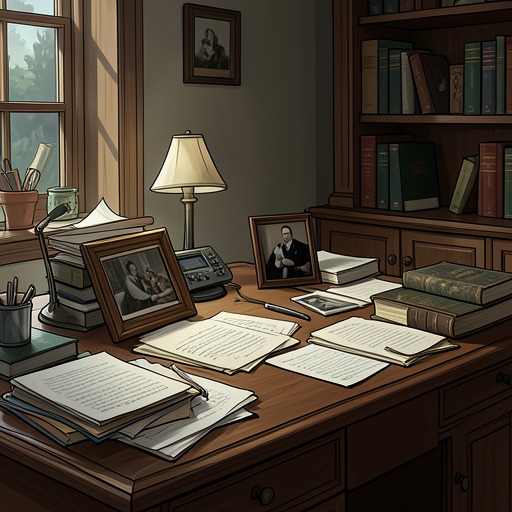
Blanca answers not with an abstraction but with particulars. She can recall the mahogany bookcases in her mother’s house changing from mahogany to burgundy to black as the hours passed and the sun moved. She remembers the precise warmth of bread just out of the oven in her father’s hands, and can picture the small glass of red wine he habitually left half full in the kitchen. These details make Pedro’s claim tangible: attention has stored the house not as a general idea of home, but as a set of colors, temperatures, and familiar objects.
Yet Blanca resists the suggestion that remembering resolves bereavement. She says that some things have been lost for good and that, in her reckoning, there are more things lost than retained. As she speaks, she looks toward her mother’s dark bedroom, where Patum has kept watch at the door since arriving. She has not gone to see her mother at the cemetery that day. The scene thus places the expression beside its limit: memory preserves what was observed, but the person and place remain absent.
A family house made of memories
The expression’s meaning widens when Blanca wakes early in Cadaqués and looks out to sea. Memories gather into a dense covering that, for once, does not overwhelm her. She understands the family house as a place through which everyone has passed and where everything has happened. Its history comes back through ordinary routines and sharply particular recollections: her grandfather bringing crates of fruit from Barcelona, laundry being taken away, elaborate desserts arriving on a tray, Marisa’s gazpacho, long breakfasts of toast and butter, beach towels drying over the railing, reluctant naps, afternoon ice creams, and games of target shooting.
The remembered house also contains the unruly intensity of youth: first drunkenness, first loves, first dawns, sleepless nights, friends returning each summer, and the certainty that the world belonged to them. Later memories include the conception of her first child, summers in Cadaqués with children, separations, and her mother’s old age. Even as the routine of breakfasts, boating, lunches, naps, and card games barely changes, happiness itself does. The house’s doors, once left wide open even at night, begin to close; the place ages alongside its owner and eventually seems to become her.
That accumulation gives Pedro’s idea a domestic scale. The house is not preserved by one defining event but by years of noticing: meals, objects, habits, changing light, and the people who came and went. At the same time, the recollections include deaths and decline. Marisa dies, and her daughter Elenita dies a couple of years later; old friends return with children and tired faces. The house can hold these losses in memory, but its archive does not turn them back into life.
Memory and the return of grief
The novel sets this kind of recollection against the temporary relief of physical intimacy. After sex with Óscar, Blanca recognizes that for a few moments the experience has seemed to disperse death—and life—along with everything else. But the reprieve lasts only briefly. The furniture, clothes, memories, lamps, panic, and sorrow return to their exact places in the room, in her head, and in her stomach. The image makes the persistence of remembered things almost physical: they may be momentarily displaced, but they come back.
Nor does the affection of others simply replace the person Blanca longs for. People repeatedly tell her that many love her, and she is grateful, but inwardly she wants her mother beside her, holding her hand and resting a hand on her forehead. The expression’s emphasis on observation therefore does not dismiss love; it identifies another way a bond endures when the beloved cannot be present. Its reassurance comes from the detail that remains, not from a claim that every absence can be repaired.
The living traces of the absent
Patum makes that tension visible in the house. The dog knows that Blanca’s mother is gone: he does not enter her room, but waits at the doorway and sniffs through the house for her scent or for some sign that she will return. Blanca recognizes her own search in his. She thinks of repeating journeys they took together, to Athens, Venice, and New York, perhaps in the hope of finding her mother there. The remembered places become destinations for longing, even though the passage offers no promise that the search will succeed.
Patum himself is also part of what may soon be lost. Guillem has told Blanca that the veterinarian doubts the dog will live until winter. Patum is the last of a litter born in the house, and Blanca recalls her mother tending the puppies in a large wooden box beside her bed: ensuring that the weaker ones could eat and that their mother could rest. Remembering this care, Blanca says she loved the child her mother had been, too. The recollection does more than preserve an image; it restores a relationship across time, by attending to an earlier self and to the acts of care that shaped her.
The expression remains deliberately less conclusive than a promise of recovery. Blanca’s memories make lost people and places summonable, in Pedro’s sense, while her own replies insist that some losses are permanent. Its force lies in holding both truths together: attention gives the past continuing presence, but it does not erase the distance between recollection and return.