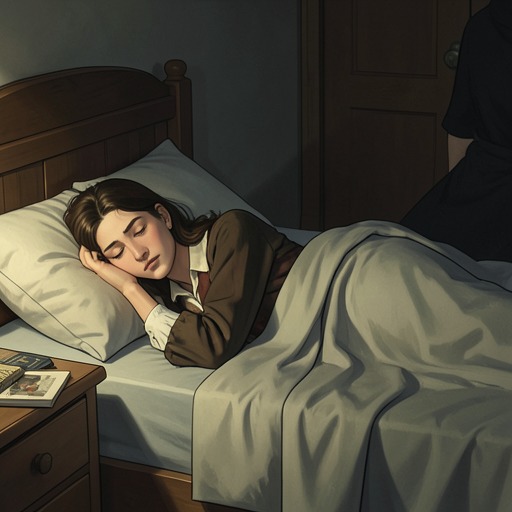
Lo contrario de la muerte no es la vida, es el sexo
También esto pasará“Lo contrario de la muerte no es la vida, es el sexo” is the narrator’s compressed account of how sexual desire becomes a bodily answer to her mother’s dying and death. Introduced through memories of her mother’s illness and the narrator’s reunion with Santi in Badalona, the expression refuses to treat sex as a cure for grief: it is instead an urgent, physical counterforce to the experience of loss.
Formulation and Context
The narrator states, “Lo contrario de la muerte no es la vida, es el sexo” while describing a period when her mother was fighting illness and dementia. In the months before her death, the narrator also fought—sometimes fiercely, though she calls the struggle useless—to prove to herself and the world that she was still alive. The sentence emerges from that parallel: as the mother’s condition worsened, the narrator’s sexual encounters became more ferocious and implacable.
The expression appears as the narrator meets Santi again after weeks apart, in a shabby Badalona bar where they eat unpleasant croquettes as if they were dining somewhere grand. Their date belongs to the present-tense life of desire, but the narrator immediately measures it against the months of her mother’s decline. The contrast makes the phrase less an abstract maxim than a conclusion drawn from an intimate chronology: illness intensifies, and sexual urgency intensifies with it.
Sex as Bodily Counterforce
The narrator casts sex as a way of registering continued existence when sadness and exhaustion threaten to make life feel extinguished. She recalls once waking alone or beside someone and feeling that the world was smaller than her bedroom; during her mother’s illness, by contrast, she and her mother seemed to be turning into brittle, dried trees, gray and close to becoming dust. The image gives physical form to the proximity of death, against which sexual activity becomes an attempt to resist bodily depletion.
That resistance is not presented as peaceful consolation. The narrator says that the desperate have sex desperately, and describes the encounters as if every bed in the world were hosting the same battle as her mother’s. The metaphor binds desire to illness without equating them: sex cannot stop the disease, but its force gives the narrator an opposing bodily intensity to inhabit. Her mother, when told they seemed close to withering, insists that they are the two strongest people she knows and that no storm could overcome them. The narrator’s maxim thus sits beside a maternal language of shared endurance, though it locates resistance in sexual force rather than in reassurance.
Desire, Attachment, and Paradox
The Badalona meeting makes the phrase concrete through the narrator’s response to Santi. He arrives by bicycle wearing her favorite, faded red jeans and an old khaki parka they bought together; she thinks he wears them partly to please her and partly as a charm against the storms in their relationship. Seeing him ride toward her makes her heart leap, as it does each time. The bodily reaction precedes any resolution of their difficulties: attraction remains immediate even when the relationship is unsettled.
The maxim also complicates the apparent opposition between life and death. Rather than claiming that sex restores ordinary happiness, the narrator places it on the other side of death: a forceful sensation that answers despair without erasing its cause. Its bluntness captures both vitality and desperation. The expression matters because it gives language to that contradiction—desire can make the grieving narrator feel alive, while remaining inseparable from the illness and loss that have made such intensity necessary.