The failed dawn visit to her mother’s grave
También esto pasaráBlanca’s failed dawn visit to her mother’s grave turns a solitary walk after a party into a direct confrontation with grief. She reaches the cemetery before sunrise expecting to face the grave alone, but a locked gate prevents her from entering. As her effort to get through it gives way to exhaustion, daybreak brings an image of her mother alive beside the sea, and the words that have come to define the novel’s consolation: “También esto pasará.”
The walk toward the cemetery
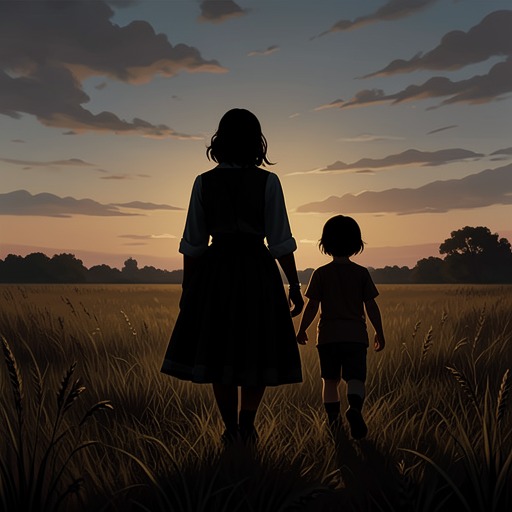
The visit follows a night spent at a party. After three or four hours there, Blanca leaves as the weather has cooled and a pale, milky mist begins to blur the outlines of things. She initially considers going down to the beach to watch the sunrise alone, but instead turns uphill. The choice takes her through the village’s narrow, rocky lanes, between low walls of piled stone that border gardens and olive fields.
The route carries her through reminders of different lives she has inhabited in Cadaqués. At the campsite, she recalls summers when she and her friends moved through the village and the world with euphoria, arrogance, and intensity. The memories are not a single, continuous idyll: the same place belongs to her youth, to the arrival of children, and to the life she shared with her mother. The campsite is closed, and an older man carrying a bucket crosses the clearing and disappears into the shower building. These small details hold the walk in ordinary morning time even as Blanca approaches a place charged with loss.
She thinks of her children waking at home. Edgar will carry the remnants of the night quietly, while Nicolás will meet the new day talking and laughing. Blanca continues upward despite the heaviness in her legs, passing the campsite and reaching the white walls of a small hermitage and the dark cypresses beside the cemetery entrance. Her attempt to go alone has become a physical journey through the landscape of her family life, but the landscape does not promise that she will be able to complete it.
The locked entrance
The last time Blanca visited the cemetery, many people were present, and the living outnumbered the dead. Even then, she imagined a later visit by herself: she pictured climbing the hill calmly, philosophically, and perhaps already healed, carrying a wildflower picked along the way. At the gate, however, she is tired, cold, and trembling. She considers turning back, sleeping, and returning at midday with company—or never coming back at all.
Blanca pushes the dark, knotted wooden gate and finds it closed. She has assumed that a cemetery would not be shut at night, and at first treats the obstacle as something she must be handling incorrectly. She leans her body against the door and works the heavy iron handle, unable to make it open. Her distress escalates from practical frustration into an increasingly desperate effort to persuade herself that the problem can be solved: she imagines calling the mayor, climbing the wall, writing to a newspaper, and even contacting Amnistía Internacional.
She tries approaching the gate gently, murmuring “Mamá, mamá” with her ear against the wood, as though her mother might hear and answer from within. Hearing no response, she shakes the handle again and pounds on the door until pain in her fists and palms makes her stop. The physical force cannot overcome the barrier. She sits on the bench by the hermitage, defeated and exhausted, and discovers that the morning has arrived while she was struggling at the entrance.
Sunrise and the remembered mother
The change in light does not open the cemetery. Instead, dawn transforms the view around the closed gate: pale pink light touches the silvered olive trees, reddens the hermitage walls, and falls across the dirt paths. Blanca recognizes the light as if it were a call from someone familiar. From the wall beside the entrance, she can see the olive fields and Port Lligat, the small harbor where the family kept its boat.
There she sees her mother walking along the quay toward the boat, accompanied by Patum, Nana, and Luna, who have just been swimming. The vision gives precise, familiar form to the mother Blanca cannot reach at the cemetery: her faded blue-check shirt over her bathing suit, the bruises on her brown legs, her small inward-turned feet in children’s sandals, her crooked glasses, and her salt-dried cap over disordered hair. The sea is calm and the day glorious. Before boarding, her mother turns, smiles, and says, “También esto pasará.” She winks at Blanca.
The scene does not show Blanca entering the cemetery or finding her mother there. Instead, the locked gate leaves her outside, while the vision places her mother in the remembered Cadaqués of boat trips, dogs, and bright mornings. The encounter offers reassurance without undoing the death or resolving the visit as planned: Blanca receives her mother’s familiar saying at a moment when the physical route to the grave has failed.
Grief beyond the grave
The failed visit belongs to Blanca’s broader movement between the force of bereavement and the ongoing demands of life. At other moments, memories of the family house gather densely around her: meals, beach towels, summer routines, first loves, her children, separations, and the gradual aging of the house alongside her mother. On the terrace, these accumulated memories can form a covering that does not suffocate her. At the cemetery gate, by contrast, the attempt to approach loss directly overwhelms her until she is crying and physically spent.
Her need for contact also reaches beyond the grave. Earlier, she describes sex as briefly scattering death, life, and sorrow, only for every object and memory to return to its place afterward. Here there is no such temporary escape: the path ends at a closed door, and the consolation comes instead through a remembered image and phrase. The contrast makes the mother’s words neither a cure nor a denial of grief. They are a way of enduring its recurrence, fitting the novel’s pattern of returning to loss while continuing through ordinary days, family memories, and the changing light of Cadaqués.