Verano en Cadaqués
También esto pasaráVerano en Cadaqués is the summer setting that gives Blanca’s mourning its shape: in the house her mother has left her, a brilliant and familiar landscape holds both a family’s history and the stark fact of its absence. The season does not resolve grief so much as make it recur alongside sex, friendship, children, daily routines, and memories of a life shared across generations.
A Summer After Loss
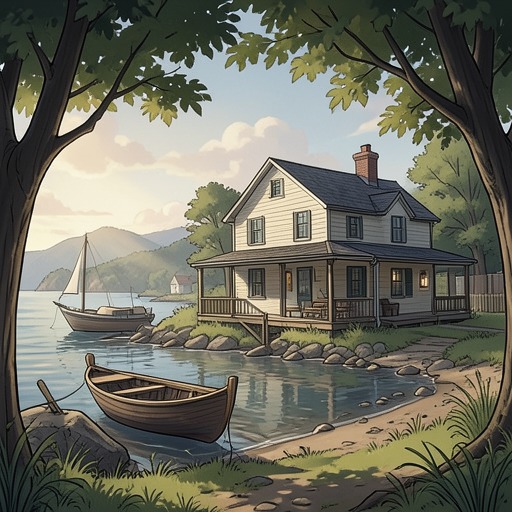
The novel places its central summer in Cadaqués after Blanca’s mother has died. The setting is at once refuge and inheritance: her mother’s house is now Blanca’s, and the prospect of going there offers a change of surroundings at a time when she wants to retreat from other people. Yet the house is no neutral shelter. Its rooms, objects, and views continually return Blanca to the person who shaped them.
The Mediterranean light intensifies the contrast between landscape and grief. In the morning, the sea appears calm and the air clear; the light can make the world seem newly begun, even while Blanca knows that loss has altered it. She recognizes the summer sun as the one from her childhood. The landscape’s continuity can feel almost like a denial of tragedy, but it also gives the bereaved narrator a way to inhabit the present without pretending the past has disappeared.
The House as a Record of Family Time
An early morning on the terrace opens into a layered history of the family home. Blanca recalls her grandfather arriving with crates of fruit from Barcelona, Remei taking laundry away to wash, and Pepita de la Galiota bringing enormous tocino de cielo. The remembered household also comes through its repeated summer habits: breakfasts of toast and butter, beach towels drying on the railing, reluctant siestas, trips into town, afternoon ice creams, and target shooting. These particulars make the house a record not just of important events but of the ordinary repetitions that once made family life feel secure.
That history stretches from childhood into adulthood. The house holds first drunkenness, first loves and dawns, summers with friends, Blanca’s first child conceived, and later visits with children of her own. It also holds separations and her mother’s old age. As the mother grew older, the doors that had once stood open even at night began to close. The routine of breakfasts, boat trips, lunches, naps, and card games continued, but happiness gradually changed. By the time Blanca returns, the house has aged with its owner and, in her perception, has become almost indistinguishable from her.
The mother’s bedroom remains the most spacious and best-situated room, but no one occupies it now, and Blanca cannot bring herself to enter. She considers putting Guillem and Patum there, a practical possibility that does not undo the room’s emotional charge. Her mother’s presence also returns through remembered gestures: giving instructions from the top of the stairs in a long summer tunic, or calling a joke from her room into a conversation on the terrace. The house stores these scenes without making them safely past.
Objects, Animals, and the Work of Remembering
The summer’s mourning extends beyond Cadaqués to Blanca’s home, where boxes from her mother’s belongings stand in six rows almost reaching the ceiling, beside unopened boxes from Blanca’s previous move. The inherited boxes contain books, dishes, tea sets, and tablecloths. Blanca repeatedly swings between wanting to give everything away and deciding to keep every last object; the indecision becomes a way of measuring how close or distant she can bear to be from her mother.
One object escapes the boxes: a blue-gray wool jacket with terracotta stripes, bought with her mother at the mother’s favorite shop. Blanca keeps it because she remembers seeing her mother wear it, not because it is valuable. She cannot bring herself to take it to the dry cleaner or even check whether it still smells of her mother. The jacket makes memory tangible, but its presence at home is also unsettling: it greets Blanca like a dusty, hair-covered ghost. In the later coda, dated Barcelona, April 2014, Blanca has finally taken it to be cleaned. The small decision marks a changed relation to the object, not the end of attachment.
Animals likewise carry the past into the summer present. Blanca remembers that her mother’s house once held as many as five dogs, including strays her mother rescued and dogs belonging to visitors. Patum, now Guillem’s dog, waits outside the mother’s room and searches the house for her scent. Blanca recognizes her own longing in the dog’s search. Patum may not live through the winter, and Blanca remembers the litter of nine puppies born in the house, which her mother watched over in a wooden box beside her bed. The prospect of losing Patum makes the family’s old world feel emptier still. Later, Rey, who has also been left without his owner, becomes a new household companion; Blanca is trying to teach the children to walk him every day.
Daily Life Beside Grief
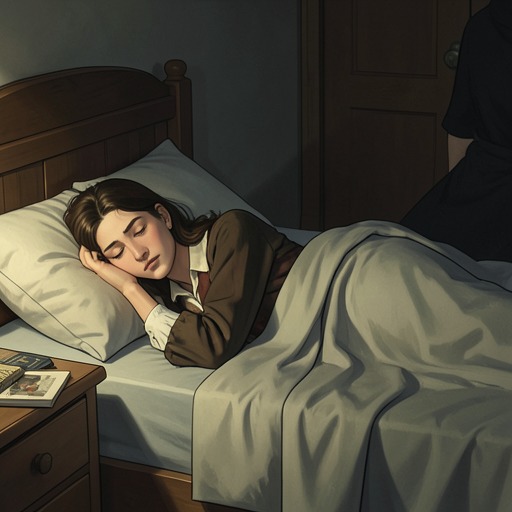
The summer does not follow a straight line from mourning toward recovery. Blanca can be surrounded by people who love her and still want only to retreat to bed and have her mother sit beside her, hold her hand, and touch her forehead. The repeated reassurance that many people care for her does not replace the particular comfort she longs for. Elsewhere, the children’s noise at the pool and the promise of another hot day continue outside the bedroom while she wakes beside Óscar, her former partner.
Sex briefly interrupts the pressure of death and life, but the interruption cannot last. Afterward, the room, clothes, memories, panic, and sorrow return to their places. This pattern gives the summer its unsettled rhythm: physical pleasure can suspend grief for a moment, just as a morning view or an old routine can make life seem newly open, but neither erases what has happened. The body and the landscape offer intervals of relief rather than a cure.
The return of memory can also be sustaining. On the terrace, recollections accumulate into a dense covering that, for once, does not suffocate Blanca. That history includes happiness as well as decline: youthful nights without sleep, friends, laughter, and the feeling that the world belonged to them. The same house that witnessed her mother’s growing age and the family’s losses remains the place where those earlier summers can still be recalled in detail.
Dawn and the Summer’s Frame
Dawn repeatedly gathers the summer’s competing times into a single scene. After a night at a party, Blanca leaves before the children wake. Edgar is quiet and thoughtful in the morning, while Nicolás meets the day talking and laughing. Walking through the village, Blanca remembers her own youthful summers there, when she and her friends moved through the world with exuberance and carelessness. The path takes her past the old camping ground and on toward the small chapel and the cemetery, whose two cypresses stand at its entrance.
The novel begins and closes in a cemetery, placing this summer within a frame of death while allowing the intervening days to fill with the material of life. The ending’s movement toward the cemetery does not cancel the landscape’s promise of another morning, nor does that promise undo bereavement. Instead, Cadaqués holds both together: a place where the family’s past remains vivid, the mother’s absence is encountered in rooms and animals, and ordinary summer life continues around the dead.