Charles Palantine
Taxi DriverCharles Palantine is a presidential candidate whose public image becomes a screen for Travis Bickle’s hopes and resentments. To Travis, Palantine first appears as a reassuringly ordinary, approachable politician; later, the senator’s campaign and rallies become the setting for Travis’s attempt to turn his private hunger for significance into a public act of violence. The novel presents Palantine largely through Travis’s gaze, so his character is both a political figure in his own right and an object shaped by the driver’s projections.
Identity and Public Image
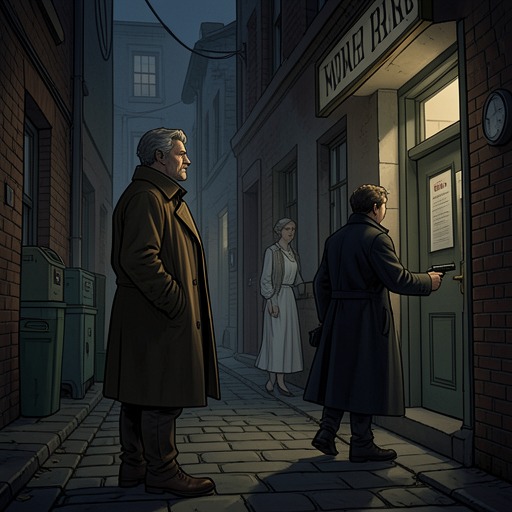
Palantine is campaigning for president, with a campaign headquarters at the corner of 58th Street and Broadway. Its window identifies it as the Palantine presidential campaign committee, and the upcoming primaries are set for July 20. Travis spends time outside the office between fares, initially drawn there less by a settled political commitment than by what he sees through the windows.
Travis describes Palantine as being in his fifties, with a smiling face, thin lips, and hair graying in places. His cotton suits, pink shirts, and handsome ties contribute to an impression of warmth and polish. In Travis’s account, he does not seem like a conventional middle-class speechmaker: he could pass, the driver thinks, for a best friend or a friend’s friend. Palantine’s apparent happiness and friendliness make him seem accessible, though this portrait is filtered through a stranger who has already begun investing the candidate with personal meaning.
Campaign and Political Speech
Palantine’s public message emphasizes overcoming division. At a Harlem appearance, his amplified voice calls for an end to racism, poverty, and war, and he condemns political forces that, in his account, set Black against white and young against old. He urges listeners to accept their neighbors and give for the common good. The crowd applauds and answers him with evident enthusiasm; Travis observes that Palantine knows how to speak persuasively and appear sincere.
The scene also puts the speech within a divided urban landscape. Travis sits in his taxi, marked occupied, among a largely Black neighborhood crowd, with police, security personnel, and journalists nearby. He listens only partly, absorbed in composing an imagined letter to his parents. The juxtaposition does not establish what Palantine privately believes; it shows instead how a political appeal for unity reaches Travis amid his own alienation and racialized way of seeing the city.
Encounters with Travis Bickle
Palantine first enters Travis’s life as an image at campaign headquarters, while Betsy works there. Travis watches her from outside and imagines a future connection with her, at the same time as he tells himself he may vote for Palantine. His interest in the campaign is therefore inseparable from his attention to Betsy, whom he idealizes as exceptional and whose work makes the candidate seem more personally significant to him.
On April 27, after Travis has arranged to see Betsy, he picks up Palantine in his taxi. The candidate is travelling with two well-dressed companions and discussing how to secure California delegates. Travis is struck by how much more real Palantine seems in person, though he can see him only in the rear-view mirror. He tells the senator that he expects him to win and mentions wanting a campaign sticker on the cab, which the taxi company’s policy prevents. Palantine says that he has always respected taxi drivers’ opinions, then turns his attention from his companions to Travis and asks what the next president should make a priority.
Travis answers that the city should be cleaned up, describing it as filthy and comparing it to an open sewer. The exchange briefly gives him the attention he craves: Palantine treats him not merely as a driver but as someone with a view worth hearing. Yet the connection is slight and bounded by the ride. Travis’s later belief that Palantine would recognize and love him as his assassin is not supported by any reciprocal relationship; it grows out of this brief encounter and Travis’s own fantasies.
From Admiration to Target
Travis’s attention to Palantine changes as his private plans become more violent. He imagines becoming somebody and entering history, and measures himself against notorious assassins while worrying about remaining sufficiently real. Palantine, once a candidate Travis says he might support, becomes the intended victim through whom Travis hopes to achieve that imagined distinction. His fixation does not arise from a political dispute with the senator: Travis says he respects Palantine, and treats that respect as compatible with killing him.
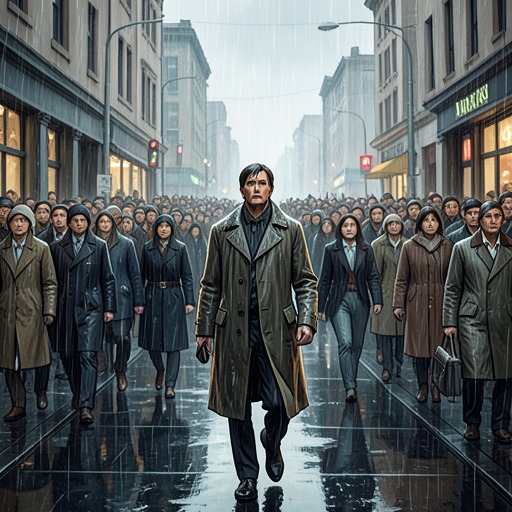
At a later rally, Palantine speaks from a platform, promising victory in the election and at Miami Beach the following month. Travis moves closer through the applauding crowd. He recognizes a bodyguard with whom he had spoken about the Secret Service roughly a week earlier, and sees Palantine beside Betsy’s colleague, while Betsy herself is absent. The rally brings the campaign’s public spectacle and Travis’s concealed intention into the same space, but the available account does not establish that he reaches Palantine or completes the attack.
Narrative Significance
Palantine’s importance lies partly in the contrast between the politician’s public invitation to collective unity and the intensely private drama Travis builds around him. The candidate asks what a future president should do and gives Travis a moment of attention; Travis turns that moment into a personal claim on the campaign and eventually into a plan for notoriety. The movement from taxi conversation to crowded rally makes political visibility the setting for Travis’s search for recognition.
Because Palantine is chiefly described through Travis’s perspective, the reader receives a vivid impression of his appearance and public manner but little access to his private character. He is neither shown as a confidant nor developed through an independent account of his motives. Instead, his approachable image, campaign rhetoric, and physical presence on the platform become points around which Travis’s longing for purpose and his escalating violence gather.