Sport
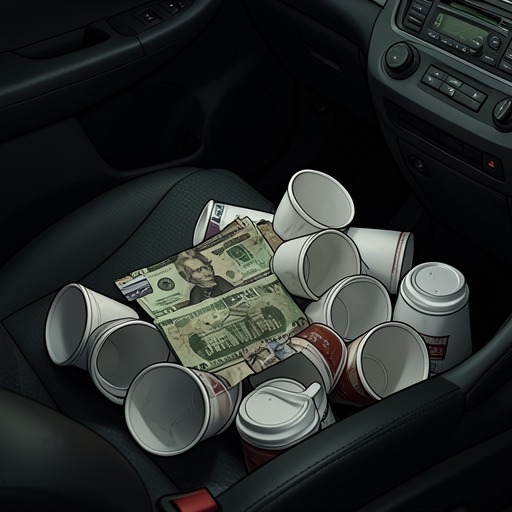
Taxi DriverSport is the pimp who manages Iris’s access to customers and helps keep her within his control. Travis first encounters him indirectly: a young man with pockmarks and a fringed suede jacket pulls a girl from the back of Travis’s taxi, then throws a crumpled twenty-dollar bill onto the seat and tells the driver to forget what happened. When Travis later approaches the same distinctive man at Iris’s direction, the earlier payment turns Sport from a passing figure into the face of the coercion Travis had failed to oppose—and eventually tries to confront with a gun.
Identity and Introduction
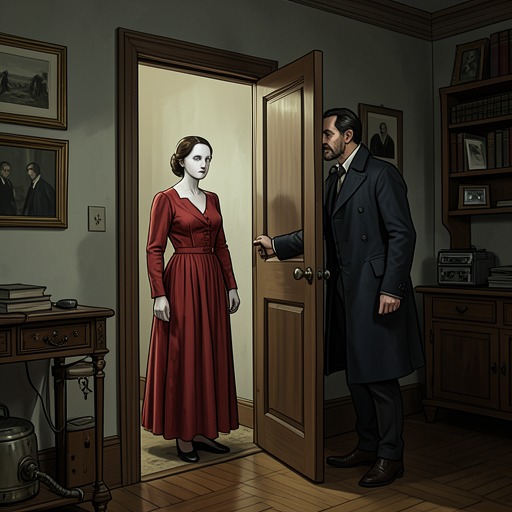
Sport is recognizable by the details that recur across Travis’s encounters with him: pockmarked skin, a fringed suede jacket, and a manner Travis experiences as oily and repellent. The first sighting is not a formal introduction. Travis is preparing to shift gears when a struggle at the rear of his cab interrupts him; someone holds the girl, and a soft, silky voice urges her to come along. She does not fight as she is pulled out. Sport then leans partway through the driver’s window, drops the crumpled twenty-dollar bill beside Travis, and instructs him to disregard the incident. Another, older and greyer man leaves with them. Travis cannot see Sport’s face clearly, but the jacket, scars, and voice remain as identifying details.
The second encounter confirms the connection. Iris points out the man waiting in a doorway and tells Travis that his name is Sport. Travis recognizes the pockmarks and the fringed jacket, linking him to the man who paid him after the earlier removal from the taxi. Sport answers Travis’s question about his name with indifference. His businesslike response to Travis’s stated interest in having fun is to set prices: twenty dollars for fifteen minutes, thirty for half an hour. The exchange presents him not as a stranger caught in a single disturbance but as the operator of a commercial arrangement around Iris.
Control of Iris and the House
Sport’s authority is reinforced by the old man who watches the corridor. When Travis accompanies Iris toward a room, the older guard addresses him as a cowboy, removes Travis’s .38 Special from his jacket, and pockets it while announcing that he is keeping track of the time. Iris leads Travis into room number two. The sequence makes Sport’s operation legible through its division of roles: Sport deals with Travis at the doorway, while the older man controls the visitor’s weapon and the clock. The room itself, with its worn orange carpet, dark brown walls, red velvet couch, peeling posters, and small phonograph, is a working interior rather than an open refuge from the street.
Sport’s control over Iris also emerges in her account of the earlier taxi incident. Travis tells her that she had tried to escape in his cab but that Sport had stopped her. Iris says she does not remember it, and later explains that she had been intoxicated; that, she says, was why they prevented her from leaving. When sober, she has nowhere else to go and regards Sport and the others as protecting her from herself. Her statements show both the force of the restrictions around her and the limits of Travis’s understanding: the episode that becomes evidence of Sport’s control is not, in Iris’s own telling, a straightforward account of a plan to leave.
Travis’s Rescue Attempt
Travis arrives at the house with a declared purpose of getting Iris out, not buying her time. He tells her that he intends to take her away and insists that he has come to rescue her. Yet Iris questions why she would leave, calls the place where she lives her home, and later argues that when she is not intoxicated she has nowhere else to go. At breakfast the next afternoon, she appears freshly washed and dressed in a brown sweater and pressed, faded jeans; the ordinary meal of ham and eggs, orange juice, and coffee gives Travis an image of himself as an older brother taking a young woman out to eat. He imagines that they might become friends if they make an effort to talk.
That hopeful image sits uneasily beside his certainty that he knows what Iris needs. He urges her to return to her parents in Pittsburgh, but she says they hate her and asks why he thinks she left. He predicts that life around Sport will lead to addiction or death and says girls need protection. The contrast matters to Sport’s characterization: his control is the immediate danger Travis identifies, but Iris does not simply accept Travis as an alternative authority. She contests his account of her home, her past, and her choices. Sport’s grip is therefore shown through Iris’s dependence and constrained options, while the rescue narrative belongs principally to Travis.
Violence and Narrative Significance
Sport also occupies a place in Travis’s effort to make himself feel consequential through weapons and confrontation. Travis says he wants to become somebody and enter history; he drives through dangerous neighborhoods partly to imagine using his guns and to make his dream feel real. His stated respect for women and his language of masculine feeling coexist with a growing readiness to treat violence as proof of manhood. Sport becomes a concrete target for that armed self-fashioning: the man whose earlier payment exposed Travis’s passivity, and whose doorway now brings him face to face with the world he claims he will oppose.
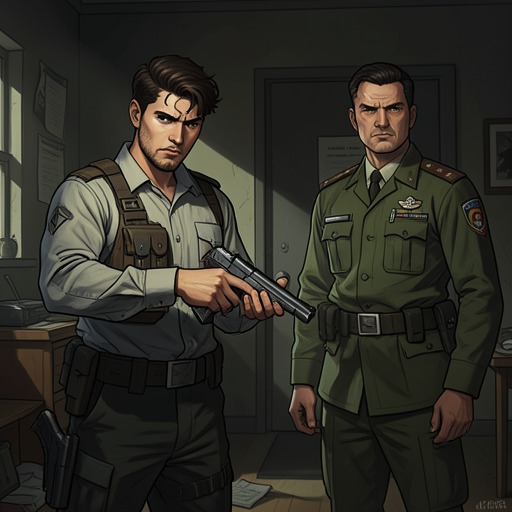
When Travis returns, he walks directly up to Sport at the doorway and places an arm around his shoulders in a familiar greeting. The gesture is followed by a sudden shift: Travis drives his .38 Special hard into Sport’s stomach. The account breaks into an explosion, a scream, pain, and something wet on Travis’s hands and jacket. The supplied episode does not establish Sport’s ultimate fate, but it does make the confrontation the point where Travis’s earlier inaction gives way to direct armed violence. Sport’s role in the narrative is thus both personal and structural: he is Iris’s exploiter and gatekeeper, but also the figure through whom Travis turns his fantasies of rescue, masculine authority, and historical significance into an attack.