Travis Bickle
Taxi DriverTravis Bickle is a former soldier and night-shift taxi driver whose search for purpose in New York City takes the form of armed preparation, a self-appointed effort to rescue Iris, and a violent episode that leaves him celebrated by the public. His story repeatedly sets his private sense of isolation and mission against the city’s ordinary indifference—and, at the end, its readiness to call him a hero.
Identity and Background
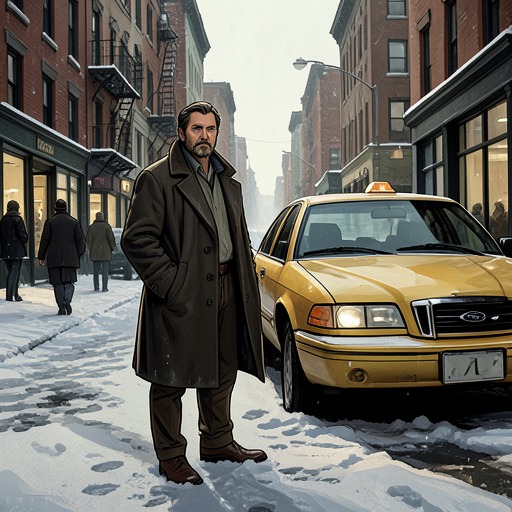
Travis looks back on his first winter in New York City as a time of cold, snow, dirt, and near-total emotional solitude. He recalls having no one to love and little respect for himself. He had served in the army for so long that he knew mostly career soldiers, and describes those acquaintances as friends of a night rather than enduring companions. After learning that Hedda had left and injured herself with scissors, he seriously considered coming to New York City and driving a taxi. His account is uncertain about whether the decisive choice was to come to the city or to become a cabdriver there, but he presents the job as the route by which he arrived.
His memories of military service and civilian life remain in uneasy relation. He says the Vietnam War seemed less terrible than what he encountered on his first nights driving in New York City, while also recalling the army’s explanation that wartime violence rested on a different conception of human life. The comparison does not settle into a coherent justification: he sees people on the streets whom he considers no better, or worse, than the animals he encountered elsewhere. The account establishes the force of his moral judgment without resolving the contradiction between his own training in violence and his disgust at violence around him.
Taxi Work and Urban Isolation
Travis begins driving during a prolonged stretch of wet, humid March weather. Rain brings him more fares and gives cabdrivers unusual command over where passengers go; he describes the driver, in effect, as the city’s temporary master in bad weather. He first works around the movie theaters but quickly tires of the customers there. He finds visitors and wealthy passengers irritating and unpredictable, and resents being expected to provide directions, weather reports, flight information, movie listings, and restaurant recommendations. Unlike Maxey, a veteran driver from the Bronx who can entertain passengers with stories and advice, Travis does not see himself as a guide to the city.
The work makes him an observer of degradation without giving him a community. Most mornings he returns to the depot to clean the rear seat, usually of semen and sometimes of blood. He notices elderly women eating from garbage cans at five in the morning and people sleeping in the street; he contrasts their exposure with the roof over his own head, which he makes his first priority after a shift. At the same time, he wonders why life seemed manageable in the army but not here. His long nights also leave him physically depleted: he describes back cramps, difficulty getting up after driving, and sometimes working while high and not entirely himself. A dream of returning to a full depot after earning more than three hundred dollars, only to find no space and have to work for hours longer, turns the taxi routine into a trap. Its warning signs urge drivers to stay alert and prepare for the unexpected, an admonition that echoes his growing vigilance.
Weapons, Routes, and a Project of Recognition
After buying guns from Andy, Travis feels a sudden emptiness as the money changes hands and tells Andy, in a forceful outburst, that he will never return to the army alive. He asks for something to carry the weapons. Andy empties a small blue nylon sports bag, wraps the guns in an old sheet, puts them inside, and hands it over. Travis thinks Andy seems afraid of him after hearing his declaration. The vivid light and the spark of contact between his fingers and the metal mark the purchase as more than a transaction: it begins a period in which his life narrows around preparation.
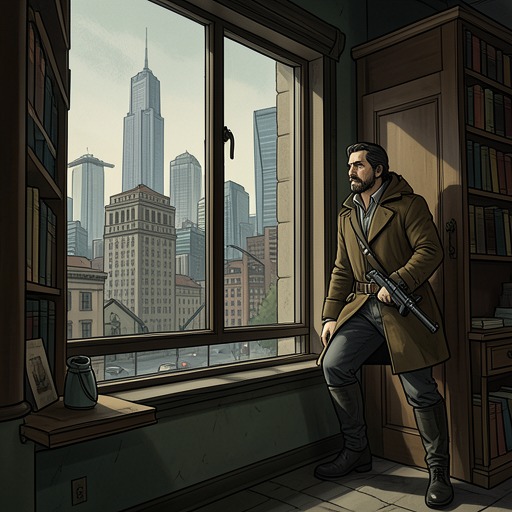
Travis spends days organizing his apartment with plans, photographs, newspaper clippings, and maps. He treats the task as something he must do properly, even as he works to restore his body: twenty, thirty, or forty pull-ups a day, yoga, and exercises in enduring pain, including holding his arm near a burner flame without flinching. He frames physical conditioning as necessary to absolute organization, with every muscle ready for use. His preparations thus combine the practical routines of training with an increasingly consuming sense that a single mission defines his life.
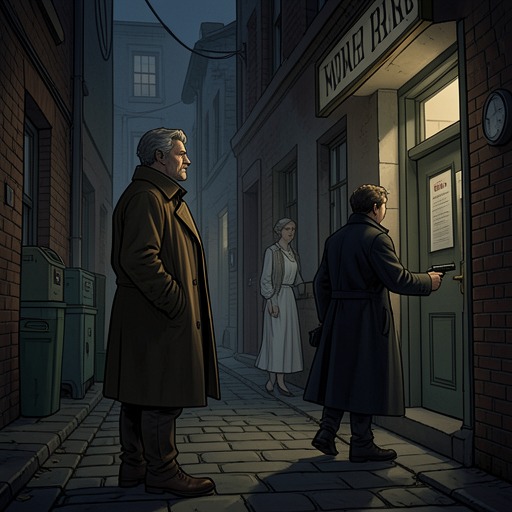
He starts parking near Charles Palantine’s headquarters at night, watching for Betsy—not, he says, to harm her, but to make clear that he remains nearby. A window sign counts down the days until Palantine’s arrival in New York City and is changed each day. Elsewhere, Travis deliberately drives into neighborhoods he regards as dangerous, around 128th Street and Amsterdam, hoping to discover what he would do if he had to use his guns. Instead, passengers are polite, tip him, and keep to themselves. He extends these patrols through Harlem and Seventh Avenue, past bottles in the road and crowded blocks on Lenox Avenue, then down the Lower East Side toward Tompkins Square, B Street, and Avenue B. He imagines the night opening a door into darkness and making him real through the weapon he carries.
The routes are both working territory and a stage on which he tries to give his fantasies substance. Travis openly wants to become somebody, a celebrity who enters history; he contrasts that ambition with the danger of becoming unreal, as he believes has happened to other notorious would-be assassins. He also associates his contemplated violence with Charles Palantine, whom he describes as a man he loved and admired, and with an America that taught him both to kill and not to kill. The contradiction is central to his self-conception: he can cast violence as a blessing for someone he admires while treating it as the means by which he will finally become historically visible.
Iris and the Failed Rescue
Travis tells Iris that her earlier attempt to escape in his taxi was stopped by Sport, and then announces that he will get her out. Iris does not remember the incident. When Travis insists that he has come to take her away, she asks how he intends to do it; he replies that he does not want to fight and has come to get her out. Her response challenges the premise of his plan: she asks why she would leave when this is where she lives. Travis recalls that she had wanted to leave and had got into his taxi, but Iris says she must have been high.
When Travis again raises the earlier escape, Iris explains that she was high and was prevented from leaving for that reason. When she is not high, she says, she has nowhere else to go and believes the people around her are protecting her from herself. Travis tries to appear understanding and sympathetic, but recognizes that his efforts are going nowhere and feels very sad. Her account does not erase the danger he sees; it does, however, show that his rescue plan does not match her stated understanding of her own circumstances.
The next day, at a late breakfast at half past one, Iris appears freshly washed and dressed in a brown sweater and pressed, faded jeans. Over ham and eggs, orange juice, and coffee, she tells Travis about getting together with Sport and about the place she lived before: Pittsburgh. He imagines that they might become friends if they make an effort. But when he urges her to return to her parents, she says they hate her and insists that there is nothing for her there. Travis argues that her present life is hell and predicts that she will become addicted or die; he says girls need protection. The exchange makes the limits of his protective role plain: he is alarmed for her, but he repeatedly substitutes his diagnosis and preferred destination for the future she describes.
Violence, Public Recognition, and Ending
Travis’s account culminates in an attempted attack on Charles Palantine and an ensuing flight through the city. He escapes through a crowd, reaches his taxi, scrapes the curb as pedestrians scatter, crosses a bridge over the subway, passes through Canal Street in Manhattan, and drives north along the West Side Highway. By the time he reaches home, he says, the constant noise in his head has stopped. The movement away from the scene gives way to a rare image of quiet, though the narrative does not establish that this calm amounts to a lasting change.
After a later violent episode, Travis wakes in a hospital, having apparently lost consciousness. He is not sent to prison. Newspapers describe him as a taxi driver against organized crime and as a taxi driver who killed three people. He keeps the articles and says that, for the first time, he feels like somebody—a person. Letters arrive, and the mayor and President Boro visit him in the hospital; flowers are sent as well. The public’s heroic interpretation supplies the recognition he had sought, but the newspaper headlines and his own account do not make that recognition a clear moral resolution. When he leaves the hospital, it is nearly autumn. He returns to his old room, now with a new television and an upholstered chair.
Narrative Role
Travis’s first-person recollections make the city’s routes, passengers, and street scenes pass through a consciousness that is both sharply observant and increasingly organized around a private mission. His work exposes him to strangers without connecting him to them: he carries people wherever they want to go, yet resists the social role of an informative, convivial driver. The cab can be workplace, shelter, and a moving vantage point from which he imagines danger and significance.
His arc is shaped by the distance between intention and consequence. He presents himself as a man seeking discipline, historical importance, and the rescue of Iris; Iris’s objections expose how little his idea of rescue depends on her consent, while the press and hospital visitors turn violence into public heroism. The ending grants him the recognition he wanted without showing that the solitude and contradictions that drove him have been resolved.