
From Condemnation to Self-Acceptance
TemptationThis flow follows Colton’s movement from religious shame and coercive conversion efforts toward a sexuality and future he can claim for himself.
increasing Bearing strength in each event
 decreasing
Bearing strength in each eventdecreasingDesire Named as Sin

Desire Named as Sin
A Discovery Turned Inward
As a teenager, Colton realizes that his attraction to boys is not merely admiration or imitation. The discovery arrives with desire, confusion, and fear, because the religious framework surrounding him has taught him to interpret same-sex attraction as moral failure. Rather than treating the feeling as information about himself, he initially treats it as something that must be eliminated.
Shame Becomes a Private Discipline
Colton tries to regulate his body and thoughts through prayer and denial. He hopes that suppressing desire will protect him from marriage and from repeating the unhappy pattern he sees between his parents, yet he also believes his sexuality condemns him. The conflict is not simply between private desire and public rules; it is between the person he is becoming and the person he thinks he must perform to remain loved.
This stage shows how shame can make self-knowledge feel dangerous. Colton has not yet learned to separate his identity from the judgments imposed on it, leaving him vulnerable when his parents discover what he has tried to hide.
The Promise of a Cure

The Promise of a Cure
Coercion Disguised as Treatment
After Colton’s parents send him to Father Benson’s conversion camp, the language of spiritual correction gives violence the appearance of care. The camp presents his sexuality as an affliction and suffering as a path toward improvement. Colton is pressured to interpret his own distress as evidence that the treatment is working rather than as proof that he is being harmed.
The Body Refuses the Story
The camp’s attempts to control Colton do not change who he is. Instead, they leave him physically injured, frightened, and increasingly aware that the adults responsible for his supposed cure may kill him. His body’s involuntary responses are used against him, creating a cruel confusion between physical reaction and consent.
The camp exposes the danger of an ideology that treats a person’s identity as a defect to be corrected. Colton’s escape begins when survival matters more than the promise that obedience will make him acceptable. The first step toward self-acceptance is not confidence; it is recognizing that he has the right to get away.
A Name for the Truth
A Name for the Truth
Disclosure Without Condemnation
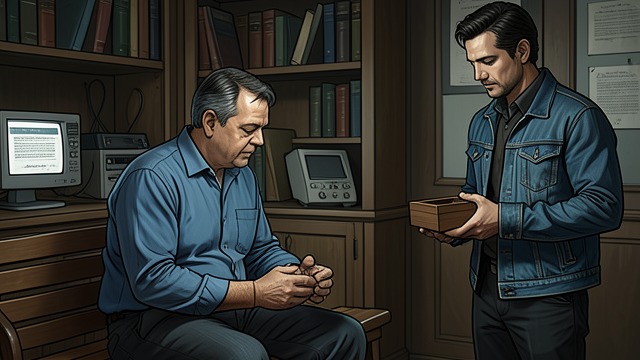
After escaping and reaching Colorado, Colton is found exhausted and taken into care. When Officer Kimball asks why he ran, Colton struggles to explain the camp and his fear of being sent back. The simple statement that he does not want to return becomes an early act of self-protection: he is not yet ready to tell everything, but he can identify the danger.
An Adult Who Listens
In therapy, Amit speaks openly about being Deaf and queer, showing Colton that an adult can inhabit those identities without treating them as shameful. Colton gradually tells Amit that his family sent him to camp after discovering he was gay. The disclosure does not erase the trauma, but it places the truth in a setting where it is heard rather than punished.
This moment begins to loosen the connection between sexuality and disgrace. Colton still fears what others may believe, but Amit’s example offers a different possibility: queer identity can be named with care, and a person who shares it can build a life rather than merely endure one.
Choosing What Counts

Choosing What Counts
An Old Definition Breaks Down
Colton approaches intimacy with a strict idea of virginity: that it is determined by penetration. When Marcel stops before going further, Colton initially experiences the moment as rejection and as another reminder that his age and inexperience place him outside the life he wants. Their conversation reveals how much Colton’s understanding has been shaped by silence and shame.
Meaning Returned to Colton
Marcel tells him that virginity belongs to the person defining it, not to an external rule. The reassurance matters especially because Colton’s first experience of bodily arousal was entwined with abuse at the camp. Marcel does not claim that one loving encounter can undo that history; he gives Colton room to decide what his experiences mean now.
Over time, Colton becomes able to understand their non-penetrative intimacy as sex without being forced to surrender his own definition of readiness. The change is not a technical correction but a recovery of authorship: Colton can choose how to name desire, pleasure, and experience for himself.
Love Without Erasure

Love Without Erasure
Desire on Colton’s Terms
At the cabin, Colton decides that he is ready for penetrative sex with Marcel. The decision comes after they have already built trust through other forms of intimacy and after Colton has been able to set boundaries without being punished for them. His choice is not a test of maturity or proof that he has recovered; it is a step he wants to take with someone he trusts.
A Future Chosen Freely
The encounter is interrupted by the false emergency arranged by Brad and Jason, but Colton still chooses to leave and help Marcel rather than allow the disruption to define their relationship. When he eventually tells Marcel he loves him, he does so without the belief that he must become someone else first. His history remains part of him, but it no longer decides whom he can love or what future he may pursue.
The movement from secrecy to chosen intimacy reframes self-acceptance as lived practice. Colton does not have to erase fear or trauma in order to be gay openly with the person he loves. He can keep making decisions, speaking honestly, and imagining a life that belongs to him.
During Colton’s adolescence, before he is sent away
At sixteen, during Colton’s confinement in Father Benson’s conversion camp
During Colton’s first week in custody after reaching Colorado
After Colton and Marcel’s first intimate encounter
During the final cabin evening and their return home
