
Colton Davidson’s Recovery and Self-Acceptance
TemptationColton Davidson’s path traces his movement from religiously enforced shame and abuse toward self-acceptance, connection, and a future he can choose for himself.
increasing Bearing strength in each event
 decreasing
Bearing strength in each eventdecreasingFear Inside the Family
A Childhood Without Safety
Public Appearances
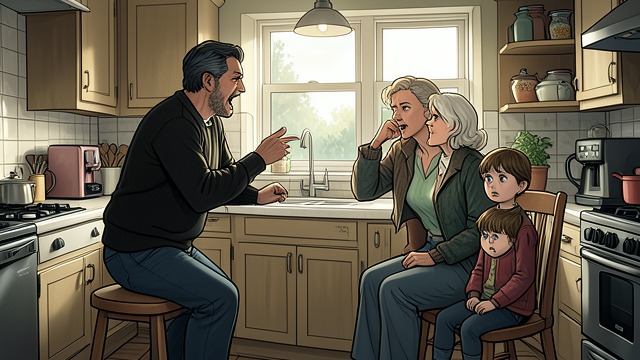
Colton Davidson grows up in a family that looks respectable to the people around it. Church services, meals, and public politeness conceal a home shaped by anger, shouting, and the persistent message that the children are burdens.
Private Shame
Because his parents’ treatment does not match the familiar images of physical abuse he has been taught to recognize, Colton struggles to name what is happening. He becomes frightened of marriage and intimacy, imagining that adulthood might make him repeat the coldness he sees between his parents.
The emotional consequence is an early conviction that love must be earned by compliance. That belief makes the later rejection of his sexuality feel, at first, like proof that he has failed his family rather than evidence that they have failed him.
Punishment for Desire
Desire Made Into Evidence
The Camp’s Promise
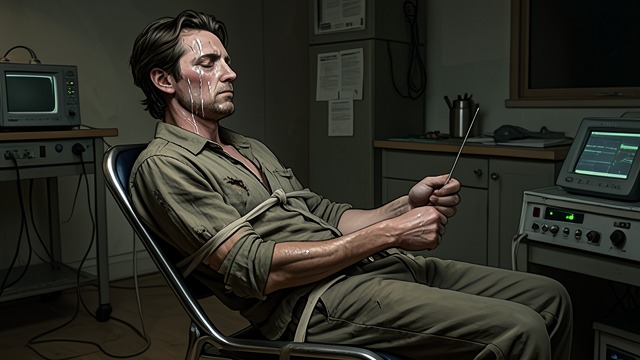
When Colton’s family discovers his attraction to men, they send him to Father Benson’s conversion camp. Its language of salvation recasts his ordinary desire as a spiritual defect and presents suffering as necessary treatment.
A Body Under Coercion
The camp subjects Colton to confinement, deprivation, and painful attempts to condition his responses. Its violence leaves physical scars and nerve damage, while its central lesson is that he should distrust his own body whenever it reacts naturally.
This period turns shame into a survival struggle. Colton’s growing certainty that he may die there finally outweighs the fear of escape, and his decision to run becomes the first decisive act of self-preservation in a life where adults have claimed the authority to define what is good for him.
Naming the Harm
From Flight to Disclosure
A Stranger Offers Safety
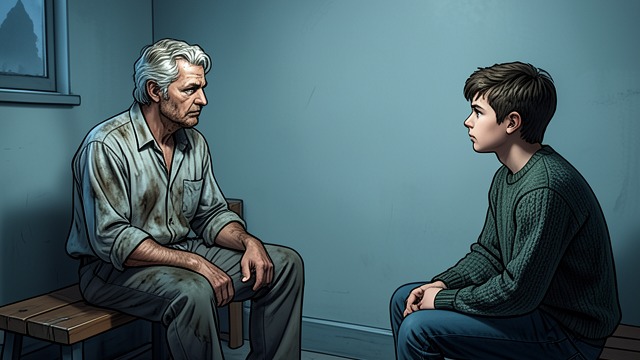
After weeks on the road, Colton is detained for hitchhiking and meets Officer Kimball, who promises he will not be sent back to the camp. The offer of a shower, clean clothes, and food gives him a brief experience of care without punishment attached.
Speaking to Amit
At the group home, Colton meets Amit, a queer therapist-in-training who shares parts of his own experience without making Colton responsible for comforting him. Colton begins to describe how his family’s rejection led to the camp and how frightening the aftermath remains.
Disclosure does not instantly remove Colton’s fear or settle his beliefs. It does, however, interrupt the isolation on which the camp’s authority depended: another person can hear what happened and respond with care rather than condemnation.
Learning to Belong

Practicing a Future
A Home With an Exit Date
At Ted House, Colton tests the limits of the adults who have taken him in, expecting that misbehavior will eventually prove he does not belong. Sage and the others keep setting boundaries while also insisting that his trauma does not make him disposable.
Independence Without Isolation
When Colton ages out, he receives an apartment and keeps working at Masala, but his own habits of self-doubt and his ADHD make ordinary routines difficult. He still struggles with loneliness, focus, and the belief that other people see him as a troubled former foster child rather than an adult.
His recovery develops through imperfect, repeated experiences of being welcomed back. At Ruby’s, in the café, and among the people connected to Ted House, he learns that needing support does not erase his agency and that a mistake need not end a relationship.
Choosing His Own Life

A Future Beyond Survival
Desire Without Shame
Colton’s growing relationship with Marcel gives him room to explore intimacy through explicit boundaries and mutual trust. He can pause when he is not ready, and later choose penetrative sex for himself rather than treating it as a test he must pass to become an adult.
A Calling Reclaimed
When financial-aid rules threaten his plan to study veterinary medicine, Colton initially experiences the setback as another future closing against him. Elliot’s offer of work and tuition support gives him a practical way forward, grounded in Colton’s genuine commitment to animal care rather than pity.
By the end, Colton is no longer defined only by escape, foster care, or the scars of the camp. His love with Marcel, his decision to pursue veterinary school, and his continuing care for animals show a future built from chosen commitments rather than imposed shame.
early in Colton’s childhood
at age sixteen, during his months at the camp
in the first weeks after his escape
from Colton’s late teens into his early twenties
late in the story, after Elliot offers tuition support
