
The Loss of Prince and Its Consequences
Tess of the d'UrbervillesThis flow traces how the death of the family horse makes Tess feel responsible for her family’s hardship and shapes her first departure.
increasing Bearing strength in each event
 decreasing
Bearing strength in each eventdecreasingThe Failed Household Journey
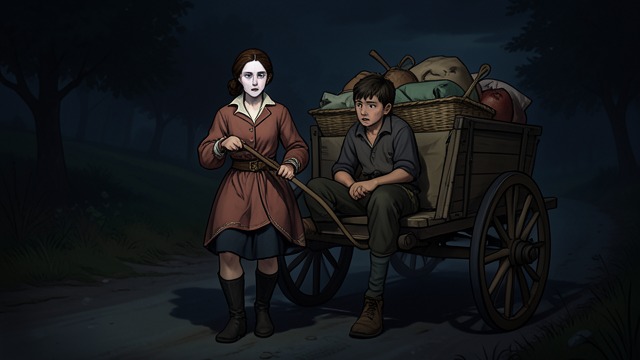
The Failed Household Journey
A necessary delivery
When John is too unwell to take the beehives to market, Tess volunteers to drive the family wagon, accompanied by her young brother Abraham. The household depends on the trip for income.
Responsibility accepted
Tess takes the reins despite limited experience, determined not to let the family’s goods go unsold. Her choice is generous, but it places a young, tired driver in charge of a slow wagon on dark roads.
The Mail-Cart Collision
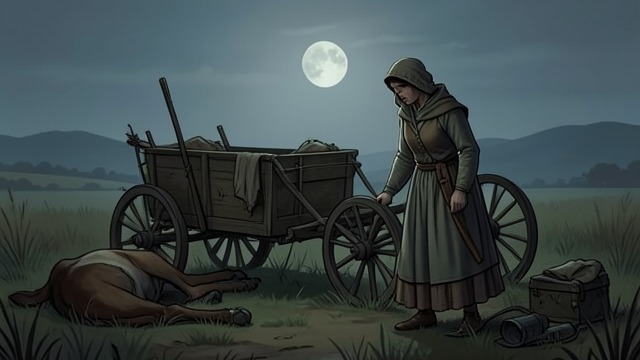
The Mail-Cart Collision
Prince is killed
Tess falls asleep briefly, and the unlit wagon is struck by the mail-cart. Its shaft fatally wounds Prince, the family horse and its principal means of transport.
A lasting self-accusation
Tess declares the accident her fault, though she did not intend it and was carrying a family burden. The loss deepens her sense that she must make amends through work.
A Family Funeral
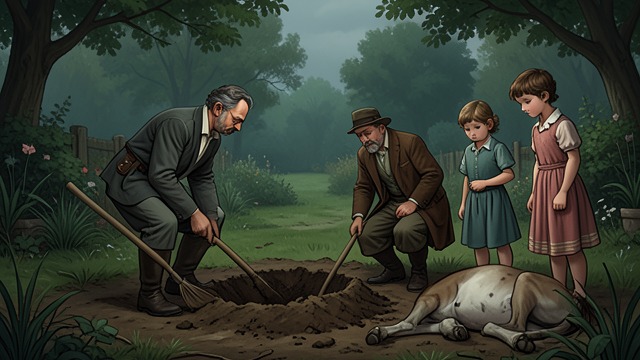
A Family Funeral
Prince is buried at home
John refuses to sell the horse’s body for a few shillings and digs a grave in the garden. The children mourn the animal as both companion and breadwinner.
The loss becomes economic
The family’s haggling business depended on the horse, and its disappearance threatens their livelihood. Tess’s grief is compounded by the belief that she caused the crisis.
Work as Reparation
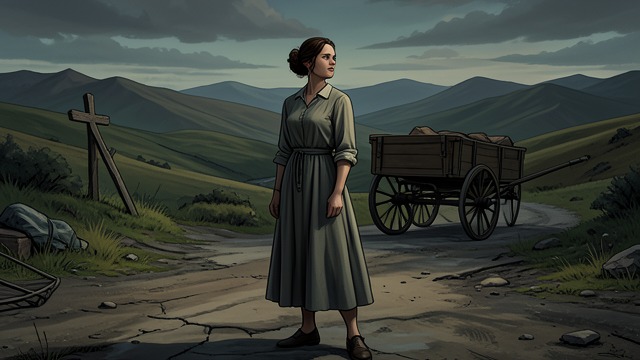
Work as Reparation
Tess accepts the family plan
Joan proposes that Tess visit the wealthy d'Urbervilles in hopes of assistance. Tess dislikes being treated as a poor relation but agrees because she feels responsible for the household’s loss.
A motive with consequences
Her sense of duty is real, but it pushes her toward The Slopes and Alec. The animal’s death therefore becomes the immediate economic cause of a journey with much larger consequences.
The New Horse and Old Debt
The New Horse and Old Debt
Help remembered as obligation
Alec gives John a new cob after Prince’s death, and Tess remembers the gesture when she later refuses to accept more from him. The assistance is not free of emotional pressure.
Need shapes choice
Tess repeatedly treats family need as a debt she must repay, even when repayment exposes her to danger. Her first act of repair thus anticipates the self-sacrificing decisions that govern later crises.
the night after the club-walking
before dawn on the journey toward Casterbridge
the evening after the collision
the days after Prince’s burial
during Tess’s separation from Angel
