'Liza-Lu
Tess of the d'Urbervilles'Liza-Lu, the youngest Durbeyfield daughter and Tess Durbeyfield’s younger sister, moves from the family’s vulnerable childhood into the novel’s final, solemn image: walking hand in hand with Angel Clare after Tess’s execution. Her limited appearances gather force through the changes they register—her abrupt growth, her family’s distress, and Tess’s last appeal that Angel care for her. She is both a person Tess loves and a living echo of Tess, a resemblance that shapes the ending without erasing the difference between the sisters’ fates.
Identity and Background
When 'Liza-Lu arrives at Tess’s lodging, Tess initially fails to recognize her in the twilight. Tess had left her at home only a little over a year earlier as a child; now the girl has shot up so quickly that her old frock has become short, while her thin legs and awkward hands and arms still reveal her youth and inexperience. The contrast between sudden height and unmistakable childhood makes her growth itself a sign of the time Tess has spent away and the changes that have overtaken the family.
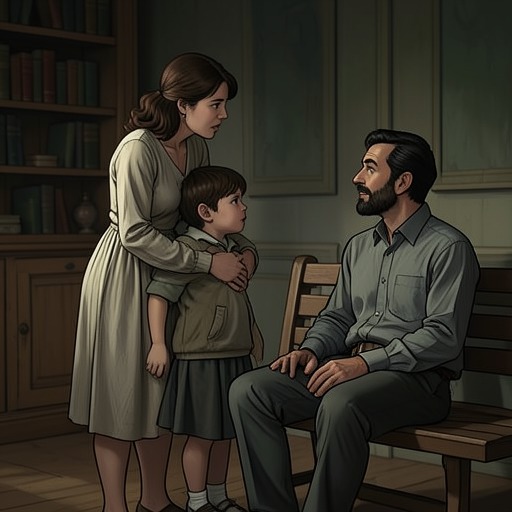
Her manner is serious and practical rather than demonstrative. Having walked about all day trying to find Tess, she tells her plainly that she is tired. The report she brings is urgent: Joan Durbeyfield is seriously ill, the doctor thinks she is dying, and John Durbeyfield is unwell too. He resists ordinary labour on the grounds that a man of his supposedly high family should not have to work as a common labourer. 'Liza-Lu’s message therefore brings together the immediate crisis of her mother’s health and the family’s continuing dependence on a fragile claim to ancestry.
Return to the Family
Tess stands thinking before inviting her sister inside and giving her tea. The decision that follows is immediate: although her agreement at Flintcomb-Ash does not end until Old Lady-Day, April 6, she resolves to go home early. 'Liza-Lu is too exhausted to make the journey that night, so Tess arranges for her to follow the next morning. Before leaving, Tess visits Marian and Izz to ask them to explain her situation to the farmer, gives the younger girl supper, tucks her into her own bed, and packs the belongings she can carry in a withy basket.
At home, 'Liza-Lu is among the children Tess contemplates after returning. Their unexpectedly elongated appearance makes their growth startling to Tess, and the work of looking after them draws her attention away from her own troubles. This moment defines the practical bond between the sisters: 'Liza-Lu’s journey brings Tess back to a household in need, and Tess responds by taking up care of the younger children as well as nursing their mother.
That dependence becomes more painful when another sister tells Tess that 'Liza-Lu is crying and that a crowd has gathered in the house because John Durbeyfield is thought to be dead. The child who reports the news understands its importance but not yet its full grief, asking whether they will never speak to their father again. 'Liza-Lu appears here within the family’s shared shock, as the death of their father compounds the illness that had first sent her to find Tess.
Displacement and Family Hardship
When the Durbeyfields leave Marlott, 'Liza-Lu travels with Joan and the younger children in the family wagon. The household’s possessions are packed around them; Joan sits atop the load with the children, holding the head of the clock in her lap to protect it from the jolts. Tess and the next eldest girl walk beside the wagon until it is out of the village. 'Liza-Lu’s place among the passengers makes the family’s displacement concrete: she is not merely the bearer of news but one of the young dependants carried into an uncertain future with the household goods.
Tess’s concern for her sister persists even while the two women are fleeing together. At a lonely place beneath the open sky, Tess says she is glad to be there after her great happiness and wishes there were no other people in the world besides the two of them—except 'Liza-Lu. When Tess asks Angel to watch over her sister if anything happens, the request turns affection into a specific responsibility. 'Liza-Lu is the person Tess names as the exception to her wish for isolation and the person she wants protected beyond her own life.
Tess’s Bequest and the Ending
Tess goes further than asking Angel to care for 'Liza-Lu. She urges him to marry her if Tess is lost, describing her sister as good, simple, and pure, and imagining that Angel might teach and guide her. Tess believes 'Liza-Lu possesses what was best in herself without what she calls her own bad, and thinks that a future union might make it seem as though death had not entirely divided the sisters. Angel objects that 'Liza-Lu is his sister-in-law and says that losing Tess would mean losing everything; Tess replies that such a marriage is not unheard of in Marlott. Her suggestion is a desperate, tender attempt to secure a future for the person she loves, not evidence that Angel accepts it as a plan.
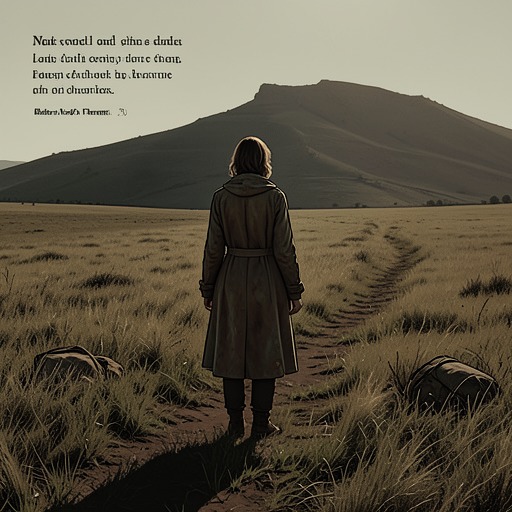
After Tess’s execution, the novel shows Angel and 'Liza-Lu together on the road out of Wintoncester. She is a tall, budding young woman, described as a spiritualized image of Tess: slighter, but with the same beautiful eyes. Their faces are pale and diminished by grief. They walk hand in hand, say nothing, and move with bowed heads; as they reach the West Hill and the town clocks strike eight, they stop in paralyzed suspense beside a milestone. 'Liza-Lu’s final appearance thus carries both resemblance and separation: she recalls Tess in her appearance, but her presence alongside Angel marks the life that continues after Tess’s death.
Narrative Significance
' Liza-Lu is not given an extensive independent plot, and the evidence of her character lies chiefly in what she does and what her presence means to Tess. She travels alone to find her sister, conveys the family emergency, and is drawn into the sequence of illness, bereavement, and removal from Marlott. Her limited speech is matter-of-fact; the novel makes her importance legible through those practical actions and through Tess’s repeated attention to her welfare.
Her resemblance to Tess becomes most explicit at the ending, where she is at once a distinct younger sister and an image of the woman who has died. Tess’s appeal that Angel protect and perhaps marry her exposes how little secure future the family can offer 'Liza-Lu on its own. The final handclasp with Angel does not settle Tess’s proposed future for them; instead, it leaves 'Liza-Lu beside him in shared grief, carrying the novel’s last, wordless image of survival after the irrevocable loss.