Alec d'Urberville
Tess of the d'UrbervillesAlec d'Urberville is a young landowner who uses the supposed kinship between his family and Tess Durbeyfield’s to establish a personal claim over her. First encountered at his family’s estate, he shifts from familiar teasing to sustained pursuit, and later adopts the identity of a religious convert before returning to his former manner. His changing professions do not undo the harm he has caused or end his pursuit of Tess; his eventual death occurs after he has drawn her back into his orbit, leaving her and Angel Clare to face its consequences.
Identity and Introduction
Alec first appears as a young man in his early twenties, emerging from a tent at the estate where Tess has come hoping to see his mother, Mrs d'Urberville. His dark complexion, carefully groomed moustache, and forceful gaze distinguish him from the aged, historically imposing relative Tess had imagined. He introduces himself as Mr d'Urberville and asks whether she has come to see him or his mother. Tess answers that she came for his mother, making clear from the outset that their expectations of the encounter differ.
The family connection is not what Tess supposes. The narrative describes Alec as an embodiment of the d'Urberville name, but Angel Clare later learns from his father that the ancient d'Urbervilles had disappeared decades earlier and that Alec’s family was a newer one that had taken their name. The discrepancy exposes the distance between aristocratic identity as inherited history and a name adopted by a comparatively recent family. Alec’s own interest in calling Tess his cousin gives this manufactured connection a personal use: it makes his attention seem familiar while disguising the imbalance between an employer’s son and a young woman dependent on his household.
The Slopes and the Growth of Control
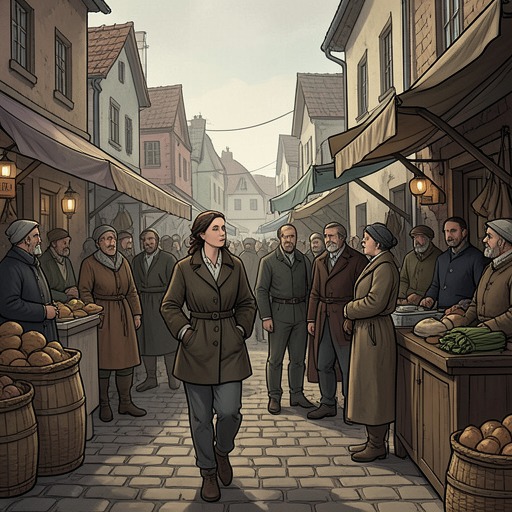
When the carrier who brought Tess will not pass Trantridge Cross again for some time, Alec proposes that they walk around the grounds. Tess would rather shorten her visit, but agrees under his pressure. He leads her through lawns, flower beds, conservatories, and greenhouses, asking whether she likes strawberries. The excursion establishes a pattern: he makes the arrangements, while Tess accommodates herself to circumstances and to his insistence.
At the poultry farm, Alec cultivates familiarity through playful conversation and by calling Tess his cousin when they are alone. This reduces her initial shyness without creating affection; the narrator emphasizes that her growing ease with his presence is not a new tenderness. Her dependence on Mrs d'Urberville, and through her relative helplessness on Alec, makes resistance harder. Even the seemingly ordinary work of tending the bullfinches is set within this unequal arrangement. Tess learns to whistle to the birds each morning, using tunes she has learned from her mother, and finds the task more pleasant once she has regained the skill. Yet one morning she suspects someone may be concealed behind the curtains of Mrs d'Urberville’s bed. She searches the curtains afterward, but finds no one. The episode reinforces the sense that Alec’s playful familiarity can also become intrusive and unsettling.
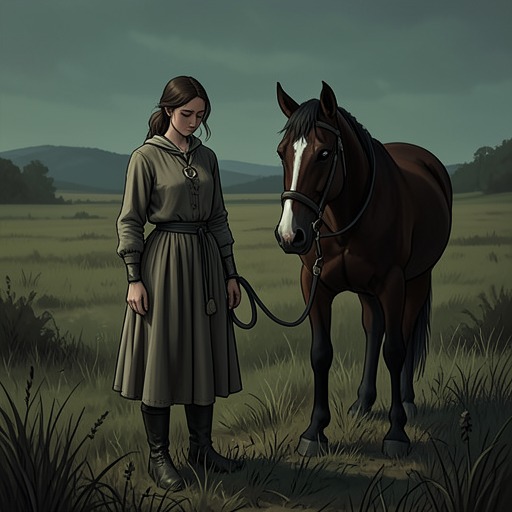
When Alec drives Tess toward Trantridge, he leaves the cart carrying her box far behind and chats to her as they travel. She has become unusually timid in vehicles since an earlier accident involving her father’s horse, and his reckless driving makes her uneasy. The scene continues the pattern of his control over the pace and conditions of their encounters: Tess voices concern, while Alec has already chosen the course of the journey.
The Chase and Its Consequences
In The Chase, Alec’s attention to Tess takes precedence over finding the right route. He rides at random for more than an hour, prolonging their companionship, and only later determines where they are. When darkness and fog make it difficult to retrace the way, Tess is left asleep on the ground while he searches for landmarks. The narrator situates the episode in the stillness of the ancient woodland, then turns from the physical setting to the wider injustice of what has happened to her.
The account refuses to make inherited guilt an adequate explanation. It allows that Tess’s ancestors may have wronged peasant women, but rejects the idea that a descendant’s suffering repairs an earlier injustice. Instead, the narrator invokes the fatalistic phrase “It was to be” and marks the lasting division between Tess who left home for work and the person she is afterward. Alec’s role in this change is not treated as a private romantic misfortune: the unequal social relation between him and Tess, and the community’s fatalism, shape the aftermath.
Alec’s conduct also reaches beyond Tess’s own account of their history. Years later, Angel Clare hears from his father about a young landowner near Trantridge whose conduct had been so objectionable that Mr Clare confronted him while preaching there. The man, whose mother was blind, resented the intervention and publicly insulted the older clergyman. Angel later recounts the episode to Tess without initially understanding how directly it touches her past. She recognizes Alec in the story and responds with grave hopelessness, telling Angel that their marriage cannot go forward. The incident connects Alec’s history of misconduct to the moral and religious world of Angel’s family, while showing how an account of him can reopen Tess’s past even when she is not the subject of the conversation.
Conversion and Renewed Pursuit
Alec later appears as an evangelist, preaching a forceful doctrine and describing himself as a former sinner whose change was brought about in part by the influence of a clergyman he had once insulted. Tess recognizes his voice before she sees him, then confirms that the preacher is the man who harmed her. The reversal is striking: Alec’s public role now presents him as a witness to moral reform, and the story he tells casts Mr Clare’s earlier rebuke as the beginning of that change.
When he proposes marriage, Tess refuses and says that she loves someone else. Alec responds first by claiming he acted for her good and by presenting marriage as a means of sanctifying them both. Once Tess makes clear that she is already married, he tears the marriage licence in half and offers instead to help her and her husband. His words combine apparent concern with a continuing desire to know and influence the couple’s lives. Tess does not invite this involvement.
Alec returns to Tess’s lodging after seeing her again, saying that he cannot put her image from his mind and asking her to pray for him. Tess answers that she cannot pray for him, since she does not believe that divine power would alter its plans on her account. Her response makes plain the distance between his religious language and her own painful sense of powerlessness. His professed conversion has not removed him from her life or restored her trust.
At a later encounter, he has abandoned the preacher’s appearance and resumed the jaunty manner in which Tess first knew him. He approaches her while she is eating on a hayrick, without warning or invitation. Later, while working near her in a smock-frock, he surprises her again; she recognizes his face when the workers meet across the fire. His changes of costume and role—landowner, evangelist, laborer—alter how he presents himself but do not end the repeated pattern of pursuit. Tess tells him that she is leaving because she is not considered a proper woman, and he condemns the social judgment that has helped make her vulnerable.
Final Return and Narrative Significance
When Angel returns to England, he searches for Tess and learns that she has endured hardship rather than use his family name or ask his father for more money. At Cross-in-Hand, he passes the stone where Alec had once compelled Tess, during his own attempt at reform, to swear that she would never deliberately tempt him again. The oath’s setting brings the earlier religious performance into Angel’s search: a pledge associated with Alec’s reformation has not kept him from returning to Tess.
Tess eventually tells Angel that Alec has won her back after helping her and her family following her father’s death. She explains that Alec had repeatedly insisted Angel would never return; when Angel does arrive, she recognizes the lie and asks him to leave. The scene makes Alec’s practical assistance inseparable from the pressure he exerts, while also showing how Angel’s long absence has left Tess exposed to that pressure. Her return to Alec is neither presented as a simple choice free of circumstance nor as a reconciliation that restores trust.
Tess later tells Angel that she killed Alec after he taunted her about Angel and called him a foul name. Angel is horrified but also astonished by the strength of her attachment to him. He cannot fully understand the gravity of her action in the moment, and the narrative leaves open the possibility that her mind had been temporarily unbalanced by grief. Alec’s death ends his direct pursuit, but it does not erase the chain of events that has brought Tess and Angel together in flight. Across his appearances, the contrast between the name he claims, the moral identities he adopts, and the continuing effects of his conduct makes him central to the novel’s critique of status, gendered judgment, and the gap between public reform and changed behavior.