Angel Clare
Tess of the d'UrbervillesAngel Clare is the younger son of the Reverend Mr Clare and an aspiring farmer whose love for Tess Durbeyfield becomes the novel’s central test of idealism, judgment, and responsibility. At first he notices her only after missing the chance to dance with her; later he falls in love, marries her, and abandons her after learning of her past. His departure exposes the cruelty of applying a rigid moral ideal to Tess while treating his own concealed history as forgivable. By the time Angel recognizes that his judgment was unjust, his return cannot undo what has happened.
Identity and Background
Angel first appears as one of three brothers traveling with knapsacks and stout walking sticks. The eldest wears the dress of a curate, the second looks like an undergraduate, while Angel, the youngest, has no settled professional appearance. His eyes and clothes suggest someone who has not yet entered a definite vocation, and he is described as a tentative student of many things. When his brother asks what he intends to do, Angel promises to catch up with him and Cuthbert shortly, but remains at the dance for a while longer.
The brothers’ contrasting appearances place Angel between the established paths of his family and an as-yet-undecided future. Others later describe him as a gentleman’s son who is learning farming in its different branches: he has studied sheep farming elsewhere and is now learning dairy work at Talbothays. He plays the harp, speaks little to the dairy workers, and is often absorbed in his thoughts. His father, the Reverend Mr Clare, lives at Emminster and is known for earnest religious work; Angel, by contrast, doubts the value of his father’s intensity and is distressed by the humiliations it brings him.
Angel’s bearing is marked by a thoughtful voice, a fixed and abstracted gaze, and an air of uncertainty about his material future. Yet this vagueness coexists with a capacity for determination: he is not simply indecisive, and his firm manner can dispel that impression. As a boy, people thought he might accomplish anything if he applied himself. His difficulty is less a lack of potential than an unstable set of ideals through which he interprets both his own life and Tess’s.
First Meeting and Life at Talbothays
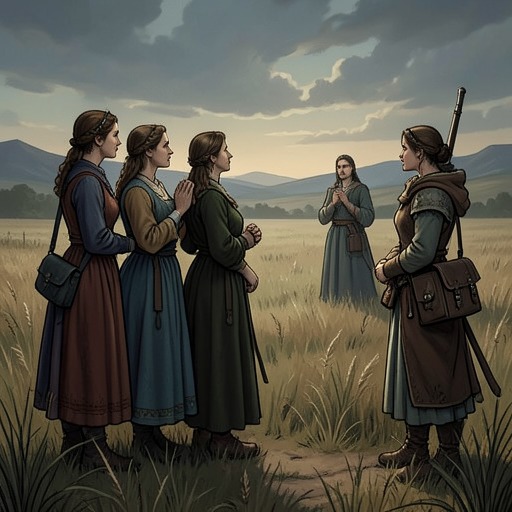
At the May Day dance in Marlott, Angel dances with other young women but fails to notice Tess. When the church clock strikes, he remembers that he must rejoin his brothers and leaves. As he goes, he sees Tess standing alone near the hedge and realizes that she is the pretty young woman he did not choose. He regrets overlooking her and wishes he had asked her name. The encounter is slight, but it establishes a pattern: Angel’s attention arrives after the decisive moment, when his first impression has already caused hurt.
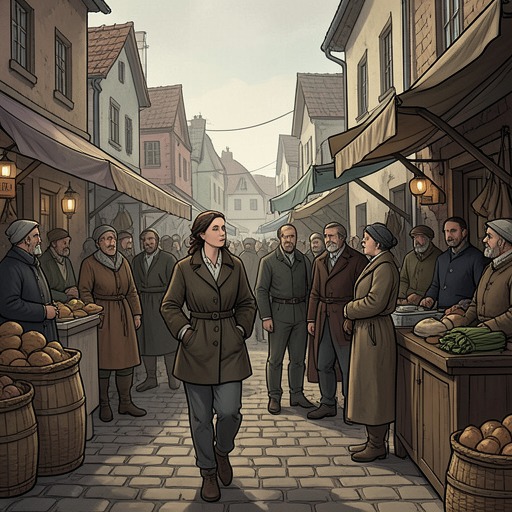
The two meet again at Talbothays Dairy, where Angel is learning farm work. Tess recognizes him as the stranger from the dance, although the hardships she has endured since then have made the memory momentarily difficult to retrieve. Their relationship develops through daily proximity: each day gives Angel another impression of Tess’s character, while she learns more about him. Tess tries to restrain her own feelings, but the strength of her vitality makes that effort difficult. Angel’s romantic regard grows within a setting where he is both her fellow worker and, by background and education, a gentleman’s son.
When Angel proposes, he presents marriage in practical as well as romantic terms. Since he expects to become a farmer, he wants a wife who understands farm management and asks Tess to fill that role. The proposal joins his affection to an ideal of partnership grounded in rural work. Yet his language also reveals how readily he imagines Tess within a future he has shaped in advance, before he knows the full history that she fears will change his view of her.
Marriage and the Disclosure
Angel’s decision to marry Tess is bound up with his willingness to regard her as an ideal partner. During their engagement he tells himself that she already belongs to him in heart, a confidence that treats their emotional closeness as assurance of mutual understanding. But Angel himself has withheld information. He later admits that he did not disclose his own past because he feared losing Tess; although he considered telling her more than once, he repeatedly postponed it. He confesses only when she proposes that they share their faults.
The timing makes the disclosure a crisis of reciprocity. Angel has protected his chance of marrying Tess by remaining silent, yet he has entered the marriage expecting her to tell him everything. Once he has admitted his own concealment, Tess tells him about her acquaintance with Alec d'Urberville and what followed. She speaks plainly, without flinching, as their hands remain joined. The scene brings their two histories into immediate comparison: each has a past, but Angel does not judge them by the same measure.
Angel acknowledges that Tess has suffered more wrong than she has done. His recognition does not prevent him from leaving her. The contradiction becomes the defining failure of his response: he can articulate that she was more sinned against than sinning, yet cannot make that understanding govern his conduct as her husband. His ideal of Tess proves less resilient than his affection, and the marriage is broken by the very past that his own disclosure has just made relevant to both of them.
Separation and Change of Judgment
After the separation, Tess remains legally Angel’s wife and insists on that bond when Marian and Izz speak with her about him. She cannot join them in discussing him as though he were simply an absent man, because he is still her husband. At the same time, she feels she has no moral claim upon him and refrains from writing to his parents, despite being told she may contact them if she is in difficulty. Her effort not to ask for a favour leaves her virtually absent from both Angel’s family and her own.
Tess’s life during the separation makes the material cost of Angel’s withdrawal unmistakable. She works at Flintcomb-Ash, a severely poor farm described as a starve-acre place and an absentee-owner’s village, while Angel is abroad. When she thinks of his judgment, she cannot sustain the distance from public opinion that might otherwise help her endure hardship. She comes to recognize that Angel, like others, has dealt harshly with her. In her view she never intended to do wrong; her suffering has followed actions that were inadvertent, judged as though intention and circumstance counted for nothing.
Angel, meanwhile, travels through the interior of South America toward the coast. He has been gravely ill since soon after arriving and has almost given up hope of farming there, although he keeps that change of mind secret from his parents while any possibility of staying remains. When he receives Tess’s loving letter, he begins to regret his hasty judgment. He can no longer say that he will reject her forever, and that change in what he can contemplate amounts, in spirit, to accepting her again.
His return is delayed in part because Tess’s letter reaches him only by chance and after a long interval while he is inland. Once back in England, he hesitates to confront her without warning. Her latest letter shows that the delay has changed her estimate of him, and Angel recognizes that this change is justified. He asks his father whether Tess has applied for money and learns that she has not. Only then does he understand that her pride has kept her from seeking help and that she has suffered deprivation. His parents, now understanding the real reason for the separation, respond with tenderness toward Tess, a response prompted by the very moral transgression that had not moved them before.
Return, Final Commitment, and Significance
Angel decides to go to Tess rather than continue to believe that her regard for him is irrecoverably changed. When he finds her, he asks whether she can forgive him for going away and asks her to come to him. His return is no longer a demand that she meet his old ideal; it is an appeal for renewed closeness. He tells her that his love has returned, then learns that she has killed Alec d'Urberville. Instead of withdrawing again, Angel promises not to desert her and to protect her by every means in his power, whatever she has done or not done.
That promise is the clearest reversal in his conduct. Earlier, Angel’s recognition that Tess had suffered more than she had sinned could not overcome his judgment; now he pledges himself to her without making protection conditional on innocence. But the couple’s reunion cannot restore the future they once planned. In the final image, Angel walks hand in hand with 'Liza-Lu, Tess’s sister, a young woman presented as a spiritualized likeness of Tess. They move in silence, their bowed heads recalling a pair of apostles. Angel’s presence beside 'Liza-Lu registers the life that continues after Tess, but it does not erase his failure to return to her in time.
Angel is therefore neither a simple villain nor the uncomplicated romantic partner his courtship initially suggests. His capacity for affection and later self-reproach is genuine, but so is the damage done by his unequal moral standard. His arc turns on the distance between knowing that Tess has been wronged and acting on that knowledge when it matters. The late promise to protect her marks a change in his judgment; its arrival after irreversible loss gives that change its tragic weight.