Confession and Silence
Tess of the d'UrbervillesConfession and silence form a sustained conflict in Tess Durbeyfield’s approach to marriage: she believes Angel Clare must know her history, yet fears that telling him will destroy his love. The novel gives that conflict a material shape in a letter slipped under a door and left unseen beneath a carpet. Between these failed attempts and her eventual spoken account, Tess must decide whether silence is mercy, self-preservation, or a betrayal of the man she loves.
The obligation to tell
Before accepting Angel’s proposal, Tess tries to explain that she has something to disclose. She says that her hesitation is on his account and insists that he must hear her history, warning that he will not like her so well once he knows it. Angel, thinking first of their practical future and his happiness, invites her to tell him if she wishes. His response does not remove her fear: the essential difficulty is not whether she can describe her past, but whether she can risk the change in his regard that she imagines the truth might bring.
Tess’s concern is set against Angel’s assumptions about her identity. He celebrates her descent from the d’Urbervilles and sees the family name as an advantage that may ease society’s acceptance of her as his wife. Tess replies that she does not particularly value the lineage: the land once belonged to her family, but also belonged to the ancestors of other people working it. The contrast matters to her effort at candour. Angel can welcome an inherited history when it seems to confer status; Tess is preoccupied with the personal history she believes may make her unworthy in his eyes.
At the last moment before this early opportunity, Tess does not tell him. The narration identifies both her fear of blame for having waited and an instinct of self-preservation stronger than her candour. Her silence is therefore not simple indifference to honesty. It grows out of competing responsibilities: she wants to disclose the past, but also wants to preserve the love and security that marriage with Angel appears to promise.
A mother's counsel and Tess's resistance
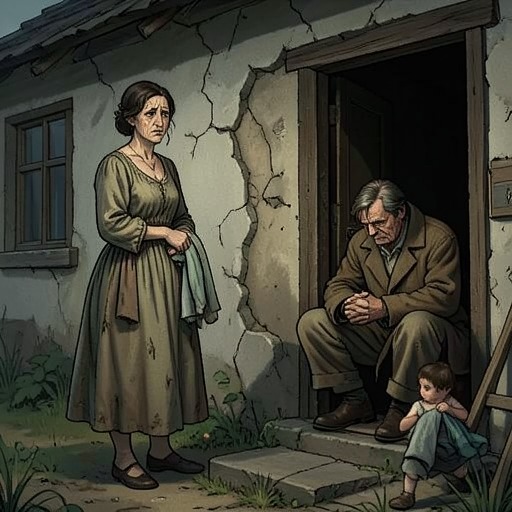
Tess asks her mother for advice and receives an emphatic instruction to keep the “Bygone Trouble” from her intended. Joan argues that it was not Tess’s fault, that other women have concealed comparable troubles, and that speaking would needlessly jeopardize her welfare. She also invokes a promise Tess made before leaving home: because she knew Tess’s habit of saying everything in her heart, she had asked her daughter never to reveal it. Her advice joins practical protection to an appeal to a prior promise, making silence seem both prudent and binding.
The letter also shows the distance between mother and daughter in their understanding of the past. Joan treats the episode as a passing accident and approaches life with an elasticity that Tess does not share. Tess recognizes this difference, yet admits that her mother may be right about the course to take, whatever the quality of her reasons. Accepting the advice steadies her: she feels calmer and lighter once responsibility has been shifted away from her own decision. Her love for Angel then rises into an idealizing trust; she sees him as a guide, philosopher, and friend, and believes his goodness and compassion to be beyond question. This exalted picture helps explain why disclosure feels so dangerous: she fears not merely rejection, but the collapse of a nearly sacred image of their relationship.
That temporary acquiescence does not settle the matter. When Marian tells Tess that the other milkmaids had loved Angel, had tried not to hate Tess, and had accepted that he chose her, Tess weeps and resolves to tell him everything despite her mother’s command. She feels that preserving silence could be a betrayal of Angel and somehow a wrong to the women who have suffered through unrequited love. Her sense of obligation widens: truth is no longer only a private question between future spouses, but also a debt she feels she must pay in light of the unequal distribution of happiness and pain.
The letter lost beneath the carpet
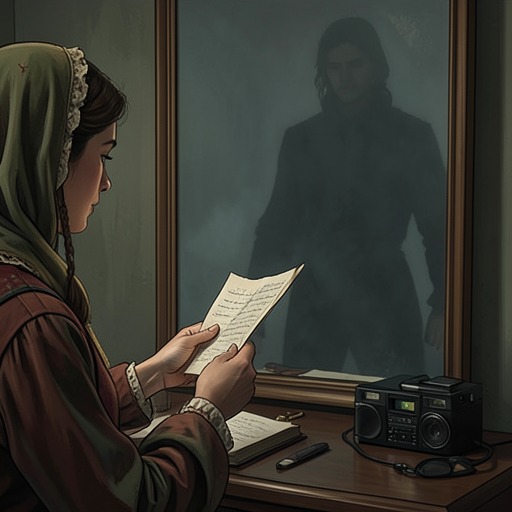
Tess cannot bring herself to speak directly, so she looks for another means of disclosure. After hearing Angel describe a dream in which he fought the man who had insulted her, she writes a concise account of events from three or four years earlier on four pages. Without shoes, she carries the note upstairs and slips it under his door, acting while her resolve is strong enough to overcome the fear that it may fail again. The letter is a concrete compromise between speech and silence: Tess gives Angel the truth, but avoids having to watch his immediate response as she tells it.
The following morning, Angel meets her warmly and says nothing about the revelation. Tess cannot tell whether he has read and forgiven her, or whether he has received the letter at all. His unchanged affection feeds her hope that he loves her as she is, while his silence leaves the central question unresolved. For a time, she interprets his conduct in the most hopeful way, wondering whether her fears have been childish and whether he has deliberately spared her anxiety.
On the morning of the wedding, Tess searches Angel’s former room and finds the envelope still sealed beneath the edge of the carpet. In her haste, she had pushed the note beneath both the door and the carpet; Angel never saw it. She withdraws and destroys it, telling herself that the bustle of preparations makes it impossible to have him read it now. Yet the incident has not truly removed the opportunity: she knows that time remains, even as the movement of the household makes deliberate conversation difficult. The overlooked letter turns a moral crisis into a matter of chance and placement. Tess has tried to tell; Angel’s apparent silence has not been a response at all.
From delayed disclosure to spoken confession
The wedding takes place without Tess’s friends from Marlott, while Angel’s family remain cool about the marriage. His parents regret his haste but accept that he is old enough to judge, and his brothers do not reply. Angel has withheld Tess’s lineage from them, intending later to present her as a d’Urberville and a lady. Their marriage thus begins amid several managed disclosures and expectations, but the most consequential hidden fact is not the ancestry Angel hopes to reveal; it is the history Tess has tried, unsuccessfully, to tell him.
After the wedding, news arrives that Retty Priddle tried to drown herself. Tess responds that Retty suffered without cause while those who had cause could hide it and pretend otherwise. The incident finally turns her resolve. She regards herself as the chosen one among girls who had loved Angel, believes she has taken happiness without paying for it, and determines to pay to the uttermost farthing by telling him. The language of payment makes confession an act of moral accounting: Tess cannot accept the happiness of being chosen while concealing what she regards as the fact that disqualifies her from it.
When Angel says that he wants to confess something to her, Tess is almost glad, because she thinks his disclosure may mean he can forgive hers. She reminds him that she too has a confession. Their hands remain joined as she begins; the firelight and the shadow of her body mark the moment with an ominous intensity. Pressing her forehead against his temple, she tells him of her acquaintance with Alec d'Urberville and its results. The account, long delayed through fear, maternal counsel, a misplaced letter, and missed chances to speak, is at last given face to face.
What silence can and cannot protect
The novel does not treat silence as a single, settled moral position. Joan recommends it to protect Tess from needless harm and invokes the promise made at home; Tess briefly accepts that logic, then fears that silence wrongs Angel and others. Her reluctance also protects her from the immediate risk of rejection. These motives overlap without becoming identical: a silence intended as care can also preserve Tess’s own hope, while an attempt at honesty can become entangled with guilt and the belief that she must pay for happiness.
The repeated failures to disclose give the theme its structure. Tess first tries to begin the conversation and stops; later she writes a letter, but it lodges beneath a carpet; on the wedding morning she finds and destroys it; finally, after Retty’s attempted suicide sharpens her sense of obligation, she speaks. The sequence distinguishes intention from successful communication. Tess is not simply withholding a story: she repeatedly approaches the act of telling, while circumstance, fear, and misinterpretation keep the truth from reaching Angel until after the marriage.
The decisive irony is that Angel’s apparent quiet after the letter has not been forgiveness, because he has never read it. Tess’s hope rests for a time on a response that did not happen. Her spoken confession ends that uncertainty about whether she has told him, but the supplied scene leaves the consequences of his hearing it to what follows. At this point, confession is neither a guaranteed release nor a completed reconciliation; it is the moment when Tess makes the truth available to the person whose judgment she has feared.