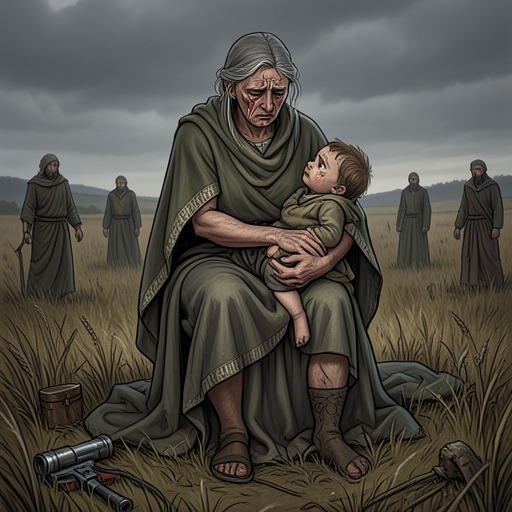
Death of Tess’s child
Tess of the d'UrbervillesThe death of Tess’s child is the loss that precedes her confession to Angel Clare: when she finally recounts her connection with Alec d’Urberville, the child is already dead. Angel’s later questions establish the distinction that will shape his response—Tess’s baby has died, but the man associated with her past is still living.
The Death Before the Confession
As Tess begins to tell Angel her story, their hands remain joined. Firelight rises through the ashes beneath the grate, casting a red, apocalyptic glow over the two figures. Her diamonds catch the light with a sinister glint as she leans her forehead against Angel’s temple and tells him of Alec and what followed. The child’s death belongs to the painful history she is disclosing, not to a separate scene of dying shown here: the narration places it within the past whose consequences Tess is at last making known.
Confirmation and Consequence
Later, Angel asks directly whether the baby is alive. Tess answers that the baby died. His next question shifts from the child to Alec, and Tess confirms that Alec is alive. The spare exchange sets two facts side by side: the child is irretrievably lost, while the man linked to Tess’s past remains present in the world. The death therefore figures in the disclosure as more than background; it marks a consequence that cannot be undone, even as Tess faces Angel with the living history behind it.
Narrative Significance
The episode is framed through telling and response rather than an extended account of the child’s final moments. First, Tess’s bodily closeness to Angel contrasts with the grave content she must disclose; later, a few blunt answers reduce that history to its most consequential facts. The child’s death helps define what has already happened, while Alec’s survival keeps the past from feeling concluded. This contrast gives the confirmation its force: grief is settled into the past, but the source of Tess’s ordeal has not disappeared.