Marlott
Tess of the d'UrbervillesMarlott is the village at the center of Tess Durbeyfield’s family history: her birthplace and childhood home, the setting of her first encounter with Angel Clare, and a refuge she repeatedly leaves and returns to. Its sheltered rural landscape stands in tension with the pressures of reputation, poverty, and displacement. As the Durbeyfields’ home, Marlott offers belonging, but never lasting security.
Setting and Character
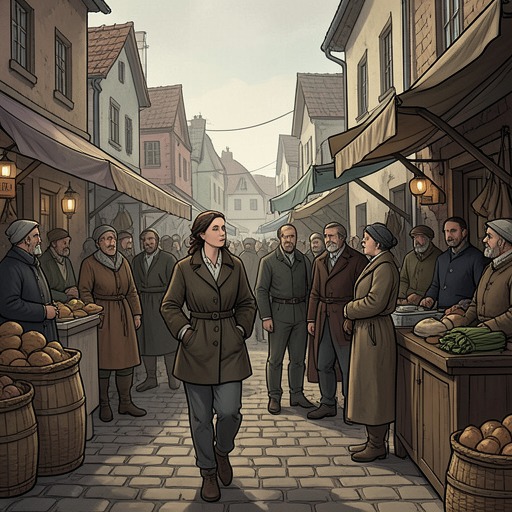
Marlott lies among the north-eastern undulations of the Vale of Blackmoor, a secluded and fertile region within a four-hour journey of London. The surrounding hills enclose the vale, and the country below differs sharply from the open downs and broad fields beyond its ridges. Its roads can be narrow, winding, and muddy, while its sheltered fields and springs suggest a landscape apart from the harsher country around it.
That physical enclosure gives Marlott the character of a distinct rural home, but it does not make the village immune to wider change. In the story, its fields, lanes, cottage, and churchyard become landmarks through which the Durbeyfields’ fortunes can be measured. The village holds memories for Tess even when her family’s place in it is precarious.
Home, Family, and Departure
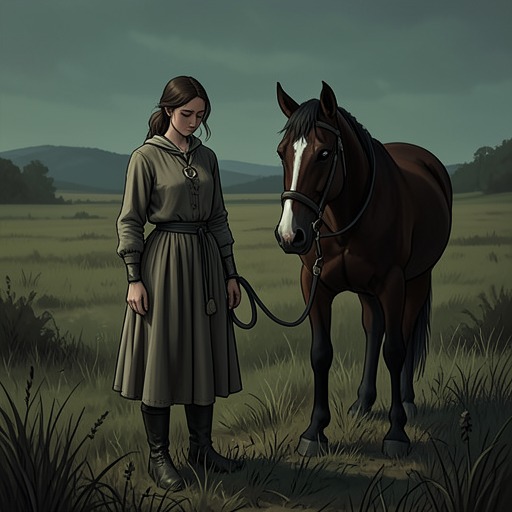
The Durbeyfield cottage is the family’s base, but their circumstances deteriorate after the family horse is lost and their prospects become uncertain. Tess’s mother urges her to seek help from the wealthy Mrs d'Urberville, presenting the family’s newly discovered ancestry as a possible resource. Tess is reluctant to claim kinship for material advantage, yet the scheme connects the family’s hopes to a supposed noble past rather than to secure work or income.
When Tess later returns to Marlott, she finds her mother at home and the children still upstairs, while her father remains in bed on a Sunday morning. The domestic scene brings her back into the family’s daily life, but the house cannot erase what has happened beyond the village. During the winter she helps support the household by plucking fowl, preparing turkeys and geese, and making clothes for her younger siblings from finery she has put aside. She refuses to seek further help from Alec d'Urberville.
Marlott also becomes difficult for Tess to inhabit because it holds the family’s failed attempt to gain advantage through the d'Urbervilles. She hopes that a place without those memories might allow her to begin again. After a period of waiting, she leaves a second time in spring, travelling by hired trap toward Stourcastle and then continuing south toward Talbothays Dairy. Looking back at Marlott and her father’s house, she knows her family will carry on without her; she also believes her absence may be better for the younger children than remaining as an example associated with her past.
Reputation and Uneasy Return
Tess’s later return to Marlott is shaped by the gap between her private circumstances and her family’s expectations. A local man tells her that John Durbeyfield’s daughter has married a gentleman-farmer, and that the family’s noble descent has become a subject of village talk. Tess’s own return, however, is not the prosperous homecoming her parents imagine. She avoids arriving publicly with her luggage and approaches the cottage by a back lane, aware that her family believes she is away on a wedding journey.
The misunderstanding deepens when John doubts whether the marriage has really taken place. Tess hears the doubt and feels that she cannot remain at home if even her own family questions her account. After only a few days, she uses a letter from Angel Clare as the reason to leave again, allowing her parents to believe she is joining her husband. She gives her mother twenty-five pounds from the fifty Angel had provided, describing it as some return for the trouble and humiliation she has caused the family. Her parents take the money as evidence that the separation has been repaired, while Tess uses the gesture to preserve her husband’s reputation and her own dignity.
A Home Under Pressure
Marlott’s history is bound not only to family reputation but also to the changing rural economy. As cottages are demolished and fewer homes remain, those standing are increasingly needed for agricultural workers. The village’s established families, once central to local life, are pushed toward larger towns. The Durbeyfields, whose ancestry is not credited, are among those regarded as likely to lose their home when their lease ends.
On the first Lady-Day when the family can be expelled, their roomy cottage is required for a carter with a large family. John’s widow Joan, Tess, 'Liza-Lu, Abraham, and the younger children must leave. The account links this removal to both housing pressure and moral scrutiny: the village’s influential residents have treated the family as an undesirable presence, and Tess’s return has made her visible again to people concerned with the household’s reputation. The loss of the cottage is therefore at once economic and social, turning the family’s home into a place from which they can be excluded.
Tess’s own return shortly before this crisis is marked by her mother’s illness. She enters quietly, learns that Joan is no better, prepares breakfast, and takes up nursing her. The younger children seem to her to have grown strikingly during her absence; caring for them draws her attention away from her own troubles. The house remains part of her identity, but her family’s place in it is already under threat.
Memory and Significance
When Angel Clare later comes to Marlott seeking Tess, he finds the childhood house occupied by people who never knew her. Its new residents pursue their ordinary concerns without regard to the lives that preceded them. The house, once central to Tess’s sense of home, has become an indifferent setting that no longer holds her history in any visible way. Angel learns that John Durbeyfield is dead and that Joan and the children have left the village.
On his way out, Angel passes the field where he first saw Tess at a dance. The churchyard holds John’s gravestone, which proclaims his descent from the d'Urbervilles even though the family had been left without secure property. Angel discovers that the mason’s bill for the stone remains unpaid and settles it before continuing after the family. Marlott thus gathers the novel’s contrasts in a few connected places: the childhood home that has passed to strangers, the field of an unfulfilled first meeting, and the churchyard monument to an ancestry that could not protect its inheritors. The village is both Tess’s point of origin and a measure of how little inherited identity can shield a rural family from hardship and judgment.