Tess Durbeyfield
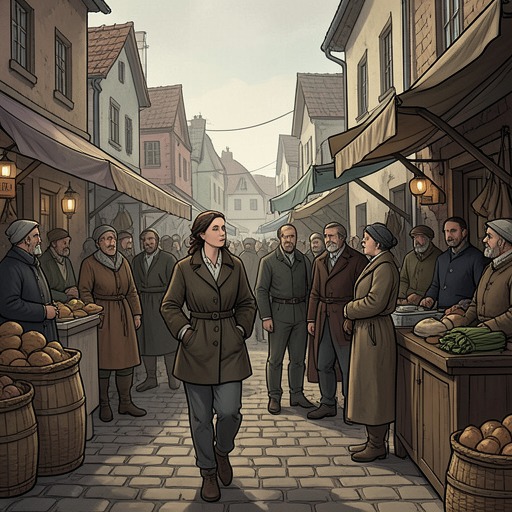
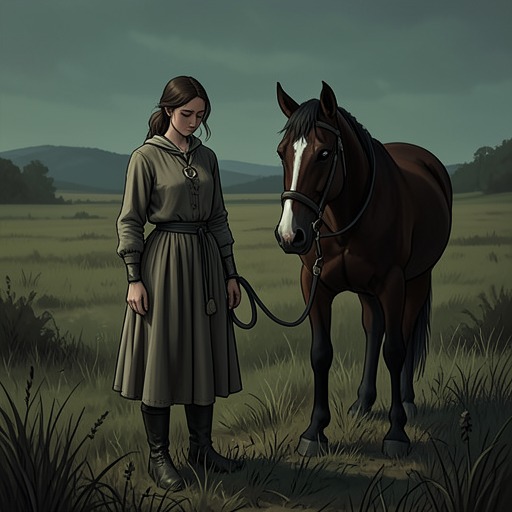
Tess of the d'UrbervillesTess Durbeyfield is the eldest daughter of John Durbeyfield and Joan Durbeyfield, a young rural woman whose personal choices are repeatedly entangled with her family’s poverty and the expectations society places on women. Initially described as inexperienced and emotionally open, she is pushed from home in the hope that a connection to the wealthy d’Urbervilles will improve her family’s circumstances. Her later life as a mother, agricultural worker, wife, and fugitive shows how little protection ancestry, labor, or moral intention can offer her. Her story’s decisive conflict lies in the distance between her own understanding of herself and the judgments imposed upon her.
Identity and Background
At the beginning of the story, Tess is presented as young and largely unacquainted with the dangers beyond her village. The narration calls her a “mere vessel of emotion untinctured by experience,” emphasizing not an absence of feeling but a lack of knowledge with which to interpret the world around her. Her speech retains the local dialect despite her schooling, while her appearance is described through distinctive features, including her deep red mouth and the way her lower lip moves when she speaks. These details situate her in a particular rural community and register her youth before experience alters her sense of herself.
Her family’s circumstances make her vulnerability practical as well as personal. After her father’s newly discovered ancestry raises hopes of a connection to the d’Urbervilles, Tess becomes the family member expected to act on that possibility. She silently wonders how she can help her parents out of their difficulties when Joan proposes a plan. In Trantridge, even after an incident that destroys her confidence in Alec d'Urberville, Tess continues toward the village on foot rather than abandon the undertaking. She weighs returning home against the prospect of disrupting the scheme for her family’s rehabilitation, a calculation that shows how family need constrains her freedom to withdraw.
From Trantridge to Motherhood
When Tess returns to Marlott after her time away, she is described as “the same, but not the same”: an alien in a familiar place. After a long period of seclusion, she takes outdoor work in the harvest because it is the most remunerative work available to her during the busy agricultural season. Her return is not a simple restoration of her earlier life. The work places her again among the people of her village, while her changed circumstances make her feel estranged from the community that had once been home.
Her mother’s response exposes the harsh economic hopes attached to Tess’s departure. Joan reproaches her for failing to secure a marriage and for apparently bringing back no benefit to the family, recalling that people had expected a happy outcome from the young couple’s departure together. Tess answers that she was a child when she left and asks why no one warned her about the danger men could pose. She points to the unequal distribution of knowledge: ladies, she argues, learn about such dangers through novels, while she had neither that opportunity nor her mother’s guidance. Her distress is therefore not only a response to personal misfortune; it is also a protest against the lack of preparation and protection afforded to a poor young woman.
Tess’s baby becomes the focus of another conflict between social judgment and maternal care. The child’s birth outside marriage is treated by society as an offence, but Tess’s desire is simply to preserve the child’s life. When the baby becomes gravely ill, she is overwhelmed by the knowledge that he has not been baptized. She responds by arranging an improvised ceremony at home: she lights a candle, wakes her younger siblings, has them kneel with their hands joined, and brings the infant to a basin of water while one sister holds open the Prayer-Book. The scene makes Tess the organizer and officiant of an act that the formal religious authorities have not provided for her child.
The infant, Sorrow, dies in the early morning. His death brings grief, but the account also emphasizes Tess’s distress over his unbaptized state and the circumstances into which he was born. Her younger siblings wake and beg her to have another baby, a request that underscores their incomplete understanding of the loss. The contrast between their plea and Tess’s grief leaves the child’s death not merely a private bereavement but a painful encounter with religious and social systems that have made his legitimacy consequential.
Work, Love, and Marriage
After the family’s attempt to claim kinship with the rich d’Urbervilles collapses, Tess recognizes that Marlott has become difficult to inhabit. The family’s hopes of a closer connection have failed, and she cannot imagine becoming comfortable again among memories of that failure until many years have passed. She reasons that escape from the past requires leaving the place associated with it. Two or three years after her return from Trantridge, she leaves home for the second time, setting out in May for work at Talbothays Dairy.
At Talbothays, Tess encounters Angel Clare again. She recognizes him as the stranger who had joined the dance at Marlott, danced with other women rather than her, and then left with his companions. The memory makes their later intimacy part of a longer, uneven history: Angel had once passed through her life without choosing her, but now the circumstances are different. As their relationship deepens, Tess understands that loving him carries a painful consequence. When Angel’s proposal makes marriage an immediate possibility, she gives the answer she believes an honourable woman must give, though the prospect brings her acute distress.
Tess ultimately resolves to tell Angel the truth about her past, despite her mother’s instruction to remain silent. Hearing Angel’s own words about marriage and moral obligation, she decides that withholding her history would be a betrayal of him. She tells her story while their hands are still joined, speaking of her acquaintance with Alec and its consequences. Her disclosure is an act of candor, but it also exposes the unequal terms on which she and Angel understand sexual history. Angel acknowledges that she was more sinned against than sinning, yet that recognition does not prevent their separation.
Separation, Poverty, and Resistance
After the marriage breaks down, Tess is once more required to support herself through agricultural labor. She approaches Marian for help, explaining that Angel has gone abroad, that she has exceeded her allowance, and that she must return to her old work for a time. She asks Marian to call her Tess rather than Mrs Clare, a small but telling request to set aside the marital title that no longer protects her. Marian helps her find work at Flintcomb-Ash, a farm the narration characterizes as a “starve-acre” place, part of a village neglected by both its own inhabitants and its absent landowner. Tess nevertheless sets to work; patience, combining moral courage with physical timidity, sustains her through the labor.
When she encounters Alec again, his religious conversion and renewed pursuit provoke her anger rather than reconciliation. Tess objects to the speed with which he has changed his public identity after having helped make her life bitter. She rejects the idea that a conversion can erase the consequences of his earlier conduct, identifying the injustice of a man seeking spiritual advantage after causing lasting harm to a woman. Her response makes clear that her moral judgment does not depend on accepting the social terms by which women are made to bear the cost of men’s actions.
Tess continues to hope that Angel may return, but poverty and uncertainty intensify her attachment to that hope. One night she begins a letter to him, tells him that she loves him, and conceals the hardships she is enduring. The letter remains unfinished and is put away in her box. She has heard that Angel asked Izz to accompany him, and doubts whether he cares for her at all. The unsent letter preserves the conflict between her wish to reach him and her fear that he has chosen another future.
As the family’s situation worsens, Tess decides that she must return home before her work agreement ends on Old Lady-Day, the sixth of April. Her choice follows a long period of reflection, and she resolves to risk leaving before the agreed date. In a later moment of anger and grief, she acknowledges to herself that Angel, too, has dealt harshly with her. She has never intended to do wrong, she believes, yet has been persistently punished for actions she did not intend. That recognition marks a change in how she interprets her suffering: she no longer treats every judgment against her as proof that she deserves it.
Return to Angel and Ending
When Angel returns and seeks her, he asks for Teresa d'Urberville or Durbeyfield. Tess appears at the threshold in a gray-white dressing gown and slippers, her hair only partly arranged, unlike the person he had expected to see. The reunion brings together the names attached to her successive social identities: Durbeyfield, d’Urberville, and the name by which Angel had known her as his wife. Yet the altered circumstances between them cannot be undone by recognition alone.
Tess tells Angel that she has killed Alec, saying that she felt she owed the act to Angel and to herself. She explains that Alec had come between them and that, after Angel failed to return, she had gone back to Alec. She insists that she never loved Alec as she loved Angel and asks whether Angel believes her. Her account joins the killing to a desperate hope of recovering their relationship, while also naming the earlier choices and abandonment that have brought her to this point. The scene does not present her action as a simple restoration of what was lost; it reveals the ruinous cost of a reunion reached only after further violence and flight.
At the end, Tess wakes and asks Angel whether those who have come for her have arrived. When he confirms the moment, she says she is ready. The quietness of that final response contrasts with the unstable hopes and repeated upheavals that have preceded it. Tess’s story closes not with escape from judgment but with her acceptance of the immediate consequence, leaving her earlier insistence on her own moral intentions in sharp tension with the punishment imposed upon her.
Narrative Significance
Tess’s trajectory repeatedly places her personal conduct beside the social structures that judge it. Her mother’s reproach makes clear that the family initially measures her prospects through marriage and material advantage; the treatment of Sorrow shows how stigma reaches even the next generation; and Angel’s acknowledgment that Tess was more sinned against than sinning does not spare her the consequences of a sexual double standard. In each case, the language of respectability or religion promises moral order, while the actual burden falls heavily on Tess.
The novel also charts how work both sustains Tess and exposes her limited choices. Harvesting in Marlott, dairy work at Talbothays, and labor at Flintcomb-Ash provide ways to live, but none can erase the past or secure lasting independence. Her movement between homes and farms is therefore more than a sequence of job changes: it is the material form of her effort to find a place where memory, poverty, and judgment will not define her entire life. The effort repeatedly fails, but Tess’s patience, candor, and growing capacity to question the verdicts passed upon her prevent her from being reduced to those verdicts alone.