The Durbeyfields' eviction from Marlott
Tess of the d'UrbervillesThe Durbeyfields' eviction from Marlott turns the end of a tenancy into a forced departure, making the family's private misfortune part of a wider upheaval in village life. On Old Lady-Day, they lose their home because John Durbeyfield’s life tenancy has ended and the cottage is wanted for a carter’s large family; Tess, convinced that her return has helped make the household expellable, watches the family prepare to leave the village where they were born.
Causes and Background
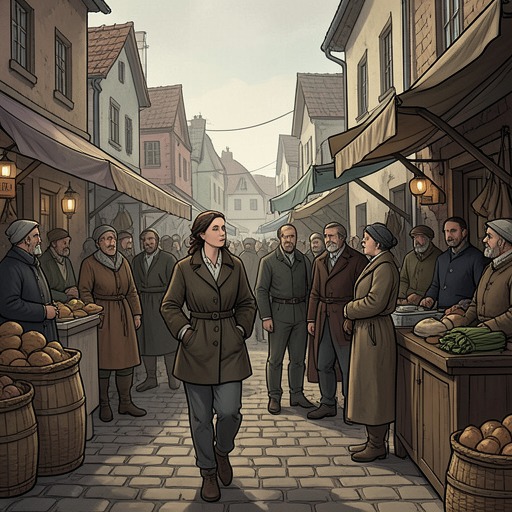
The removal takes place amid the annual migration of agricultural workers. Agreements made at Candlemas come due on Old Lady-Day, and laborers move between farms in a yearly circulation that has grown more pronounced. For younger families, the change can feel like an adventure or the promise of better circumstances; the narrative compares one household’s Egypt with another’s Land of Promise, only for the new home to become Egypt in its turn. That restless movement is not the whole story, however. Marlott is also losing its non-agricultural residents and the stable village life they had helped sustain.
A class of tradespeople and other workers once stood above the farm laborers in the village’s local hierarchy. Some held their homes for life, others occupied copyholds or owned small freeholds. As long holdings ended, their dwellings were seldom let again to similar tenants: they were pulled down or reserved for farm workers. Cottagers not directly employed on the land consequently faced disfavor, and the loss of their custom forced others to leave too. The families who had carried village traditions were driven toward larger towns. Against this background of shrinking housing and agricultural consolidation, the Durbeyfields’ eviction is not an isolated dispute but one household’s encounter with a transforming rural economy.
The Loss of the Cottage
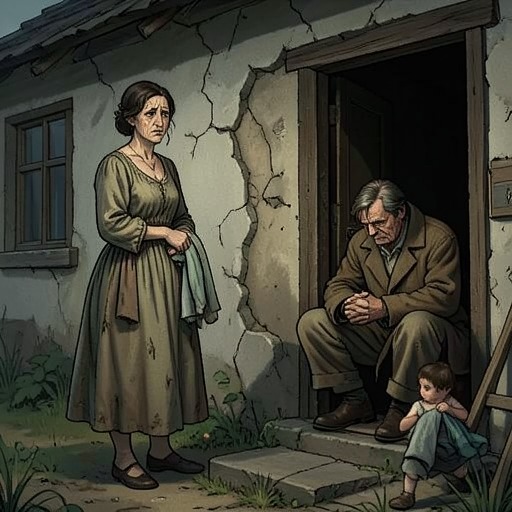
When the Durbeyfields’ lease ends, the family has little recognized claim to remain. John’s was the last life tenancy on the property; once it fell in, the household had no further right to stay. They might perhaps have continued as weekly tenants, but that possibility disappears. On the first Lady-Day when the family could be expelled, their roomy house is required for a carter with a large family. The family’s departure thus follows both the loss of its tenancy and the demand for its dwelling by agricultural employment.
The decision is also framed as a judgment on the household’s respectability. Since the earlier event that cast a shadow over Tess’s life, villagers had tacitly regarded the Durbeyfields as people who should go when their lease ended, supposedly in the interest of morality. The narrator does not present the family as paragons: John and Joan have sometimes been drunk, the younger children have seldom attended church, and Tess has made what the community considers irregular unions. Yet this moral accounting is applied in a setting where non-farm households are already being pushed out. The family’s conduct supplies the language of exclusion; the reduced housing and demand for laborers’ cottages give exclusion material force.
Tess and the Approaching Departure
On the last evening in Marlott, Joan, 'Liza-Lu, and Abraham go out to say goodbye to friends, leaving Tess to keep house. At the window she reflects that her own presence has contributed to the family’s removal. After returning to Marlott, she had been seen in the churchyard trying with a small trowel to restore a baby’s obliterated grave. This revealed that she was living at home again; influential, scrupulous villagers then scolded Joan for harboring her. Joan answered sharply and independently offered to leave at once, and the offer was accepted. Tess links that sequence to the family’s loss of its possible weekly tenancy.
When the reason for the eviction is discussed, Tess explains that her father’s life tenancy was the family’s last right to the property and adds that they might have stayed as weekly tenants if it had not been for her. She describes herself as not a proper woman. Her self-blame gives the expulsion an intimate moral dimension, but the circumstances also show that the family’s insecurity predates this immediate confrontation: their claim depended on a tenancy that had ended, and their cottage was needed for someone else’s agricultural household.
The Removal
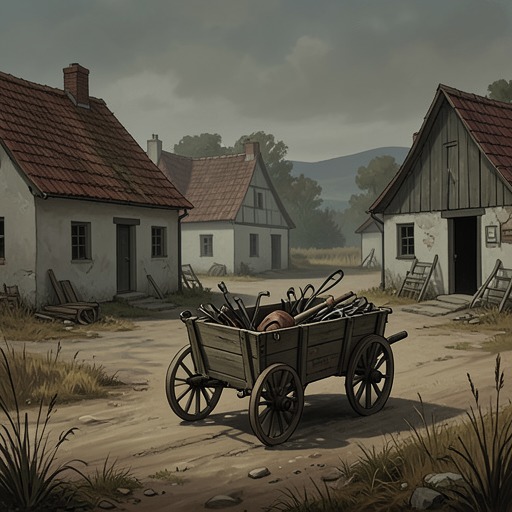
The removal begins in the small hours, when rumbling wagons disturb people living near the highways. These are the preparations for the general movement of families: farmers send teams to collect the belongings of hired laborers and carry them to their new destinations, aiming to arrive by six in the morning. No such farmer sends a team for the Durbeyfields. They are women and children rather than regular laborers, are not particularly required anywhere, and must hire a wagon at their own expense.
On the morning of departure, Tess is relieved that the weather is windy and threatening but not rainy; wet furniture, bedding, and clothing would bring a train of further hardship. The family eats breakfast in the thin light and begins clearing the house, with one or two friendly neighbors helping. After the furniture is loaded, the beds and bedding are arranged as a circular nest for Joan and the younger children to sit in during the journey. The horses have been unharnessed during the loading, so the family waits before they are brought back. At about two o’clock the wagon finally moves, with the cooking pot swinging from its axle and Joan carrying the clock’s head in her lap to protect its works. Tess and the next eldest girl walk beside it until they are out of the village.
Consequences and Significance
The neighbors who see the Durbeyfields off wish them well, although they privately doubt that welfare is possible for a family so harmless to others and so vulnerable to its own circumstances. As the wagon climbs to higher ground, the wind grows keener. On 6 April it meets other removal wagons carrying families atop their loads. Their carefully arranged possessions make migration visible as a repeated social pattern, not merely the Durbeyfields’ singular departure.
The eviction changes the meaning of home from a place of birth and family continuity into a dwelling temporarily held at the discretion of property and employment. The family must finance its own transport precisely because it is not attached to a farmer’s labor force, while the wider village is being reorganized around that labor force. The episode also sets the movement of material hardship against the language of moral correction: Tess accepts blame for the family’s loss, but the conditions that make departure likely include the ending of old holdings, demolished cottages, and the preference for workers directly needed on the land. Their wagon carries household goods out of Marlott, but the causes of the journey reach far beyond the household itself.