The inescapability of the past
Tess of the d'UrbervillesThe inescapability of the past names a force that reaches beyond memory: what has happened continues to organize the present, even when Tess Durbeyfield longs for a clean break. Her realization that her earlier and present lives have not become separate, the Durbeyfields’ reversal from landed ancestry to dispossession, and Tess’s anger at the judgments imposed on her all give the theme personal, social, and material weight.
The Past as an Unbroken Continuity
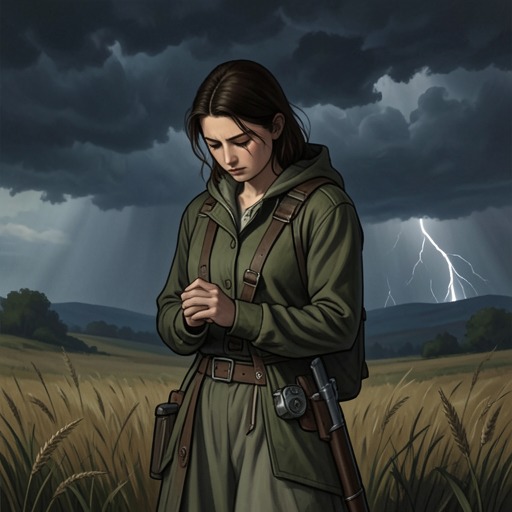
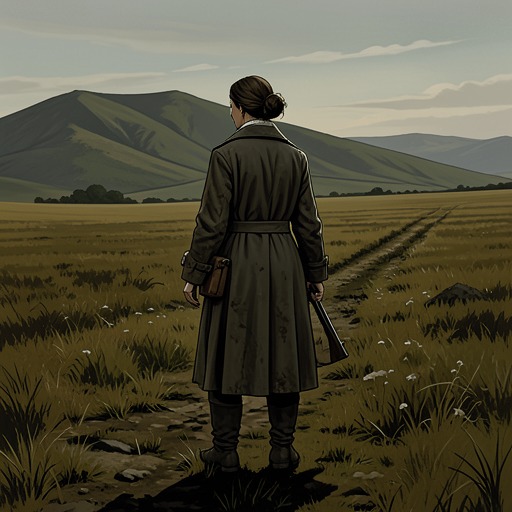
After encountering Alec d'Urberville in his new role as a Methodist, Tess walks away without turning her head. The encounter unsettles the balance between them: the man who had wronged her now appears aligned with the Spirit, while she feels herself still unregenerate. More deeply, the moment revives the past as an enclosing force. Her hunger for affection gives way to what the narration describes as an almost physical sense of an implacable past still girdling her; the hoped-for break between her earlier and present existence has not occurred. The thought that bygones cannot be complete until she herself is gone makes escape seem possible only through her own disappearance.
The imagery gives that persistence a bodily form. Tess feels exposed to a gaze from outside the barn, as if even her clothing can register it, and her sorrow changes from passive heaviness into practical despair. The past is not simply an episode she recalls: it remains present as shame, anticipated judgment, and a barrier to imagining a life unmarked by what came before.
Inherited History and Material Reversal
The Durbeyfields’ loss of their home extends the theme from individual experience to family history. John Durbeyfield’s death ends the final life on which the family’s lease depends. The dwelling is coveted by the tenant-farmer for regular laborers who lack adequate cottages, and the family’s independence as “liviers” makes renewal unlikely. The immediate consequence is not an abstract fall in status but the loss of the house where the younger children were born.
The narration frames that dispossession as a reversal of the family’s own aristocratic past. Once the d'Urbervilles, the Durbeyfields now undergo the fate they may once have imposed on landless people. The image of history moving by “flux and reflux” makes ancestry no protection against change: an old name survives, but it cannot secure land or shelter. The family’s past returns not as prestige but as an irony sharpened by its present vulnerability.
Judgment, Injury, and Repetition
Tess’s response to Alec’s departure is also a reckoning with the history that has governed her marriage. She recognizes that Angel Clare has dealt harshly with her, despite her conviction that she never intended to do wrong. In her understanding, her errors were inadvertent, yet punishment has continued to follow. Her grievance exposes the imbalance between what happened to her and the moral judgments she has had to bear.
She writes to Angel in anger, accusing him of treating her monstrously and declaring that she cannot forgive him. The letter does not alter the circumstances: the facts remain as before, and there is no new event to change his opinion. Its force lies instead in Tess’s refusal, however brief, to let his judgment stand as the only account of their past. Writing gives expression to an injustice that tenderness or entreaty could not undo.
The Past in the Present
The theme gathers its personal and social meanings in the contrast between Tess’s hope of separation from her earlier life and the repeated return of its consequences. Her past shapes how she sees herself; other people’s judgments make it consequential in her marriage; inherited status fails to shield her family from eviction. These are different forms of persistence, but none allows the present to begin from a neutral point.
On the Durbeyfields’ last night in their home, Tess tells the younger children that they will sleep there for the final time. The house, like the family name and Tess’s history, carries what has already happened into what comes next. The past is inescapable not because nothing changes, but because change itself bears its traces: a new religious identity, a broken marriage, or a lost home does not erase the history that formed it.