Var or Froom Valley
Tess of the d'UrbervillesThe Var or Froom Valley is the broad, fertile dairy country that Tess reaches after leaving Marlott, seeking work and distance from the memories of Trantridge. Known also as the Valley of the Great Dairies, it first appears to offer a world on a larger and more hopeful scale: its clear river, immense pastures, and abundant cattle contrast sharply with the familiar Blackmoor Vale. Yet the valley is not simply a refuge. Its seasonal abundance intensifies passion, and its pastoral beauty becomes the setting for a love that cannot undo the injuries Tess carries into it.
Setting and Landscape
Tess learns in early May that a dairy-house many miles south needs a skilled milkmaid for the summer. The opportunity comes after a long wait for a chance to leave Marlott, where she feels unable to be comfortable while the collapse of her family's attempt to claim kinship with the d'Urbervilles remains a living memory. She hopes to escape the past by going elsewhere, and resolves that her new life will be that of a dairymaid, without the d'Urberville ancestry shaping her identity.
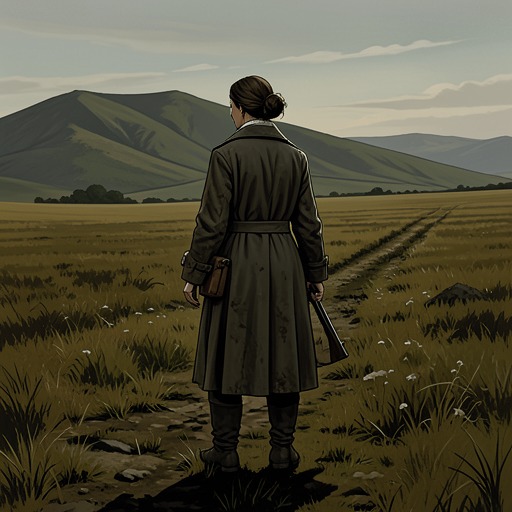
The journey takes her across Egdon and over intervening uplands and lowlands. Although the distance is only a few miles, wrong turns make the walk take two hours before she reaches a summit looking into the valley. From there she sees a country of unusually large farms and fields: enclosures run to fifty acres rather than the ten-acre plots familiar in Blackmoor Vale, farmsteads are more extensive, and cattle appear in vast herds rather than small family groups. The scale makes the valley seem to belong to a wider world.
The two valleys differ in more than size. Blackmoor's slow, often turbid streams move over mud, while the Froom runs clear and swiftly over pebbles. The narrator sets the lily of the former against the crow-foot of the latter. For Tess, the new air is clear and bracing rather than heavy, and the unfamiliar surroundings seem free of the accusing eyes she associates with home. That change of scene lifts her spirits as she descends toward the dairy.
The valley's geography is best understood from within it, not from the heights. Once Tess reaches its floor, she stands on a level green plain stretching east and west as far as she can see. The river has carried sediment down from higher ground and deposited it across the vale; now it winds, reduced and attenuated, through the land it made. Tess, uncertain of her direction, seems almost insignificant in the immense flatness, and the only immediate disturbance her arrival causes is the attention of a solitary heron.
Work and Seasonal Change
The valley is defined by dairying as much as by its scenery. Its enormous herds and richly watered grass sustain the production of milk and butter on a scale beyond anything Tess has known. The place offers her employment and a fresh social setting, but it also places her within the demanding routines of farm life, where the landscape's fertility is inseparable from labor.
That fertility changes character with the season. In the early months, the green country and clear air support Tess's hope of beginning again. By July, however, the Froom Vale's growth and warmth are described as almost physically fermenting. The air, fresh in spring and early summer, becomes stagnant and enervating; heavy scents weigh on the inhabitants, the midday landscape appears prostrate, and the uplands brown under the heat even as bright grass remains beside the watercourses. The same lush environment that seems welcoming in spring can feel oppressive in summer.
The agricultural scene conveys both abundance and strain. When Angel returns to the dairy after visiting his parents, the heat has made the valley's rich odors seem to pool over the land and leave animals, bees, and butterflies drowsy. He recognizes individual cows at a distance, evidence that he has become familiar with this working landscape. The dairy's summer routine is visible in its equipment and resting household: scrubbed, bleached wooden pails hang ready for evening milking, while the people and animals seek relief from the heat. The valley is not an untouched pastoral idyll but a place organized around work, weather, and production.
Tess and the Valley
For Tess, arriving in the valley is an effort to remake the conditions of her life. She has endured her mother's reproaches for not securing marriage to Alec d'Urberville, even though she had never wished to marry him and had experienced his attentions as fear, helplessness, and confusion. She tells her mother that she had been a child when she left home and had not been warned of the danger men could pose. Her mother, who had hoped the association would improve the family's prospects, is subdued by the admission. This painful exchange clarifies what Tess is trying to leave behind: not merely a location, but an environment in which her experience is judged through family ambition and sexual respectability.
The valley initially offers a change of air and anonymity rather than a cure. Tess imagines that if she can veil the past, she may recover; she also wonders whether chastity, once lost, must be lost forever. The narrative links that inward hope to the spring landscape and the impulse to depart. Her renewed energy is not presented as proof that the injury has vanished. Instead, it shows her ability to live on and to look toward a possible future, even while the history she wishes to escape remains part of her.
Her response to the landscape is therefore double. From the heights, the Great Dairies appear cheering and expansive; on the valley floor, the level plain makes her feel like a small, inconsequential figure. The setting can enlarge possibility without granting control. Its vastness gives her a temporary distance from local judgment, but it cannot erase the unequal terms on which her life has been interpreted.
Angel Clare and the Valley's Narrative Role
The Var or Froom Valley becomes closely associated with Angel Clare's growing attachment to Tess. The narrative presents the summer environment as an intensifier: amid the valley's rich growth and warmth, love grows passionate, and Angel's feelings deepen as the season advances. The physical landscape does not simply mirror emotion; its seasonal conditions help establish the pressure and momentum under which desire develops.
The dairy also brings Angel into an intimate relation with rural labor. Returning from a visit to his parents, he feels he can see life from its inner side, unlike in his student days. He values the absence of a resident landlord and the release from customary restraints imposed by rural society. His familiarity with the cows and the working rhythms of the farm marks a changed perspective, though it does not mean he understands everything about Tess's past. When he tells her about his father's recent attempt to preach near Trantridge and confront a young cynic, Tess recognizes the place and responds with a hard, worn expression. Angel is absorbed in his account and does not notice her reaction. The valley's quiet routines thus hold a concealed history that the pastoral setting cannot make visible to him.
The later contrasts in Tess's fortunes sharpen the valley's significance. At Flintcomb-Ash, where she works after separation from Angel, the farm is described as a starve-acre place in a village neglected by both its own community and its absentee owner. Tess and Marian labor in a vast swede field on high, stony ground, hacking out the root portions left after livestock have eaten the tops. The harsh work and barren landscape stand against the water-rich dairy country, exposing how precarious Tess's access to security is. When she protests the injustice of Angel's treatment, her sense that she has been judged for wrongs she never intended marks the persistence of the past beyond the valley where she had hoped to begin again.
The Var or Froom Valley consequently holds both renewal and limitation. Its spring landscape grants Tess a real, if temporary, lift in spirits; its dairy provides work, community, and the setting for her relationship with Angel. But the same seasonal abundance heightens passion without repairing the social and personal damage that precedes it. The shift from the clear, expansive valley to the hard labor of Flintcomb-Ash makes the difference between pastoral promise and economic vulnerability concrete: a new landscape can offer Tess room to move, but not immunity from judgment or hardship.