
Work, Class, and Rural Change
Tess of the d'UrbervillesThis flow links Tess’s labor to the changing rural economy and shows how class limits the choices available to farm workers.
increasing Bearing strength in each event
 decreasing
Bearing strength in each eventdecreasingThe Village’s Older Order
The Village’s Older Order
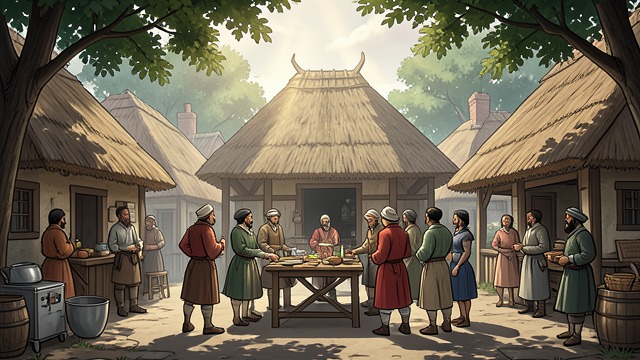
A mixed rural community
Marlott includes craftsmen and smallholders as well as agricultural laborers. Some families hold cottages or plots, giving them a degree of independence beyond wages alone.
Stability begins to erode
As older holdings disappear, farmers and landlords reshape village housing around their own labor needs. Tess’s family occupies a place in a social world already becoming less secure.
Women’s Seasonal Labor
Women’s Seasonal Labor
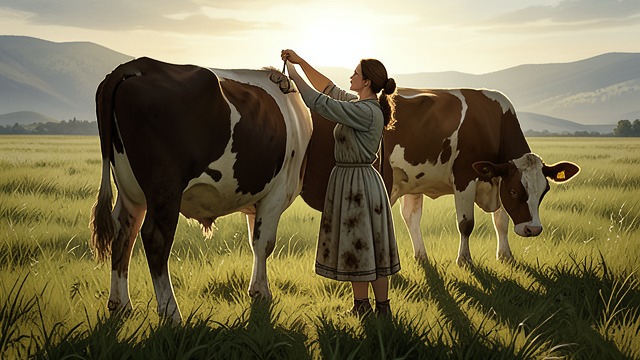
Work as independence
Tess takes harvest work because it pays better than many domestic tasks and gives her a way to support herself. She proves skilled, but the labor also exposes her to physical strain and public scrutiny.
Limited choices
Women can find work in dairies and fields, but their economic independence remains fragile. When seasonal demand changes, Tess must search again rather than rely on a stable occupation.
Talbothays as a Brief Haven
Talbothays as a Brief Haven
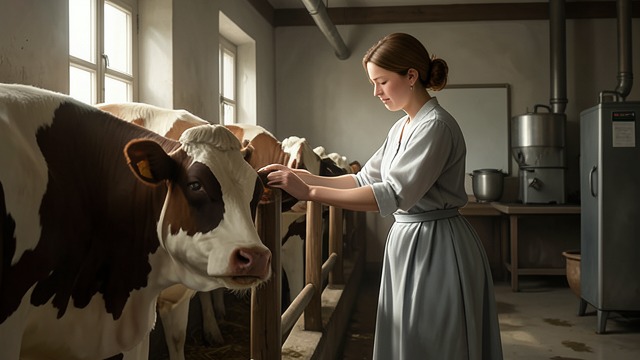
A cooperative workplace
Talbothays offers regular work, a household community, and relative material comfort. Tess’s skill at milking allows her to contribute on terms that feel more equal than dependence on Alec.
Comfort remains temporary
The dairy’s seasonal rhythm cannot protect Tess permanently. As winter approaches, work declines, and the refuge she found there becomes tied to her romance and eventual separation.
The Machine’s Relentless Pace
The Machine’s Relentless Pace
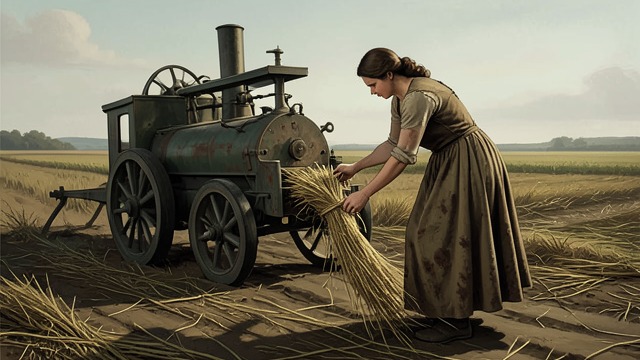
Labor reorganized by technology
The threshing machine processes the rick quickly, but the workers must keep pace with its continuous motion. Tess stands at a demanding station, untying sheaves without the pauses available to others.
Efficiency has a human cost
The machine’s speed is treated as an economic advantage, while exhaustion falls on the bodies feeding it. Hardy’s account makes technological progress visible from the worker’s side of the mechanism.
Migration Without Promise
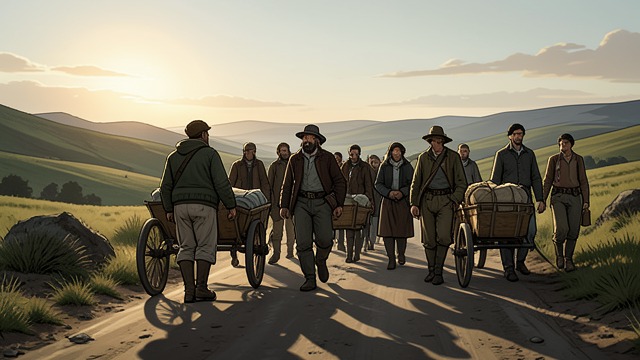
Migration Without Promise
Families change places
Agricultural workers and their belongings move between farms at the end of their hiring terms. The custom promises a new beginning, but each destination may become another place of hardship.
Structural displacement
The Durbeyfields move without a farmer’s transport or a secure job. Their journey contrasts with better-established workers and shows that mobility is not the same as opportunity.
during Tess’s early life in Marlott
after Tess returns to Marlott with Sorrow
the spring and summer of Tess’s dairy employment
the last threshing at Flintcomb-Ash Farm
Old Lady-Day, during the annual removals
