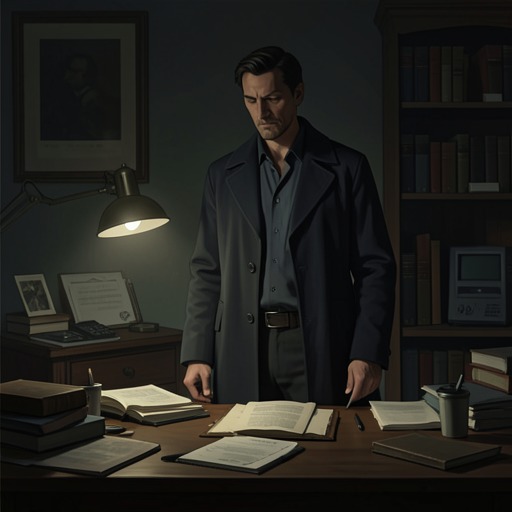
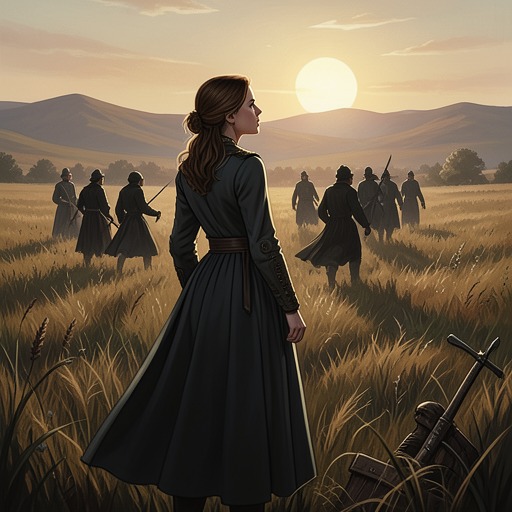
Alec sexually assaults Tess in The Chase
Tess of the d'UrbervillesThe assault in The Chase is the decisive rupture in Tess Durbeyfield’s early life: after Alec d'Urberville turns a ride home into a deliberate detour, Tess is left alone in the wood, and the narrator makes clear that the harm cannot be explained away as fate, inherited guilt, or her own intention. Its consequences follow her long after she leaves Trantridge, shaping her family’s reproaches, Angel Clare’s judgment, and the enduring conflict between her own sense of innocence and society’s treatment of her.
The ride diverted
Earlier that evening, Tess has been caught in a quarrel among the workers. Indignant and ashamed, she wants only to get away from the group. Alec arrives on horseback and finds her standing apart near the gate. He offers her a way out, and she accepts in a sudden impulse: the chance to leave her accusers behind overcomes her usual reluctance to accept his company. By the time the revellers realize what has happened, Alec and Tess are already riding away.
The rescue quickly becomes a breach of trust. During the journey Alec puts his arm around Tess; she does not continue to object, but grows uneasy when she realizes they have been travelling much longer than the short way from Chaseborough should require. When she asks where they are, he tells her they are passing through a wood, then identifies it as part of The Chase. Tess recognizes that they have left the road and asks him to set her down so she can walk home. Alec instead says they are miles from Trantridge and that the fog could leave her wandering among the trees. His explanations and the growing difficulty of finding the way back make her dependent on the man who has chosen the detour.
Left alone in The Chase
Alec gives Tess his overcoat against the September night and says he will return shortly. He then goes up the slope, ostensibly to establish where they are. The narrator reveals that the detour was not a navigational mistake: Alec had ridden at random for more than an hour, taking turns in order to prolong his time with her and paying more attention to Tess than to the route. He eventually finds a highway and turns back, but darkness and fog make it difficult to locate the place where he left her.
Tess is asleep when Alec finds her again. The scene is framed by the darkness and silence of the wood, while the narrator invokes the ancient trees and sleeping animals around them and pointedly asks where her guardian angel or providence might be. The episode’s violence is not described graphically; its significance lies in the stark contrast between Tess’s vulnerability and Alec’s control of the circumstances. The narrator’s attention then moves from the immediate scene to the injustice of what has been done to her.
The narrator’s account of injustice
The narrator refuses to make the assault intelligible as a deserved punishment. A possible retribution for the wrongs committed by Tess’s aristocratic ancestors against peasant women is raised and rejected: even if such inherited punishment might satisfy a divine morality, it does nothing to repair the wrong in human terms. The passage thereby connects class history to the present without treating Tess as responsible for ancestral conduct.
Instead, the narrator invokes the fatalistic phrase used by Tess’s family, “It was to be,” and immediately stresses the pity of that conclusion. The assault creates an “immeasurable social chasm” between the Tess who left her mother’s home for work at the poultry farm and the person she is afterward. Fate is thus presented as the language through which a seemingly inevitable catastrophe is named, not as a justification for it. The narrative exposes the human cost of treating the event as unavoidable.
Reproach and lasting consequences
Four months later, Tess’s mother reproaches her for returning without having secured Alec’s marriage, imagining that such a marriage might have helped the family. Tess’s response shows the distance between that practical hope and her experience: she says she was a child when she left home and asks why no one warned her of the danger men could pose. Her mother admits that she had hoped Tess’s attention to Alec’s feelings would preserve a chance of advantage. Their exchange makes the family’s poverty and Tess’s lack of preparation part of the aftermath, while showing how the burden of the assault is redirected into criticism of her choices.
The pattern resurfaces when Tess tells Angel Clare about her past. Angel acknowledges that she was more sinned against than sinning, yet says forgiveness is not all that is at issue. His response shows how recognition of the wrong does not by itself undo the social and marital consequences attached to it. Later, at Flintcomb-Ash, Tess endures harsh agricultural labor while living apart from Angel; her economic vulnerability is part of the wider cost of a history for which she was not morally responsible.
Tess eventually turns that injustice into an explicit judgment on Angel’s treatment of her. After Alec has ridden away, she reflects that she never intended to do wrong, yet has repeatedly received hard judgment. She distinguishes sins of intention from inadvertence and asks why punishment has been so persistent. The reflection echoes the narrator’s earlier rejection of inherited retribution: both insist that suffering is not proof of guilt. The event in The Chase therefore remains more than a concealed episode in Tess’s past; it is the originating wrong against which the novel measures the judgments, dependence, and losses that follow.